
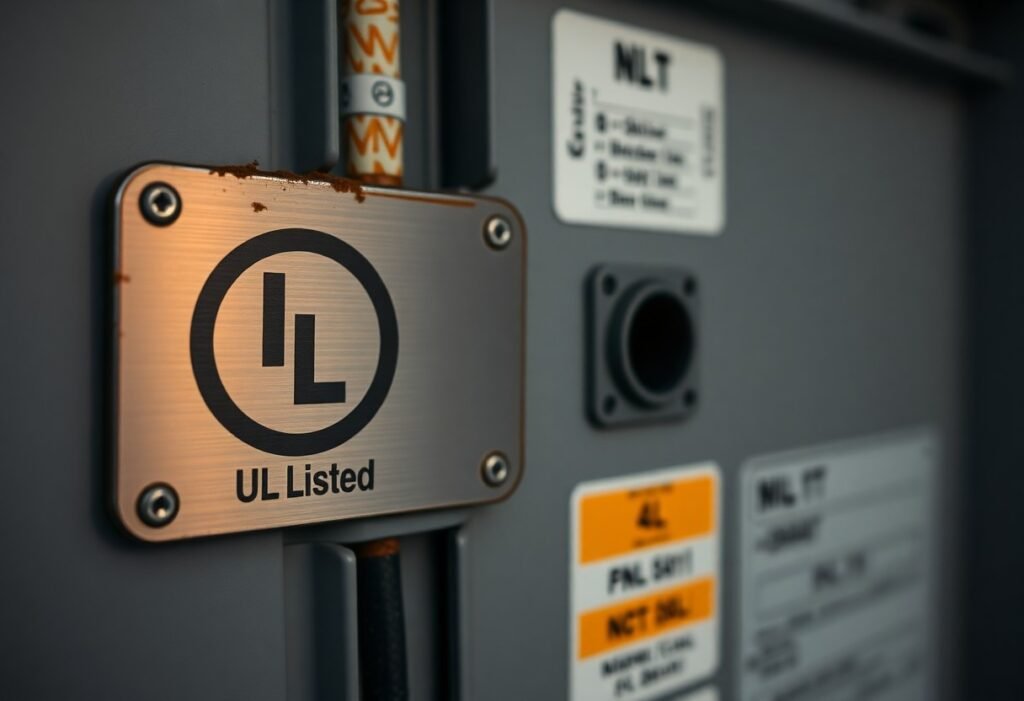
Many UL-listed signs have been independently tested by Underwriters Laboratories to verify electrical safety, durability and code compliance, so when you choose UL-listed signage you reduce fire and shock risks, meet building and insurance requirements, and protect your facility; understanding UL listings helps you specify the right products and demonstrate compliance to inspectors.
Key Takeaways:
- UL Listed means Underwriters Laboratories has tested a complete sign product and verified it meets specific safety and performance standards (electrical, fire, mechanical).
- Listing involves product testing and ongoing factory inspections to ensure consistent manufacturing quality and compliance with the applicable UL standard.
- UL-listed signs are often required by building and electrical codes, authorities having jurisdiction, and insurers to reduce fire/electrical hazards and limit liability.
- The UL mark simplifies permitting and inspections by providing documented compliance and predictable performance for installers and inspectors.
- “UL Listed” applies to finished products; it differs from “UL Recognized” (components). Altering or improperly installing a listed sign can void the listing and violate codes.
What are UL Listed Signs?
You see UL Listed signs when safety and compliance matter: they are finished sign products tested by Underwriters Laboratories for electrical safety, photometric output, battery performance, and environmental durability. You rely on the UL mark to satisfy fire and building codes, accelerate inspections, and provide documented proof that your exit and emergency signage performs predictably during outages and elevated temperatures.
Definition and Purpose
When a sign carries a UL Listing, Underwriters Laboratories has evaluated the complete unit against defined standards for electrical safety, fire performance, and functional reliability. You install UL-listed signs to meet NFPA and IBC provisions, to reduce inspection objections, and to give your facility managers and insurers confidence that signage will operate during power loss, smoke exposure, and temperature extremes.
Types of UL Listed Signs
Typical UL-listed sign types include internally illuminated LED exit signs, externally illuminated fixtures, LED retrofit kits, self-luminous or photoluminescent signs, and directional/wayfinding units. You choose based on mounting, required visibility distances (commonly 10-40 meters depending on luminance), power source (AC with battery backup or none), and specific code battery-run time requirements (often 90 or 120 minutes).
- Internally illuminated exit signs – integrated LED modules, battery backup, low wattage.
- Externally illuminated signs – simpler internals, external lamp/fixture orientation, outdoor-rated housings.
- Photoluminescent signs – passive glow, no electrical supply, tested for initial intensity and decay over 60-90 minutes.
- Thou must confirm the UL file number and rating label match the intended application before procurement.
| Internally illuminated | LED modules, 90-120 min battery, UL 924 photometric & endurance tests |
| Externally illuminated | Protected wiring, outdoor ratings, UL verification of mounting and lamp performance |
| Photoluminescent | Glow intensity, decay rate, ASTM/UL visibility tests without power |
| Self-luminous (tritium) | Radiation safety labeling, long-term brightness specs, sealed-source checks |
| Directional/wayfinding | Custom legends, standardized contrast, visibility distance and mounting height criteria |
For procurement and compliance you should match sign type to the risk profile: stairwells often require internally illuminated, exterior egress may use externally illuminated or photoluminescent, and long corridors benefit from higher-lumen versions; you also track UL file numbers and runtime tests documented in manufacturer data sheets to support code inspections and insurance audits.
- Check UL directory entries and manufacturer runtime test reports before acceptance.
- Confirm mounting height and sign spacing align with listed visibility distances.
- Verify battery type and replacement interval match the UL label and your maintenance plan.
- Thou should retain the UL file number and test reports in your compliance records for audits.
| Electrical Safety | Dielectric, grounding, and short-circuit protection per UL 924 requirements |
| Photometric | Minimum luminance, uniformity, and legibility distances specified in test reports |
| Battery Runtime | Verified 90-120 minute emergency operation under load conditions |
| Temperature/Environment | Operational range (-20°C to 50°C typical) and humidity ingress ratings |
| Labeling | Permanent UL mark, file number, voltage, runtime, and environmental class |
Importance of UL Listing
Your signage’s UL listing shows it meets established electrical and fire-safety tests defined for signs, such as UL 48 for electric signs and UL 924 for exit/egress illumination. Municipal inspectors and insurers often look for that listing during permitting and claims, and you benefit from lower inspection friction and clearer liability posture. Since UL began testing in 1894, the mark has become a de facto assurance that a product has passed third‑party evaluation you can cite in compliance documentation.
Safety Standards Compliance
When your sign is UL listed, it has passed tests for shock, overheating, wiring integrity, enclosure protection, and flame propagation under standards like UL 48, UL 1598 (luminaires) and UL 8750 (LED equipment). Manufacturers submit samples for bench testing and environmental cycling, so you get assurance that components-transformers, LEDs, power supplies-meet performance thresholds that reduce field failures and fire risk in real deployments.
Regulatory Requirements
Codes you encounter-NEC (NFPA 70), local building codes, and OSHA’s NRTL recognition policy (29 CFR 1910.7)-often require or strongly prefer NRTL‑listed equipment such as UL‑marked signs for electrical compliance and permitting. You’ll find plan reviewers reference those listings during permit applications, and non‑listed signs can trigger rework, rejection, or added inspection costs.
In practice, obtaining a UL listing involves initial product testing and ongoing factory inspections (typically annual) plus follow‑up testing when designs change; this lifecycle approach means your documented listing stays valid while manufacturing conditions remain consistent. For example, a retailer installing dozens of storefront signs across cities often submits the UL file number to multiple jurisdictions to speed approval, and insurers may use that same documentation when evaluating premiums or claims after incidents.
How to Identify UL Listed Signs
You locate UL listed signs by checking the physical label, documentation, and the UL database. Inspect the back or inside the battery compartment for the UL mark, model number, and any standard reference like UL 924 for exit/emergency signs. Then use the model or file number to search UL Product iQ to confirm the listing covers your sign’s intended application, mounting method, and environmental rating (indoor/damp/wet).
UL Mark and Labeling
You should find a UL symbol plus wording such as “LISTED” or a combined cULus mark, the manufacturer’s name, model number, and often the applicable standard (for example UL 924). Labels commonly sit on the rear plate or inside the canopy; photoluminescent or LED signs still carry the same info. If a label lacks model or standard references, treat it as suspect and verify with the manufacturer or UL database.
Verification Process
You verify listings by recording the UL mark, model and any file number, then searching UL Product iQ or contacting UL. Cross-check that the listing scope matches your installation (e.g., emergency signage rated for damp locations or 90‑minute emergency operation under UL 924). Also confirm the manufacturer’s name matches the UL record to avoid counterfeit or misapplied marks.
For deeper verification, you request the manufacturer’s Certificate of Compliance or the specific UL file report; these documents list tested configurations, component substitutions, and installation limits. You can also scan QR codes some manufacturers include that link directly to the UL record. When doubts remain, ask UL for verification or the Authority Having Jurisdiction for field evaluation; UL conducts periodic follow-up inspections and sample testing as part of ongoing listing maintenance, which you can reference in the UL Product iQ record.
Installation and Maintenance Guidelines
You should install UL listed signs per the manufacturer’s instructions and local electrical and building codes, using listed mounting hardware and properly sized conduit; many commercial LED signs accept 120-277 V feeds. Check the sign’s label for indoor/outdoor rating and operating temperature, torque fasteners to spec, secure wiring in junction boxes, and document installation details (model, voltage, date) to simplify future inspections and warranty claims.
Placement Considerations
Prioritize unobstructed sightlines and mounting orientation so your sign faces the primary approach-place signs above doors, at corridor intersections, and at every change of direction. In larger spaces, supplement primary signs every 75-100 feet, avoid glare or backlighting that reduces legibility, and choose fixtures with suitable IP/NEMA ratings for outdoor, wet, or dusty environments.
Maintenance Best Practices
You should run quick operational checks monthly and a full-duration battery discharge annually-commonly a 30-second monthly test and a 90-minute annual test for battery-backed exit signs. Clean lenses and vents every 3-6 months, replace batteries on a 3-5 year cycle as capacity drops, and keep dated inspection logs showing tests performed, failures, and component replacements.
For more thorough upkeep, verify the AC power indicator and charging current during routine checks, measure battery voltage under load on the annual test, and inspect LED drivers for overheating or flicker; replace only OEM or UL-recognized batteries and drivers when capacity or output falls below manufacturer specs. Tag replacement parts with installation dates, record technician initials, and retain logs-many authorities recommend keeping records for at least three years to demonstrate compliance.
Consequences of Non-Compliance
Failing to use UL-listed signs exposes you to enforcement and costly corrections; code authorities and UL guidance (see Listed Signs – Identifying UL Certification and Proper Use) document removal, retrofit orders, and inspection holds that can run into thousands of dollars and force operational downtime.
Legal Implications
You can be cited for code violations, required to remove or replace signage, and face civil fines; insurers commonly investigate component compliance after a loss, and a denied claim for non-listed equipment can shift repair and legal costs entirely to your organization.
Risks to Safety
Non-listed signs and emergency fixtures have higher failure rates in adverse conditions, so you increase the chance of malfunction during a power outage or fire; that directly affects evacuation times and the reliability of life-safety systems people depend on.
For example, municipal inspections have documented exits and emergency luminaires that failed under blackout conditions when non-listed components were installed, resulting in citations and mandated replacements; you should prioritize listed fixtures, verify battery backup capacity, and schedule regular testing to reduce failure probability and satisfy inspectors and insurers.
Summing up
Drawing together, UL listed signs are signage products tested and certified by Underwriters Laboratories to meet electrical, fire and durability standards so you can rely on safe operation and code compliance. You need them because building codes, inspections and insurance requirements often mandate certified signage to reduce fire risk, prevent electrical failures and limit liability, ensuring your occupants and property are protected and your installations pass regulatory review.
FAQ
Q: What are UL listed signs?
A: UL listed signs are signs that Underwriters Laboratories has tested and approved to meet specific safety and performance standards. The UL listing indicates the complete sign, as assembled and intended for end use, complies with applicable UL standards for electrical safety, fire performance, photoluminescence (for glow-in-the-dark signs), or structural integrity. Listed units may carry a UL mark and a file or category code that links to the certification record.
Q: Why are UL listed signs required in buildings and facilities?
A: Many building codes, fire codes (e.g., NFPA), and local authorities mandate UL listed signs because they provide proven, repeatable performance-especially for emergency egress, exit identification, and life-safety illumination. Using listed signs helps ensure visibility during power loss or fire events, meets insurer and regulatory expectations, and reduces the risk of equipment failure or unsafe installations.
Q: How does the UL listing process for signs work?
A: Manufacturers submit samples and documentation to UL, which performs tests relevant to the product category: electrical safety, battery and charger testing for illuminated signs, photometric/photoluminescent performance, temperature and humidity aging, and flame and smoke tests when applicable. UL also verifies construction, materials, markings, and installation instructions. If the product passes, UL issues a listing with periodic follow-up inspections at the factory to maintain the listing.
Q: What is the difference between UL Listed, UL Recognized, and UL Classified for signs?
A: UL Listed denotes a complete product evaluated for end-use safety and performance. UL Recognized applies to components intended for use inside larger systems (not standalone end products). UL Classified means UL tested the product to specific performance criteria or for limited-scope use. For signs, a listed sign is ready for installation; a recognized item might be an internal driver or LED module used in a sign but not the finished sign itself.
Q: How do I verify a sign is UL listed and what installation/maintenance rules apply?
A: Check the sign for a visible UL mark, the UL file or category code, and the manufacturer’s installation instructions. Verify the listing in the UL Online Certifications Directory using the file number or product name. Install per the manufacturer’s instructions and local code requirements (mounting height, emergency power connections, inspection access). Maintain batteries, perform periodic testing, and replace signs if damaged or if performance no longer meets the listed specifications to remain code-compliant and safe.