
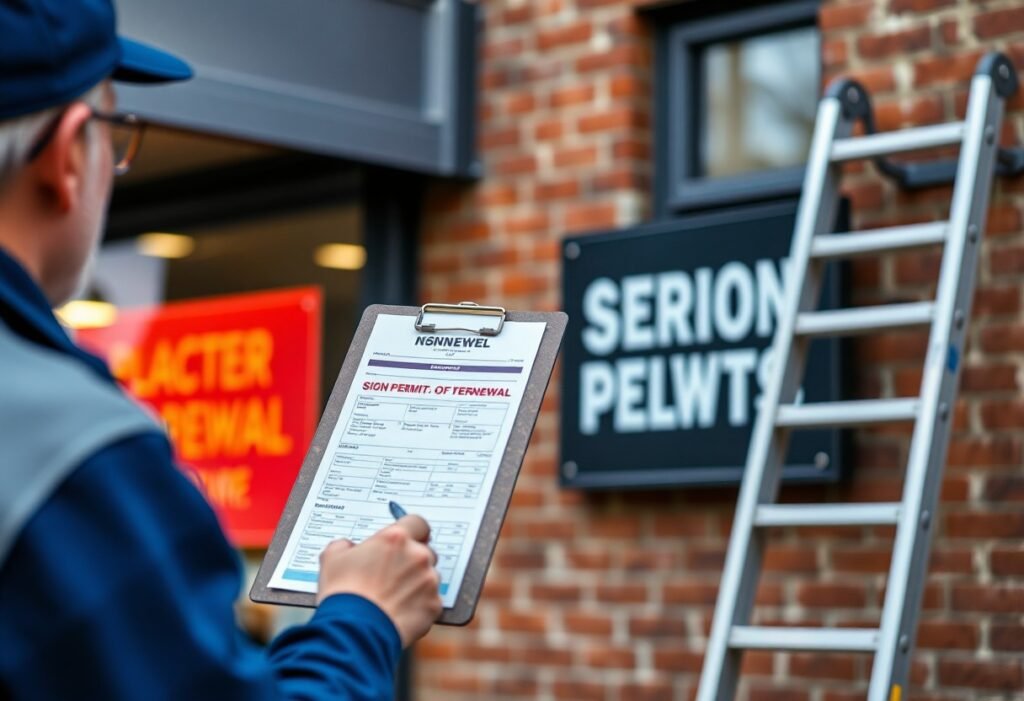
Most sign permits require renewal when the original approval period expires, when you alter a sign’s size, location, lighting, or structural support, or when you change the sign copy or ownership; local jurisdictions may also mandate periodic inspections or annual renewals, so you should consult your municipal code and the issuing agency to confirm timelines, fees, and required documentation.
Key Takeaways:
- When the original permit reaches its expiration date or a specified time limit, a renewal is required to keep the sign legally authorized.
- Any alteration to size, height, location, mounting or structural components typically triggers a renewal or a new permit.
- Converting a sign to illuminated, electronic/digital, or changeable-copy formats often requires renewing the permit to address electrical and safety rules.
- Major repairs, full replacement, or reinstallation after removal usually necessitate a renewed permit rather than treating the work as routine maintenance.
- Changes in property ownership, tenancy, land use or updates to local sign regulations can require permit renewal to confirm ongoing compliance.
Understanding Sign Permits
You should be aware that sign permits cover a wide range of issues-temporary versus permanent status, size and placement limits, illumination and electrical work, and structural requirements. Many municipalities set permit durations from 30 days for banners to 1-5 years for permanent signs, and renewal depends on those timelines and any code changes.
Definition of a Sign Permit
A sign permit is a local government authorization that lets you install, alter, or display a sign under specified conditions. It typically documents approved dimensions, materials, location, illumination, and any required inspections or stamped engineering for structural safety, and usually obliges you to pay a fee and follow zoning restrictions.
Importance of Sign Permits
You need permits to ensure legal compliance with zoning, public safety, and electrical codes; without them you risk fines, stop-work orders, or forced removal. Permits also protect you by documenting approved specifications-useful if disputes arise with neighbors or code enforcement.
For practical context, many jurisdictions require electrical permits for illuminated signs and engineer-stamped drawings for larger installations; temporary banner permits commonly run 30-90 days. If you fail to renew or obtain the right permit, fines often range from $50-$1,000 per violation (sometimes assessed daily) and can lead to mandatory removal-cases exist where businesses incurred thousands in penalties before rectifying signage issues.
Sign Permit Renewal Process
Typically, renewals follow the original permit’s expiration and require an updated application, fee payment, and a compliance review. You should expect variable timelines-temporary signs often need renewal every 30-90 days, while permanent signs are commonly reviewed every 1-5 years. Municipalities may also demand current site photos, an updated site plan, and proof of paid utility or inspection fees as part of the renewal packet.
When is Renewal Required?
Renewal is required when the permit term expires, when you alter the sign (size, illumination, or location), or when ownership or tenancy changes. Local triggers also include code amendments, post-storm repairs, or when inspectors issue a noncompliance notice. For example, many U.S. cities require temporary banner permits every 30-90 days and mandate a full renewal or reissued permit for permanent illuminated signs every 3-5 years.
Steps for Renewal
Begin by checking your local code and the original permit conditions, then assemble documents: permit number, site plan, recent photos, electrical inspection (if applicable), and proof of ownership or lease. Submit the renewal application online or at planning, pay the fee (commonly $50-$500), schedule any required inspections, and await approval-typical review time ranges from 2-8 weeks depending on jurisdiction and complexity.
In practice you’ll often need additional specialty items: electrical renewals usually require a licensed electrician’s sign-off, large or pole signs commonly need structural calculations (e.g., signs over ~40 sq ft or tall pole installations), and signs in historic districts may require a preservation commission review that adds 2-4 weeks. Expedited reviews are sometimes available for an extra fee; bundling multiple renewals can also streamline processing timelines.
Common Reasons for Renewal
Several routine triggers lead municipalities to require permit renewals: elapsed approval periods (often 1-5 years), ownership or tenant changes, and any modification to size, illumination, or placement. You’ll also see renewals when code updates occur-for example, cities adopting new LED standards in 2022 prompted mass reapplications-and when inspections reveal structural or electrical issues that need corrective work before a permit stays valid.
Changes in Business Operations
When you change your business name, ownership, or primary use-say a retail shop becomes a restaurant-local rules commonly require a permit update within 30-90 days. You must submit a new application if your occupancy classification or storefront layout changes, because those affect sign type, allowable square footage, and safety reviews tied to fire egress and electrical loads.
Alterations to Signage
Any physical change to your sign often triggers renewal: enlarging the sign face by more than 10%, adding backlighting or LED modules, switching materials from noncombustible to combustible, or moving the sign laterally beyond about 5 feet typically requires amended permits and inspections. Electrical upgrades alone usually need an accompanying electrical permit and inspection.
For alterations you’ll usually need to provide scaled drawings, a structural assessment for pole or projecting signs, and a photometric plan for illuminated faces; jurisdictions commonly ask for engineer-stamped details when wind or snow loads change. Fees range widely ($50-$500) and review times run from 2-6 weeks; plan for inspections after installation to close out the renewed permit.
Local Regulations and Compliance
Municipal codes differ widely; in Portland, for example, you must follow size, illumination, and setback rules specified under Sign and awning permits, with many jurisdictions imposing renewals every 1-5 years and periodic inspections. You should keep drawings, engineer stamps, and dated photos on file to speed renewals; nonconforming signs can incur fines of several hundred dollars or removal orders within 30-90 days in some cities.
Variances in Regulations
If your sign doesn’t meet standard criteria, you can request a variance; review boards often meet monthly and decisions typically take 30-90 days. You should submit site plans, photomontages, and hardship or design rationale. Minor deviations (≤10% area or setback) are sometimes approved administratively, while larger changes usually require public notice and fees ranging from about $250 to $1,500.
Importance of Local Guidelines
You must follow district-specific design standards because historic, downtown, and neighborhood commercial zones frequently restrict materials, colors, and lighting; one downtown corridor required non-illuminated wood signs, delaying a restaurant’s opening by 60 days when LED backlighting was proposed. Local guidelines directly affect timelines and costs, so factor them into your project schedule.
Detailed rules often include measurable limits-examples include sign-to-building ratios (commonly 1-3 sq ft per linear foot), maximum heights (typically 10-25 ft for wall-mounted signs), and illumination limits measured in lux. You should run quick calculations-e.g., a 30 ft façade × 2 sq ft/ft = 60 sq ft allowed-to confirm compliance before submitting plans, and check zoning tables and permit checklists to avoid rework and unexpected fees.
Consequences of Failing to Renew
If you let a sign permit lapse, enforcement often follows quickly: code officers can issue citations, order removal, or place a lien on your property. You may face operational disruption, loss of advertising while you pursue appeals, and a higher likelihood of future permit denials. Fines and abatement costs can accumulate, turning a routine administrative oversight into a five-figure expense in many jurisdictions.
Legal Implications
Failing to renew exposes you to administrative orders-stop-use notices, mandatory removal within 7-30 days, and civil fines-and in some municipalities to misdemeanor charges for persistent noncompliance. Municipal courts routinely uphold abatement orders; you may see liens filed against your property or be denied permits in related zoning or building applications. Appeals are available but often slow and expensive.
Financial Penalties
Municipal fines commonly range from $50 to $1,000 per day for ongoing violations, plus one-time administrative fees and escalating penalties for repeat offenses. Abatement and contractor removal typically add $500-$10,000 depending on sign size and complexity, and reapplication or expedited review fees can exceed your original permit cost by two to three times.
For example, a 90-day unpermitted display assessed at $200 per day yields $18,000 in fines before removal costs; combined with a $5,000 contractor abatement and a $1,000 reissue fee, your total liability can top $24,000. Insurance often excludes fines, and unpaid penalties can become liens or affect property sale and refinancing.
Best Practices for Managing Sign Permits
Adopt a permit-management routine that ties expiration dates, inspection windows and installation milestones to automated reminders at 90, 45 and 10 days; you should also standardize application packets (site plan, structural cert, property consent) to reduce re-submissions. Many firms cut processing delays by 30-50% by batching renewals quarterly, assigning a single permit lead, and tracking fees and inspection outcomes in one shared spreadsheet or permit software.
Keeping Records
Store digital and paper copies of permits, approved drawings, inspection reports and correspondence indexed by address and permit number, and retain them for at least 3-7 years after final sign removal. Scan plans at 300 dpi, tag files with keywords (owner, installer, engineer) and maintain an audit-ready folder so you can produce documentation within hours when inspectors or clients request proof.
Staying Informed on Regulations
Monitor municipal code updates, planning-board minutes and state statutes; many jurisdictions post sign-code amendments quarterly and some publish annual compendiums. Subscribe to your city’s permit newsletter, follow planning-department social feeds, and set keyword alerts for “sign code,” “temporary signage,” and “variance” so you catch changes within days rather than weeks.
Engage industry groups, attend at least two planning-board or council meetings annually, and budget 2-4 hours monthly to review ordinance drafts and enforcement notices; you’ll spot proposed setbacks, height limits or illumination changes before they affect permits. For complex projects, consult a local land-use attorney or sign engineer to interpret technical amendments and cite recent waiver decisions when negotiating variances.
Conclusion
With this in mind, you should seek sign permit renewal when your original permit expires, you change the sign’s size, design, structure, materials, illumination or location, ownership or tenancy transfers, or local regulations impose new requirements; renew also after required inspections or when a temporary permit ends. Consult your local permitting office to confirm timelines, fees and documentation so you keep your sign compliant and avoid fines or removal.
FAQ
Q: When is a sign permit renewal required?
A: A renewal is required when the original permit reaches its expiration date, when the approved duration for a temporary sign ends, or when the permit conditions specify a renewal interval. Renewals are also needed if the sign has been substantially altered in size, illumination, structural supports, or location in ways that exceed the scope of the original permit.
Q: How can I confirm whether my specific sign permit needs renewal?
A: Check the permit documents for an expiration date and conditions, consult the issuing building or planning department’s online portal or records, or contact the local permitting office directly. Municipalities often send a notice before expiration, but verifying the permit file and any applicable local code sections is the best way to confirm.
Q: What changes to a sign trigger a renewal versus a simple inspection or amendment?
A: Renewals or new permits are required for substantial changes such as increasing sign area, altering mounting or support systems, converting non‑illuminated to illuminated, changing electrical components, or moving the sign to a new location. Minor repairs, like repainting or replacing damaged panels with identical materials, may only require an inspection or an amendment; consult local rules for the threshold between repair and alteration.
Q: What documents, fees, and steps are typically required to renew a sign permit?
A: Common requirements include a completed renewal application, current site plan or scaled drawing showing the sign location, recent photos, proof of inspections (electrical/structural if applicable), contractor/license information, and payment of renewal fees. Some jurisdictions require updated structural calculations or engineering stamps if the sign’s condition or code has changed. Submit the application before expiration to avoid late fees or reapplication.
Q: What are the consequences of not renewing a sign permit on time and how can I remedy it?
A: Failure to renew can result in fines, stop‑use or removal orders, forced removal at the owner’s expense, and potential complications with property transactions or liability claims. To remedy the situation, contact the permitting authority immediately to submit a renewal or new application, pay any delinquent fees or penalties, and address required inspections or corrective work; some jurisdictions offer reinstatement procedures but may require additional documentation or modifications to meet current codes.