
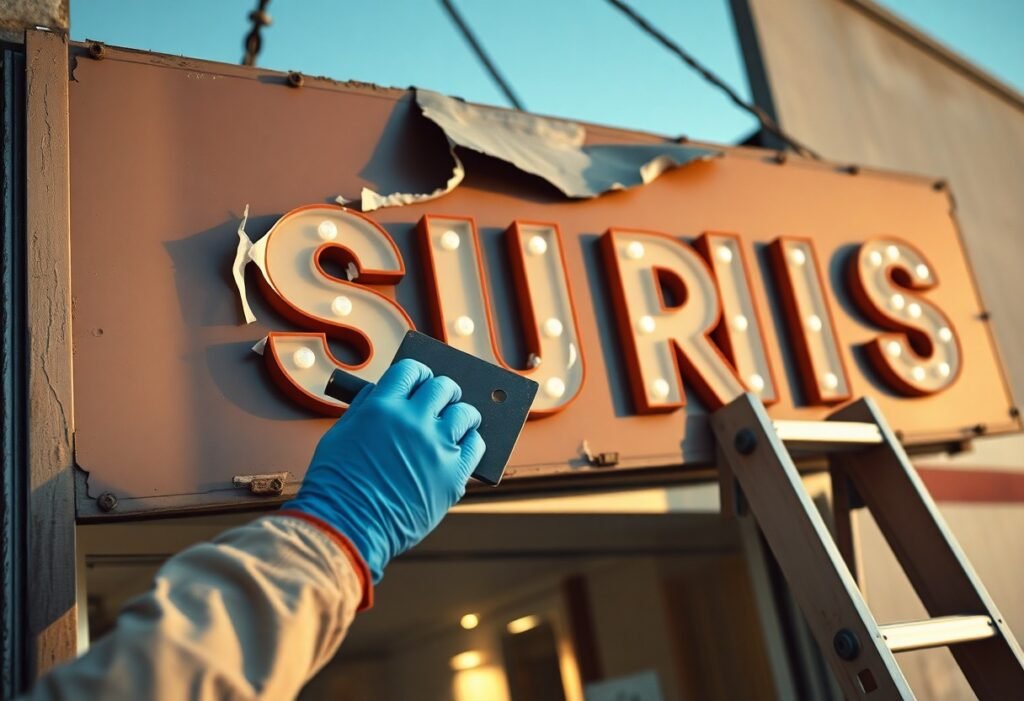
With a systematic approach, you can restore faded or peeling storefront signs by assessing substrate and fasteners, cleaning and removing loose paint or vinyl, repairing damage or replacing panels, priming and applying UV-resistant paint or replacement graphics, and sealing and reattaching hardware; follow safety procedures and scheduled maintenance to prolong results.
Key Takeaways:
- Assess and clean the sign: remove dirt, loose paint or vinyl, and inspect substrate for rot, rust, or water damage.
- Repair the substrate and edges: sand, fill holes or rot, replace panels or trim, and ensure a stable surface before refinishing.
- Use appropriate materials: apply primer and exterior-grade, UV-resistant paint or replace with weather-rated vinyl graphics and adhesives.
- Recreate or replace graphics: repaint lettering with stencils or order new vinyl/printed panels; finish with a UV-protective clear coat or laminate.
- Maintain and protect: perform regular cleaning, touch up chips promptly, and apply protective coatings to extend life and prevent peeling.
Assessing the Damage
Begin by mapping visible issues across the sign: note blistering, flaking edges, chalky color loss, and soft or discolored substrate areas. Photograph each panel and estimate affected area – if peeling or delamination exceeds about 20% of a face or if multiple seams fail, plan for replacement rather than touch-up. You should also log exposure factors (south-facing, direct UV, salt air) since signs in these conditions typically fail 2-3× faster than sheltered installations.
Identifying Fading vs. Peeling
Fading shows as uniform color loss or chalking without substrate detachment; you can confirm with a Pantone swatch or a ΔE color check (ΔE>3 is usually noticeable). Peeling presents as lifted film, flaked paint, or jagged edges and often exposes raw substrate or adhesive residue. Vinyl films commonly lift at seams after 5-7 years, whereas painted aluminum may flake after UV-induced chalking combined with poor adhesion.
Evaluating Material Condition
Probe substrates: use a screwdriver to test wood firmness, a moisture meter for panels (wood above ~18% indicates active moisture), and inspect metals for pitting or corrosion deeper than 1 mm. Acrylic faces often craze (fine cracks) under UV; foam substrates can delaminate when wet. If soft spots, rust perforation, or delamination affect structural integrity over more than 10% of the sign, plan for panel repair or replacement.
For a more technical evaluation, perform simple field tests: a 1-inch peel test on vinyl corners reveals adhesion loss if the film lifts easily; a hammer tap helps detect hollow delamination; and adhesive residue that won’t abrade away suggests chemical breakdown rather than surface contamination. Measure and record moisture, percent affected area, and adhesion test results, then share these data and photos with your sign fabricator-this lets them recommend targeted repairs (spot repainting, re-lamination, substrate patching) or full panel replacement based on quantifiable thresholds rather than guesswork.
Preparing for Repair
Before you start scraping or repainting, create a concise work plan: map repair zones, log substrate moisture (wood should read under 12% with a meter), order primers and UV-stable topcoats, and check weather forecasts-avoid painting if humidity exceeds 85% or rain is expected within 24 hours. Also verify local permits for sidewalk closures or elevated work and schedule 24-48 hours of curing time for primers and topcoats to achieve proper adhesion.
Required Tools and Materials
Gather: wire brushes, 80-120 grit sandpaper, an orbital sander, paint scrapers, heat gun, solvent-based epoxy primer and UV-resistant acrylic or polyurethane topcoat, marine-grade sealant, stainless fasteners (#8-#10), rivets, 3M primer for vinyl, painter’s tape, drop cloths, mineral spirits, rust converter, and a HEPA-rated vacuum. Include PPE: half-mask respirator with organic-vapor cartridges and P100 particulate filters, nitrile gloves, and safety glasses.
Safety Precautions
Use appropriate PPE and safe access methods: wear a NIOSH-approved half-mask with organic-vapor cartridges plus P100 filters for sanding and solvent work, cut-resistant gloves, eye protection, and a hard hat for elevated tasks. Follow ladder safety-set at a 4:1 angle, maintain three-point contact, and never stand on the top two rungs. For scaffolding, ensure guardrails and a load rating at least four times the expected weight, and always lock out sign electrical circuits before working.
For older signs (installed before 1978) test for lead with an EPA-recognized kit or hire a certified abatement contractor; if positive, contain the area, use HEPA vacuums (0.3 µm filtration) for cleanup, and follow local hazardous-waste disposal rules for contaminated debris and solvent wastes. Ensure adequate ventilation-mechanical exhaust or 3-5 air changes per hour where possible-and replace respirator cartridges per manufacturer guidance or immediately upon odor breakthrough.
Repairing Faded Signs
You should assess substrate condition first-paint loss, oxidation, or delamination-to decide between spot repairs and full recoat; for example, small faded panels often respond to color-matched acrylic enamel and a UV clear that usually restores appearance for 3-5 years, while signs with peeling or chalking need primer and full-strip treatment before repainting to prevent failure within a season.
Cleaning the Surface
Begin by removing dirt, mildew and silicone with a detergent or TSP solution, rinse thoroughly, and use isopropyl alcohol to wipe away waxy residues; for rigid substrates a pressure washer at 1,200-2,000 psi can strip grime, then abrade loose paint with 120-220 grit and finish with 320-400 grit before allowing at least 24 hours to dry in temperatures above 50°F (10°C).
Applying Paint or Finishing Products
Choose primers and coatings for the substrate: apply a self‑etching primer on aluminum, an adhesion promoter on PVC, then exterior acrylic enamel or 2K polyurethane for topcoats; apply two thin coats rather than one heavy coat, follow manufacturer recoat windows (typically 2-24 hours), and cure in stable conditions above 50°F for optimal adhesion and UV resistance.
If you spray, use a 1.2-1.4 mm tip for acrylics or follow sprayer guidelines, maintaining 4-8 mil wet film per coat and overlapping 50% for uniform coverage; if brushing, use high‑quality nylon/polyester brushes and thin coats to avoid drips. A typical field test: a café sign prepped with self‑etch primer + two acrylic enamel coats + UV clear held color for 4-6 years versus 1-2 years when uncoated. Allow full cure (often 7 days) before exposing to heavy traffic or vinyl application.
Repairing Peeling Signs
When vinyl starts to lift, triage by area size and substrate condition: repairs are cost-effective for lifts under 20-30% of the face, while larger failures often mean replacement. You should clean with 70% isopropyl, dry fully, and test adhesion with a small patch before committing. For techniques and step-by-step workflows, consult Business Signage Restoration Tips: Effective Techniques ….
Stripping Old Material
Soften old adhesive with a citrus-based remover or 70% isopropyl alcohol and warm the area with a low-heat gun to reduce tearing; always test a corner. Use a plastic scraper and coarse nylon pad to lift layers, then finish with 120-220 grit sanding for paint or composite skins. Wear nitrile gloves, eye protection, and dispose of solvent residues per local rules.
Reattaching or Replacing Vinyl
For small lifts under about 3 inches, abrade lightly, apply a compatible primer (for example, 3M™ Primer 94 for many films), then a high-bond pressure-sensitive adhesive and roll firmly with a J‑roller in overlapping 2-3 passes to expel air. Heat gently while seating to improve conformity around contours.
If you opt for full replacement, measure twice and use a quality cast vinyl (expected lifespan 5-10 years outdoors). Allow adhesives to cure 24-48 hours in 40-70% humidity, trim edges precisely, and seal perimeters with a clear weather sealant to prevent water ingress; properly installed replacements typically outperform spot repairs in longevity and appearance.
Preventative Measures
You should schedule inspections every 3-6 months and keep a maintenance log. Clean signs monthly with a pH-neutral detergent (1-2 oz/gal) and a soft brush, avoiding solvents that strip coatings; apply a UV-resistant clearcoat (2K acrylic urethane) or overlaminate printed vinyl with a cast laminate, and replace panels showing delamination or chalking rather than repeatedly patching them.
Proper Maintenance Practices
You should limit pressure-washing to under 1,200 psi at 18-24 inches and rinse with clean water, then squeegee to prevent streaks. Also inspect fasteners, gaskets, backlighting and edge seals every 3 months, sealing gaps with silicone where needed. Keep a photo log and record repairs; touch up chips with automotive-grade enamel to maintain color match and extend warranty compliance.
UV Protection Solutions
You can use overlaminates (cast vinyl), 2K acrylic urethane clearcoats, or architectural window films that block up to 99% of UVA/UVB to slow fading. Pair UV-stable inks and chrome-free stabilizers for printed faces, and expect life-extension in high-sun markets from roughly 1-3 years to about 4-8 years depending on exposure and application quality.
When you choose protection, note that cast overlaminates conform to curves and resist solvents better than calendared films; apply films and coatings between 50-70°F for optimal adhesion, squeegee from center outward, and allow 24-72 hours for solvent-based clearcoats to cure before full exposure. Professional installation reduces edge lift, preserves warranty coverage, and typically halves repaint or replacement frequency versus DIY treatments.
Professional Help vs. DIY
Deciding whether to DIY or hire a professional hinges on scale, risk, and expected longevity: you can patch and repaint small wooden or aluminum signs yourself for roughly $50-$300 in materials, but professional recoats or vinyl replacements commonly range $300-$2,500 depending on size and illumination; include lift rental ($100-$400/day) and permits when estimating, and note pros often apply UV-rated coatings that can extend sign life by 3-7 years, offsetting higher upfront costs.
When to Call a Professional
Call a pro when structural damage, electrical components, or heights above 12 feet are involved, since certified technicians, boom lifts, and electrical permits are typically required; if over 25% of the substrate is rotten or rusted, or vinyl seams exceed about 20 linear feet, you’ll save time and liability by hiring a shop-typical pro turnaround for moderate repairs is 1-3 days, with emergency electrical jobs adding 1-2 days and mobilization fees.
Cost Considerations
Labor rates vary: you should expect $50-$100/hour for sign technicians and shop minimums often start at $200; materials include UV vinyl at $6-$25/ft², exterior paint $30-$80/gal, and LED modules $5-$20 each, while permit and disposal fees can add $50-$400 depending on municipality-always budget scaffolding or lift costs of $100-$400/day into your estimate.
For example, a 10×2 ft painted wooden panel costs you about $120 for primer, two coats of exterior paint, and fasteners versus $400-$700 from a pro who will strip, treat rot, prime with an acrylic exterior system, and warranty the finish; illuminated channel letters may require $200-$600 in parts plus $300-$1,200 in labor, and choosing higher-grade UV-stable materials can extend repaint intervals from every 3 years to 5-7 years, reducing lifecycle cost.
Final Words
Upon reflecting on repairing faded or peeling storefront signs, you should assess the damage, thoroughly clean and strip loose material, sand and prime exposed areas, then repaint or replace panels with weather-resistant materials; finish with a UV-protective clear coat and schedule regular inspections and touch-ups, or hire a sign specialist for complex electrical or structural issues to protect your investment and meet local codes.
FAQ
Q: How do I assess whether a faded or peeling storefront sign can be repaired or needs replacement?
A: Begin with a thorough inspection: note the material (metal, wood, acrylic, PVC, vinyl), extent of fading or peeling, structural damage (rust, rot, delamination), and age of the sign. Test adhesion in a small area by gently lifting edges; if large sections delaminate or the substrate is compromised (soft wood, deep rust, cracked plastic), replacement is usually the better long-term option. Check for water ingress, bent frames, or electrical issues for illuminated signs. Take photos, measure the sign, and record colors and finishes to decide whether a targeted repair, resurfacing, or full replacement is most cost-effective.
Q: What are the step-by-step repairs for peeling or flaking paint on metal or wood signs?
A: Clean the surface with a mild detergent and water, then allow to dry; remove loose paint with a scraper or wire brush and sand feathered edges smooth (use 80-120 grit for heavy removal, finish with 150-220 grit). Treat rusted metal with a rust converter or remove to bare metal; for wood, replace any soft or rotted sections and sand to a stable surface. Wipe the surface with solvent (isopropyl alcohol or mineral spirits) to remove dust and oils. Prime with an appropriate exterior primer (etching/self-etching for bare metal, exterior wood primer for wood, adhesion promoter for plastics). Topcoat with an exterior-grade paint compatible with the primer (acrylic latex or oil-modified enamel for wood/metal; two coats typically). Match colors using a sample or color code, and allow recommended cure time before reinstalling or sealing.
Q: How do I repair peeling or bubbled vinyl graphics and lettering?
A: Clean the vinyl and surrounding substrate with a mild detergent and allow to dry. For lifted edges, apply a low-tack repositioning adhesive or specialized sign vinyl adhesive and press the vinyl back down with a roller or squeegee from the center outward to expel air. Use a heat gun or professional-grade heat press on low settings to re-activate the vinyl adhesive for better bonding; avoid overheating to prevent shrinking. For torn vinyl, trim ragged edges and patch from the backside with compatible adhesive tape, or replace the affected panel of vinyl using a matching cut. If vinyl has extensive fading, cracking, or adhesive failure across large areas, remove and replace the whole graphic; use a proper release solvent to remove old adhesive residues first and prime the substrate if needed.
Q: What materials, tools, and safety gear do I need for sign repairs?
A: Common tools: scrapers, wire brushes, sandpaper, orbital sander, heat gun, squeegee/roller, brushes or spray equipment, caulking gun, measuring tools, and rivet or screw drivers. Materials: exterior primer, exterior paint (acrylic/enamel), rust converter, sign-grade adhesives, vinyl repair kits, seam sealer, replacement vinyl or panels, and clear protective coatings (UV-resistant polyurethane or acrylic lacquer). Safety gear: gloves, eye protection, N95 or respirator for solvents/paint spray, dust mask for sanding, and fall protection when working at height (harness, stable ladder or lift). For electrical signs, disconnect power and, if unsure, hire a licensed electrician. Test products on a small inconspicuous area before full application.
Q: How can I extend the life of repaired storefront signs and prevent future fading or peeling?
A: After repairs, apply a UV-resistant clear coat or sign-grade topcoat to protect paint and graphics from sun and weather. Use high-quality exterior materials (UV-stable vinyl, exterior-grade paints, and marine-grade primers) during repair or replacement. Seal edges and seams with appropriate caulk or seam sealers to prevent moisture ingress. Schedule regular maintenance inspections (every 6-12 months) to clean surfaces, check fasteners, and address small issues early. For illuminated signs, maintain seals around fixtures and replace failing LEDs or ballasts promptly. If the sign is exposed to extreme sunlight, consider adding an awning or shade or selecting fade-resistant color palettes and materials designed for harsh environments.