
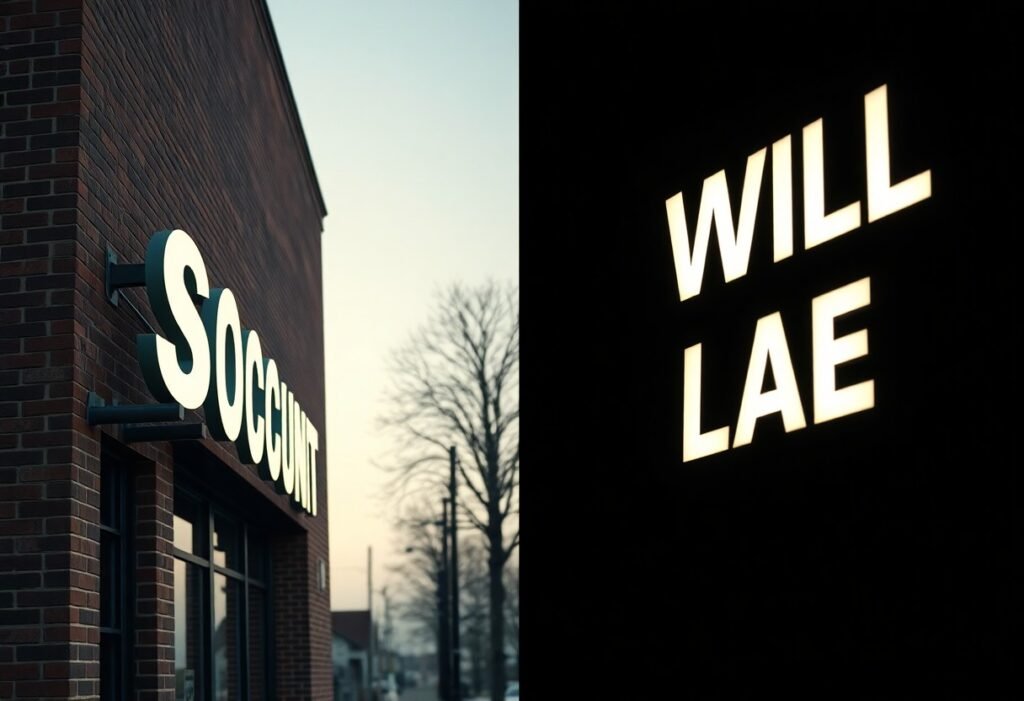
It’s best to choose mounting by considering visibility, building surface, and budget: you use remote mount channel letters when you want halo lighting, greater depth, and enhanced night visibility set away from the wall, while you choose flush mount when you need a low-profile, cost-effective installation that hugs the building facade and simplifies wiring and maintenance.
Key Takeaways:
- Choose remote mount when you want a floating or halo-lit effect, increased depth for visibility at distance, or separation from the wall to achieve stronger backlighting.
- Prefer flush mount for a low-profile appearance, closer viewing distances, simpler installs, and lower material and labor costs.
- Use remote mount to handle uneven, fragile, or inconsistent substrates and to route wiring through a raceway or backer for easier maintenance and ventilation.
- Select flush mount when permits, weight limits, or façade constraints restrict protruding elements and when a tight fit to the building surface is required.
- Base the decision on viewing distance, desired lighting effect, façade type, and maintenance access: remote for drama and long-range legibility; flush for economy and close-range clarity.
Understanding Channel Letters
Definition of Channel Letters
Channel letters are three-dimensional, individually fabricated building signs made from aluminum and acrylic that you mount to exterior façades; depths commonly range from 3″ to 8″ and sizes span from 6″ to over 6 feet for storefront branding. You’ll see LED or neon illumination options-LEDs cut energy use by roughly 60-70% versus neon-while face, return, and backing components control light direction and durability.
Types of Channel Letters
Front-lit (face-lit) letters use translucent faces for direct illumination and work well for high-visibility storefronts, while back-lit (halo) letters use opaque faces with illuminated returns to create a glow; reverse/flush mounts sit close to the wall for a refined look. Combination letters mix front and halo lighting for contrast. Typical installation depths: front-lit 4-6″, halo 3-5″.
- Front-lit: maximum night visibility for retail corridors
- Halo/back-lit: upscale, architectural settings
- Reverse-flush: minimal projection for tight clearances
- Perceiving halo effects often improve perceived value in premium locations
| Front-lit | Translucent face, 4-6″ depth, bright forward illumination |
| Back-lit (Halo) | Opaque face, 3-5″ depth, glow around letter edges |
| Reverse/Flush | Mounted close to wall, subtle shadowing, low projection |
| Combination | Face-lit plus halo accents, higher fabrication cost |
| Open-face | No acrylic face, exposed LEDs, bold industrial look |
When deciding on a type you should weigh visibility, mounting surface, and brand tone: for example, a busy highway store favours front-lit with high-intensity LEDs (700-1,200 cd/m²), while a boutique downtown may choose halo letters for an ambient effect; installation access, power runs, and local sign code setbacks typically sway the final choice.
- Consider LED lifetime: commonly 50,000+ hours
- Account for maintenance access and module replacement
- Factor local ordinances on illumination levels and setbacks
- Perceiving channel style in context helps align sign type with customer expectations
| Remote Mount (Halo from distance) | Provides deep halo on thick façade, needs 4-8″ standoffs |
| Flush Mount | Sits tight to wall, ideal for thin veneers and strict clearance |
| Remote with Face | Combines projection and face illumination for layered visibility |
| Direct-View Open-face | Exposes LEDs for industrial brands, easier cooling |
| Combination Mount | Mixes remote and flush elements to balance depth and elegance |
Remote Mount Channel Letters
You get letters that appear to float off the wall by mounting returns on standoffs or a raceway, producing halo or downlit effects and deeper profiles for long-range legibility. Typical channel depths run 4-12 inches, with standoffs commonly 1-4 inches to create an even corona; use the 1″ per 10′ viewing-distance rule to size height-e.g., 5″ tall letters for ~50′ visibility. Remote mounts also let you place drivers in a 6-8″ raceway or behind the wall for cleaner facades.
Advantages of Remote Mounting
You gain stronger night contrast and three-dimensional presence-halo lighting provides a uniform backlight that boosts recognition from 50-200 feet, depending on letter size. Additionally, raceway-mounted systems centralize drivers and make servicing simpler: a 6-8″ raceway can house multiple LED drivers accessible from grade, reducing rooftop or ceiling access. Remote mounts also mask uneven substrates like EIFS better than flush installs.
Installation Considerations
You must coordinate structural backing, electrical access, and local sign permits before ordering letters. For masonry or CMU walls plan anchors or a welded aluminum backing plate; for stud walls you’ll need plywood or blocking behind the finish. NEC rules require accessible power supplies-raceways are common to satisfy that-and many municipalities mandate permit drawings showing wiring, conduit runs, and illumination levels in foot-candles.
During installation, locate and mark all studs or masonry anchors, then pre-fit a welded or bolted raceway/backing that distributes load; large 24″+ letters often exceed 20-40 lb each and need continuous support. Run conduit or low-voltage cable to each standoff or into the raceway, bench-test LEDs and verify lumen output and color temperature (typically 3000K-5000K) before final sealing, and photograph as-built wiring for permitting inspections.
Flush Mount Channel Letters
Flush mounting places the letter faces directly against the building, creating a low-profile look that works well on narrow storefronts and under awnings; you get a tidy appearance with returns that sit flush and wiring concealed through the wall or a small chase. If you need guidance on mounting options and wiring access, see Raceway vs Wireway: Which Sign Mounting Is Best?
Benefits of Flush Mounting
You save on material and install time because you avoid standoffs or a full raceway, and the sleeker silhouette fits districts with strict sign zoning; maintenance is often simpler since faces and LEDs are accessible from the front, and the compact depth-commonly 2-6 inches-reduces wind load and structural requirements.
Situations for Flush Mount Use
You should choose flush mount when the building facade limits projection, when viewing distances are short (street-level retail, cafes, service shops), or when a clean, integrated storefront aesthetic matters most; it’s ideal for tenant panels in shopping centers and historic exteriors that prohibit protruding signage.
For more detail, flush mount works best where local codes restrict vertical extension or projection-many municipalities limit sign depth to under 6 inches or require non-projecting installs in pedestrian zones. You’ll often core-drill for power or use a small wireway, and if visibility beyond 100 feet is unnecessary, flush mounting delivers lower cost, less visual clutter, and faster permitting.
Comparing Remote vs. Flush Mount
| Remote Mount | Flush Mount |
|---|---|
| You get a floating halo or pin-mounted look, typical standoffs 1-4″, stronger night visibility and legibility beyond ~75-100 ft, needs substrate anchors and extra wiring. | You get a tight-to-façade profile, letter depths commonly 3-6″, ideal for pedestrian/close-range viewing under ~50 ft, easier cleaning and simpler mounting with lower installation time. |
Aesthetic Considerations
You’ll choose remote mount when you want depth, halo backlighting and a floating silhouette-halo glow typically extends 1-3″ around letters-while flush mount preserves a clean, logo-faithful appearance against the building; for example, retail fronts on boulevards often use remote for nighttime pull, whereas boutique storefronts use flush to match masonry and maintain historical façades.
Cost and Long-Term Maintenance
You should expect remote mount to run about 10-30% higher upfront due to standoffs, mounts and extra labor, while LED modules last roughly 50,000 hours (about 5-10 years) so both styles share similar energy costs; remote mounts can require more periodic sealant and hardware checks because of increased exposure.
More detail: fabrication costs break down into faces, returns, LEDs, transformers and mounting hardware-small 3-6 letter flush installs often range $800-1,800, while comparable remote mounts commonly add $400-1,000; plan for LED module replacement or driver service every 5-10 years, routine sealant/paint touch-ups every 3-5 years, and potential higher crane/rigging fees for difficult façades.
Regulatory and Zoning Considerations
You’ll need to map local zoning codes before choosing mount type: many municipalities limit sign area to 20-30% of a storefront façade, restrict projection over sidewalks (commonly 4 ft max), and impose height caps or setback rules in mixed-use zones. Historic districts often require design review and painted mockups. Also factor FAA or state DOT reviews when letters sit above 100 ft or near flight paths, which can add weeks to your timeline and specific mounting constraints.
Local Signage Regulations
You must check municipal sign codes for illumination hours, materials, and size limits; a common rule caps sign area at 20-30% of primary frontage and limits projection to about 4 ft without special approval. In historic districts or downtown overlays, design review boards may mandate non-illuminated or halo-only lighting and approve only certain colors or finishes, so plan designs with those aesthetic constraints to avoid costly redesigns.
Permitting Process for Different Mounts
You’ll face different permit paths: flush-mounted letters often need a standard sign permit and electrical inspection (typical review 2-4 weeks), while remote mounts frequently require structural drawings, anchor details, and engineering stamps, extending review to 4-12 weeks. Municipalities may also require photometric studies for illuminated remote mounts and easement agreements if letters project beyond property lines.
For remote mounts expect to submit stamped structural calculations (wind loads per ASCE 7), elevation drawings showing standoff distances, and conduit routing; some cities (e.g., Chicago, Los Angeles) demand sealed engineer approvals and proof of licensed installer, and fees can range from $50 to $1,000+ depending on permit type-budget both time and documentation to avoid delays.
Case Studies
You’ll find clear trade-offs in these real-world projects: remote mount solved visibility and service access on elevated and highway sites, while flush mount preserved facades in historic districts. The examples below give sizes, costs, timelines and measured outcomes so you can map similar results to your site.
- 1) Mall rooftop remote mount – 12 channel letters, 48″ height, remote driver in mechanical room, 3 electricians, installation $8,500, permit 7 days, energy ~1.1 kW, measured ROI 18 months from increased night foot traffic.
- 2) Downtown historic flush mount – 8 letters, 24″ tall, recessed LEDs, scaffold install 10 days, cost $6,200, city approval 6 weeks, pedestrian counts rose 12% in Q1 after install.
- 3) Highway-facing remote mount – 3 letters, 72″ tall, rooftop back-mount with remote power pack, delivered 4-week lead time, install $15,000, guaranteed visibility from 800 ft at night, annual maintenance $250.
- 4) Multi-tenant flush mount facade – 24 tenant panels integrated flush, total project $22,000, modular LED modules replaced on-site in <60 minutes each, passed wind-load and fire-code tests without additional reinforcement.
- 5) Airport terminal remote mount – 10′ letters on parapet, remote drivers in mechanical room with redundant feeds, project completed in 6 weeks, energy draw 1.2 kW, uptime 99.8% due to redundant power and monitoring.
Successful Remote Mount Installations
When you face rooftop, parapet, or tall-pylon sites, remote mount often wins: installers typically reduce on-site wiring complexity by 20-30% and avoid extensive façade penetrations. In practice, projects with 8-15 letters report installation times of 3-6 days and energy use ranging 0.8-1.5 kW depending on LED density, while remote drivers improve service access and longevity.
Successful Flush Mount Installations
You’ll choose flush mount when façade continuity and streetscape rules matter most; installations of 6-12 letters on historic fronts commonly take 7-14 days with costs from $4,000-$12,000. Permitting often requires mock-ups, and finished profiles under 4″ maintain preservation approvals while delivering uniform daytime branding.
More detail: in flush mount cases you should expect higher design coordination – measured projects required 2-3 design revisions and one mock-up run. Material choices (aluminum returns, polycarbonate faces) and low-profile LED modules reduced wind load and simplified sign-off; routine servicing typically involves front-access module swaps taking 20-40 minutes per letter.
Summing up
As a reminder, you should choose remote mount channel letters when you want pronounced depth, halo or edge lighting, greater visibility at distance, or when mounting on uneven or masonry surfaces where surface wiring won’t work; they’re also better for larger letters and hiding power supplies. Opt for flush mount when you need a low-profile, cost-effective solution for smooth façades or interior signs, or when local codes limit protrusion. Match the method to your building, sightlines, and maintenance access.
FAQ
Q: When is a remote mount channel letter the better choice compared to a flush mount?
A: Remote mount channel letters are better when you need a halo or floating effect, must clear an uneven or fragile façade, require additional ventilation or service access, or want to preserve a historic surface without penetrating it extensively. They also work well when letters need to be visible from multiple viewing angles or distances because the gap behind the letter creates contrast and a stronger three‑dimensional appearance.
Q: How do the visual and lighting outcomes differ between remote mount and flush mount installations?
A: Remote mount creates backlighting (halo) and shadowing that emphasizes depth and reads well at night, while flush mount places the letter face tight to the wall for a cleaner, more integrated daytime look and stronger front illumination. Remote mount is ideal for subtle, sophisticated nighttime presence; flush mount gives brighter, more direct illumination for daytime legibility and close-range viewing.
Q: What installation and structural considerations favor remote mount channel letters?
A: Remote mount requires standoffs, spacers, or a raceway and often additional anchors to handle cantilever and wind loads; use it when the substrate is uneven, tiled, or cannot support distributed fasteners. Remote mounting simplifies running wiring and mounting transformers in a raceway, and it allows easier removal for maintenance without damaging the façade. Ensure structural backing, proper sealants, and wind load calculations are included in the spec.
Q: How do cost and maintenance compare between remote mount and flush mount channel letters?
A: Remote mount installations typically cost more for hardware and labor because of standoffs, spacers, or raceway work, and may require more precise alignment. Long‑term maintenance can be easier with a raceway-mounted remote system because wiring and drivers are accessible without removing each letter; flush mount can be cheaper initially but harder to service if each letter must be detached for repairs.
Q: Are there code, permitting, or design limits that push you toward remote mount instead of flush mount?
A: Yes. Historical or protected facades may restrict drilling or through‑mounting, making remote mount with minimal contact preferable. Local sign codes can limit projection from property lines or require certain clearances; remote mount can meet those by controlling setback and profile. Electrical code and UL listing requirements must be followed for raceway installations and transformer placement-coordinate with the permitting authority and an electrician early in design.