
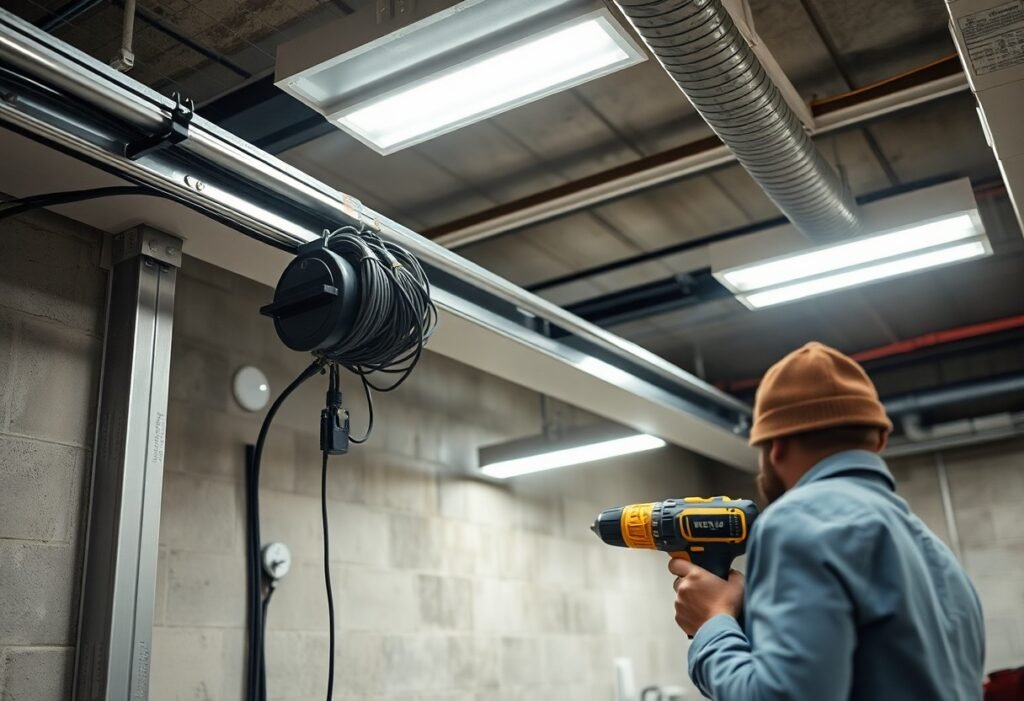
Installation of raceways is the process of fitting channels, conduits, or cable trays to route, secure and protect electrical and data cables; you rely on them when your project requires organized wiring, mechanical protection, code compliance, easy maintenance, or scalable expansion in commercial, industrial, healthcare, or institutional environments.
Key Takeaways:
- Raceway installation is the use of enclosed channels (conduit, cable trays, surface raceways, wireways) to route and protect electrical and data cabling.
- It is used when cables need physical protection, organization, separation of circuits, or compliance with building and electrical codes.
- Raceways make maintenance and future upgrades easier by providing accessible, organized pathways for adding or replacing cables.
- Common types and materials include EMT, PVC, rigid conduit, cable trays, and surface raceways-selected based on capacity, environment, and code requirements.
- Key considerations are fill capacity, heat dissipation, grounding, firestopping, and adherence to local electrical codes and inspection requirements.
What is Raceway Installation?
You route and protect electrical and communication conductors by installing raceway systems-conduit, cable trays, surface raceways, and wireways-so wiring remains accessible, organized, and code-compliant. In commercial builds you’ll often specify 1/2″-4″ EMT or rigid conduit for feeders, while data centers use ladder trays rated for hundreds of pounds per linear foot; installations follow NEC requirements (e.g., support spacing, fill caps) to ensure safety and maintainability.
Definition of Raceway
You can think of a raceway as any engineered, enclosed or partially enclosed channel designed to hold and protect electrical cables and wiring devices. It provides physical protection, fire separation, and routing control, and lets you segregate power, control, and low-voltage systems per NEC separation rules and facility design requirements.
Components of Raceway Systems
You assemble raceway systems from conduit (EMT, RMC, PVC), cable trays (ladder, solid-bottom), junction boxes, fittings, covers, hangers, and splice bodies; accessories include bushings, grommets, expansion joints, and grounding conductors. Each component affects installation time, capacity, and compliance with conductor fill and grounding rules from NEC Chapter 9.
Materials and dimensions matter: galvanized steel and aluminum offer EMI shielding and durability, while PVC gives corrosion resistance in wet locations. You’ll choose conduit sizes (1/2″ for branch circuits, up to 4″ for feeders), tray types (ladder for airflow, solid for dust control), and support spacing (EMT commonly at 10 ft, heavy trays every 4-6 ft) based on load, environment, and maintenance access.
Types of Raceway Systems
You’ll encounter five common raceway families that solve different routing challenges: conduit (EMT/IMC/RMC), cable trays (ladder/ventilated/solid), surface raceways for finished spaces, wireways for control runs, and troughs for grouped feeders. Each option varies by mechanical protection, installation speed, and code constraints; for example EMT is fast and economical indoors while RMC suits heavy industrial exposures. The table below gives a compact comparison to guide selection.
| Conduit | Metallic (EMT/IMC/RMC) and PVC options that enclose individual conductors; common sizes 1/2″-4″ for building systems; good for protected, concealed runs and burial (PVC). |
| Cable Trays | Ladder, ventilated, or solid trays that support large bundles and allow easy access; governed by NEC Article 392 and sized by load (lb/ft) and tray width. |
| Surface Raceways | Shallow plastic or metal channels mounted on finished surfaces for low-voltage and light-duty power retrofits without cutting walls. |
| Wireways | Enclosed rectangular channels for control and instrumentation wiring with hinged covers for frequent access and terminations. |
| Troughs | Open or covered troughs used in industrial plants for grouped feeders or bus protection; high-capacity and often paired with bus ducts. |
- Specify conduit when you need mechanical protection, defined bend geometry, and compliance with conductor fill rules.
- Choose cable trays for long horizontal runs with many conductors or when future cable changes are expected.
- Use surface raceways to preserve finishes in tenant spaces or for quick low-voltage distribution without demolition.
- Recognizing that local code, maintenance access, and future flexibility often determine the best system, always verify NEC sections and municipal amendments before finalizing a spec.
Conduit Raceways
You pick conduit when mechanical protection, predictable bending, and secure grounding matter; EMT (thin-wall), IMC (intermediate), and RMC (rigid) cover most commercial and industrial uses with sizes commonly from 1/2″ to 4″ for branch and feeder routing. PVC conduit serves corrosive or buried applications, and conduit layouts must account for pullbox spacing, conduit fill, and trade-access during installation to keep pulls under acceptable tension.
Cable Trays
You rely on cable trays when you must carry high-count bundles, mix data and power with easy access, or allow frequent reconfiguration; ladder trays reduce heat buildup, ventilated trays shed debris, and solid-bottom trays protect against contaminants. Typical support spacing falls in the 4-6 ft range depending on load, and sizing is driven by tray load rating and future expansion plans.
In practical projects you often size trays by expected cable counts and conductor diameters-data centers commonly specify 12″-18″ ladder trays for aggregate low-voltage runs, while industrial plants may use 24″-36″ trays for power feeders. You should plan for grounding and bonding of trays, maintain separation per manufacturer guidance and local code, and include covers or firestopping where trays penetrate rated floors; factoring vertical transitions and spare capacity prevents disruptive rework later.
Benefits of Raceway Installation
You get tangible operational and compliance advantages: raceways align with NFPA 70 (NEC) wiring rules, protect conductors from mechanical and environmental damage, simplify future changes, and often reduce maintenance time and outages – industry reports commonly cite 20-40% lower cable-related downtime after systematic raceway retrofits in commercial and industrial sites.
Enhanced Safety
You reduce fire and shock hazards by enclosing conductors in conduit or rated wireways; metal conduit also provides a continuous grounding path and limits arc-flash propagation. In healthcare and manufacturing, meeting NEC routing and enclosure requirements prevents accidental contact, controls EMI, and minimizes abrasion and chemical exposure that otherwise lead to failures.
Improved Aesthetics
You create cleaner interiors by routing cabling into hidden or color-matched surface raceways, enabling flush-mounted outlets and tidy cable drops. Architects and facility managers use modular trunking and recessed channels to eliminate cable spaghetti, improve sightlines, and maintain brand-consistent finishes in offices, retail, and hospitality spaces.
For more detail, you can specify finishes (powder-coated steel, PVC in RAL colors), select low-profile 15-25 mm shallow channels for open-plan offices, or use larger multi-compartment trays for AV and data hubs; prefabricated raceway kits often cut installation time by up to 30% while preserving access for adds, moves, and changes without invasive wall work.
Applications of Raceway Installation
Across building types you rely on raceways to protect wiring in exposed or retrofit runs; the NEC (NFPA 70) often requires conduit or cable trays for exposed conductors and metallic raceways commonly carry circuits up to 600 V. In data centers and hospitals they manage high-density power and structured cabling while reducing firestop and access issues. For a practical installation walkthrough see How to Install a Metal Raceway.
Commercial Buildings
In offices, retail and multi-tenant buildings you use surface raceways to speed tenant improvements and avoid demolition; a 10‑floor office block can require dozens of separate raceway runs for power and data. You’ll separate low-voltage and power paths to limit interference, follow NEC fill and firestop rules at penetrations, and plan for future capacity during tenant turnover.
Industrial Settings
In factories and plants that commonly run 480 V three‑phase distribution, you specify heavy‑gauge metallic raceways and cable trays for motor feeders, control wiring and VFDs; raceways also help with EMI control and a reliable grounding path. You must account for vibration, washdown and chemical exposure when choosing conduit types and fittings.
For harsh or classified areas you may upgrade to stainless steel or coated systems, explosion‑rated fittings and NEMA 4X enclosures; typical tray widths run 6″-36″ and conduit sizes from 1/2″-4″ affect fill calculations and routing. You’ll also map access points, splice bays and bonding locations to minimize downtime and meet inspection and maintenance cycles.
Installation Process
When you begin installation, you work through defined phases: planning, material selection, layout, physical installation, and testing. You verify NEC requirements (such as conduit fill, support spacing and bend limits), choose appropriate raceway types-EMT for exposed runs, Schedule 40 PVC for corrosive environments-and schedule work to minimize shutdowns; in a typical 1,000 ft commercial run expect several pull boxes and 2-3 installers for efficient pulls and terminations.
Planning and Design
You start by mapping cable routes, noting obstructions, and calculating conduit fill per NEC Chapter 9; for example, three 12 AWG conductors fit in 1/2″ EMT but larger feeders need 1″ or more. You also size supports-EMT typically supported within 3 ft of junction boxes and ≤10 ft spans-and plan for access (pull boxes every 360° of bends) and future capacity with spare conduits or oversized trays.
Step-by-Step Installation Guide
You mobilize materials, mark routes, and install supports and raceway before pulling conductors. You cut and deburr conduit, make bends within 360° between pull points, secure fittings, then pull conductors using appropriate lubricant and a calculated tension limit; after that you terminate, label, test continuity and insulation resistance, and document as-built changes for O&M records.
You can streamline complex runs by prefabricating conduit sections, scheduling multiple pulls during cool periods to reduce heat-related expansion, and using vendor-rated cable trays for heavy multicore feeders; on a 500 ft tray carrying four 500 kcmil feeders expect to verify tray load and install expansion joints every 50-100 ft per manufacturer guidance.
Step-by-Step Summary
| Step | Details |
| Plan & design | Route drawings, conduit fill calc, support spacing, pull box locations |
| Select raceway | EMT, RMC, PVC, cable tray choice based on environment and load |
| Layout & supports | Mark routes, mount hangers; EMT: supports ≤10 ft spans, within 3 ft of boxes |
| Cut & bend | Deburr, maintain ≤360° bends between pull points, verify bend radius |
| Install raceway | Secure fittings, seal for fire/entry points, maintain clearances |
| Pull conductors | Use lubricant, follow tension limits, use pulling eyes or mandrels |
| Terminate & test | Label, torque to spec, verify continuity and insulation resistance |
| Document | Update as-built drawings, record test results and spare capacity |
Maintenance and Inspection
You should schedule preventive work at least twice yearly and immediately after renovations or water intrusion; NEC 110.26 requires maintaining a 30 in by 36 in working space at electrical equipment, so verify access while inspecting. Perform quick visual checks for physical damage, document findings, and repair or replace compromised raceway sections within 24-48 hours to limit conductor exposure and maintain code compliance.
Routine Maintenance Practices
Keep cable trays and conduits clean of dust and debris using low-pressure air or vacuum; tighten fittings and supports-EMT typically requires supports every 10 ft and within 3 ft of terminations-and replace corroded clamps, gaskets, or sealant. You should also verify labeling legibility, check grounding continuity, and apply corrosion inhibitors in marine or chemical environments to extend service life.
Inspection Protocols
Use a layered inspection: visual for physical damage, mechanical checks for loose supports or improper bends, electrical tests like continuity and insulation-resistance (megger at 500-1000 V), and infrared thermography to spot hot spots exceeding ~10°C above ambient; perform full inspections annually or after significant load changes, and flag hazards for immediate correction.
Have inspections performed by qualified personnel (NFPA 70E-trained electricians) and maintain detailed logs: torque values, IR images, megger readings, corrective actions and dates. For large systems sample 5-10% of splices and connections monthly, expand testing if failures appear, and retain records for at least five years; schedule immediate remediation for safety risks and a 30-day window for noncritical fixes.
Conclusion
Ultimately, raceway installation is the practice of routing, protecting, and organizing electrical and data cabling within metal, plastic, or fiber enclosures, used whenever you need durable, code-compliant cable management, easier maintenance, or future expansion. You employ raceways in commercial, industrial, and institutional settings, for exposed runs, high-traffic areas, or where concealment and service access are required. Proper selection and installation minimize hazards, simplify troubleshooting, and support scalable system upgrades, so you should plan layout, capacity, and accessibility with applicable standards in mind.
FAQ
Q: What does raceway installation encompass and which components are typically used?
A: Raceway installation is the design and placement of physical pathways that protect, route and support electrical and data cabling. Common components include conduit (EMT, RMC, IMC, PVC), cable trays, surface raceways, wireways, junction and pull boxes, fittings, supports, hangers and covers. Materials and component selection depend on environment, load, fire and grounding requirements; installations often include grounding/bonding conductors, seals at penetrations, and mechanical protection for exposed runs.
Q: In which situations is raceway installation preferred over open or bundled cabling?
A: Raceway is preferred when mechanical protection, segregation of circuits, code compliance or easier future expansion are needed. Typical situations include commercial and industrial facilities, hospitals, data centers, outdoor or corrosive environments, areas with high foot traffic or exposed installations, retrofits where walls are not accessible, and where firestopping, EMI separation or secure routing is required. It also simplifies maintenance and adds capacity for future cabling changes.
Q: What codes, standards and planning rules govern raceway installation?
A: Installations must follow applicable electrical and building codes-such as the NEC in the United States-which address conduit fill, bending radii, support spacing, derating, separation of communication and power circuits, and firestopping. Additional standards include manufacturer listings, IEC/EN standards in other regions, OSHA for worker safety and local amendments. Proper planning covers conduit fill calculations, derating factors, emergency egress considerations, and coordination with structural and fire protection requirements.
Q: What are the typical steps and best practices for installing raceway systems?
A: Key steps include site survey and cable count, selecting appropriate raceway type and sizing for fill and bends, routing to minimize bends and crossings, laying out supports and anchor points, cutting and deburring, installing fittings and pull boxes where required, maintaining bend radii and fill limits, ensuring continuous grounding/bonding, sealing penetrations for fire and moisture, labeling and documenting routes, and performing pull tests and final inspections. Use proper tools, lubricant for long pulls, and provide expansion joints where thermal movement is expected.
Q: What are the cost, maintenance and lifecycle considerations for raceway installations?
A: Initial costs vary by material, access difficulty and labor; metal conduits and stainless components cost more but offer greater durability, while PVC and surface raceways lower material costs. Prefabrication and coordinated design reduce field labor. Maintenance includes periodic inspection for corrosion, loose supports, damaged covers, verifying grounding continuity, and removing obstructions in trays. Allow capacity for future cabling, keep as-built drawings and labeling current, and plan access points and spare raceway to minimize downtime during upgrades.