
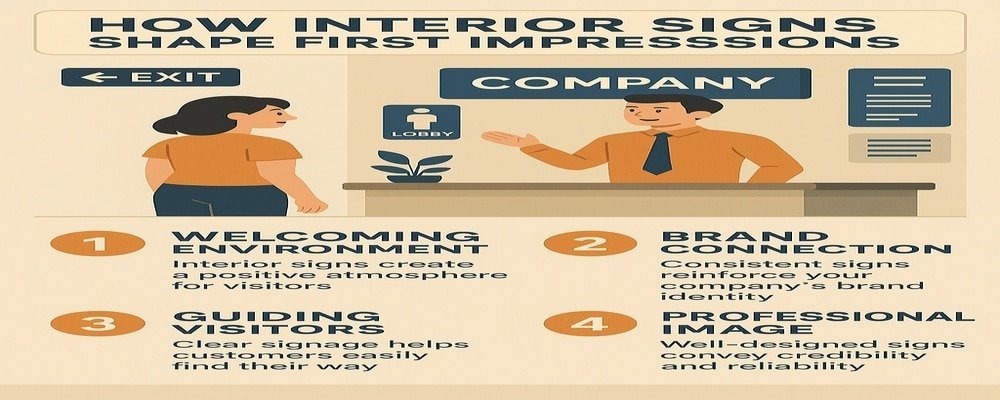
When customers step into your business, their first impression forms in less than seven seconds. Your décor, lighting, and staff all play a role—but one of the most powerful tools you have is interior signs.
Interior signs guide, inform, and impress. They set the tone for your brand and make visitors feel welcome and confident. Your interior signage plays a key role in how people remember your business. Bold lobby displays, clear signs, and inspiring wall graphics all make a difference.
Key Takeaways About Interior Signs
- Interior signs influence customer trust and brand perception the moment they walk in.
- Signs like lobby displays, wayfinding graphics, and ADA-compliant signs improve navigation and comfort.
- Design, materials, and placement directly affect how customers experience your space.
- Interior signs are an investment that improves branding, customer satisfaction, and ROI.
What Are Interior Signs?
Interior signs are installed inside buildings. They share information, help with navigation, and boost branding. Interior signs connect with customers once they’re inside, while exterior signs draw them in from outside.
Examples include lobby signs, directional signs, ADA signs, wall graphics, and digital displays. Each one serves a purpose. Lobby signs establish professionalism. Wayfinding signs reduce confusion. Wall graphics inspire and add personality. ADA signs ensure inclusivity and compliance.
Interior signs aren’t just decorative. They are useful tools that help customers feel at ease. They offer guidance and build trust in your professionalism.
Tip: When planning your interior signage, think about the customer journey—from the moment they enter to the time they leave. Your signs should guide every step.
Who Needs Interior Signs?
Every type of business benefits from interior signs. Retail stores use them to promote sales and help customers find departments. Restaurants guide guests to restrooms or pickup counters. Offices need reception signage to build credibility. Medical facilities and schools depend on wayfinding and ADA signs to reduce stress.
Small businesses gain legitimacy with well-designed lobby signs. Large corporations showcase their branding with wall graphics and polished reception signage. Gyms, spas, and salons boost customer confidence with signs. These interior signs make spaces feel organized and inviting.
Tip: Walk into your space as if you were a first-time visitor. Ask yourself: “Would I know where to go without help?” If the answer is no, you need better interior signage.
How Interior Signage Make Life Better for Businesses and Customers
Interior signage improve both the customer experience and your business operations. For customers, they eliminate uncertainty, reduce stress, and create a positive atmosphere. For businesses, they reinforce branding, showcase professionalism, and even encourage purchases.
Imagine visiting a hospital without clear wayfinding signs. Confusion creates frustration. Now imagine walking into a polished office with a sleek reception sign. Confidence rises immediately. That’s the power of interior signs.
Interior signage plays a crucial role in shaping customer first impressions. From enhancing brand visibility to creating a welcoming atmosphere, well-designed lobby signs and wall graphics serve as powerful tools for businesses to leave a lasting impact on visitors. Whether it’s a large corporation showcasing its professionalism or a gym boosting customer confidence, these signs contribute to making spaces feel organized and inviting.
Walking into a business space should be a seamless experience for customers. Proper wayfinding signs not only help them navigate through the premises with ease but also reflect positively on the business’s image. By investing in high-quality interior signage, businesses can effectively communicate their brand identity, showcase professionalism, and ultimately increase customer satisfaction.
Imagine the difference between entering a store with clear, eye-catching signs versus one with confusing or outdated signage. The former can instill trust and confidence in customers, making them more likely to engage with the business. On the other hand, poorly designed or insufficient signage can lead to frustration and a negative perception of the brand.
In conclusion, interior signs are not just decorative elements but essential components that enhance the overall customer experience and contribute to the success of businesses. By prioritizing the design and placement of interior signage, companies can effectively shape customer first impressions and differentiate themselves in a competitive market.
Tip: Pair wayfinding signs with lobby signage. One builds trust; the other reduces confusion. Together, they create a smooth experience.
Types of Interior Signage That Shape First Impressions
Interior signage come in many forms, each shaping impressions differently:
- Lobby and Reception Signs – Showcase your brand the moment visitors walk in. These signs build trust and professionalism.
- Wayfinding Signs – Help people navigate your building without stress. They are essential for malls, hospitals, schools, and large offices.
- Wall Graphics & Murals – Inspire, tell your story, and add character to spaces. Perfect for branding and customer engagement.
- ADA & Compliance Signs – Ensure accessibility for all customers, including those with disabilities. They show inclusivity and attention to detail.
- Digital Displays – Provide dynamic, real-time updates. They’re ideal for menus, promotions, or event announcements.
Tip: Start with lobby signage and wayfinding. These two categories make the most noticeable impact on first impressions.
Design Best Practices for Interior Signage
Design makes the difference between an effective sign and wasted space. Clear, attractive designs create positive impressions; cluttered or outdated signs create confusion.
Here’s what works best:
- Keep it simple. Use short text and focus on clarity.
- Choose bold fonts. Readability matters more than style.
- Use brand colors. Maintain consistency across all marketing materials.
- Add lighting. Highlight lobby signs for extra impact.
- Focus on placement. Put signs at eye level and in high-traffic areas.
Tip: Always test your design. Stand where a customer would and see if your sign is clear and readable.
Materials and Style Options for Interior Signage
The materials you choose impact cost, durability, and style:
- Acrylic – Sleek, modern, and ideal for illuminated signs.
- Metal – Durable and professional, perfect for corporate branding.
- Vinyl Graphics – Affordable and versatile, great for walls, windows, and doors.
- Wood – Warm, traditional, and inviting for rustic or creative brands.
- Digital Displays – High-tech and flexible, excellent for changing messages quickly.
Each style sends a message. A polished metal sign communicates authority. A playful wall mural shows creativity.
Tip: Align materials with your industry. A tech company should consider modern acrylic or digital signs, while a boutique may lean toward wood or artistic vinyl.
How Interior Signs Improve the Customer Experience
Interior signs reduce confusion and stress. They make customers feel comfortable, confident, and cared for. A strong lobby sign reassures them they’re in the right place. Clear wayfinding signs help them navigate large or complex spaces. Wall graphics create memorable experiences and connect customers to your brand story.
These experiences improve customer satisfaction, loyalty, and referrals. When people feel good in your space, they are more likely to return and recommend your business.
Tip: Think of interior signs as part of your customer service. They silently help customers without the need for staff intervention.
Cost of Interior Signage
Interior signage costs vary by size, material, and complexity. Basic vinyl graphics may cost under $100. Custom lobby signs with lighting may run several thousand dollars. Digital displays can require higher investments but offer flexibility to update content.
Factors that impact cost:
- Materials used.
- Lighting or digital features.
- Complexity of design.
- Installation needs.
Unlike one-time advertising campaigns, interior signs provide ongoing value. They work 24/7 to improve your customer experience and reinforce branding.
Tip: Don’t think of interior signs as an expense—think of them as an investment in customer impressions and brand growth.
10 Benefits of Interior Signs
- Strengthen brand identity.
- Improve customer navigation.
- Reduce frustration and confusion.
- Showcase professionalism and credibility.
- Support ADA compliance and inclusivity.
- Enhance the look and feel of spaces.
- Encourage customer engagement.
- Differentiate you from competitors.
- Create lasting, memorable impressions.
- Build trust and confidence in your business.
Make Every First Impression Count with Interior Signage
First impressions are powerful. Customers form opinions about your business the moment they step inside. Interior signage makes those opinions positive. They show professionalism, improve navigation, and connect visitors to your brand.
Don’t let outdated or missing signage send the wrong message. Invest in custom interior signs. They build trust, improve customer experience, and boost your brand daily.
FAQs About Interior Signs
1. What types of interior signage make the biggest impact?
Lobby signs and wayfinding signs have the strongest effect. They set the tone, build trust, and reduce customer confusion immediately.
2. How much do interior signage cost for businesses?
Prices range from under $100 for simple vinyl graphics to several thousand for custom illuminated lobby signs or digital displays.
3. What materials are best for durable interior signs?
Acrylic and metal are the most durable, while vinyl is affordable and flexible. Wood provides warmth but requires upkeep.
4. Do interior signage need to follow ADA requirements?
Yes. ADA-compliant signs are required in most public spaces to ensure accessibility and avoid legal risks.
5. How do interior signs improve customer experience?
They guide visitors, reduce stress, and create a professional environment that builds comfort and loyalty.