
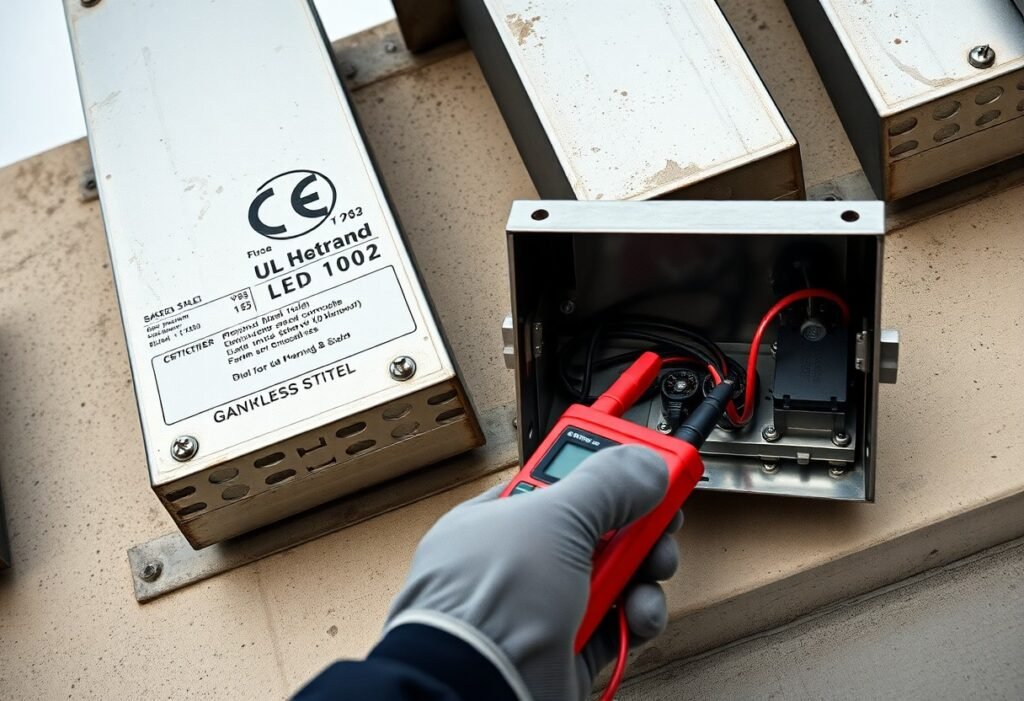
Most companies that choose UL listed channel letters give you confidence that your signage meets rigorous electrical and fire-safety testing; this reduces the chance of electrical failures, simplifies permitting and insurance approvals, and protects your customers and staff by ensuring materials and installation comply with recognized safety standards.
Key Takeaways:
- Independent UL testing confirms electrical and fire safety of materials, wiring, and LED components.
- Certified design and components reduce the risk of electrical fires, short circuits, and thermal failures.
- Consistent photometric performance ensures legibility and visibility at night or in poor weather, aiding safe wayfinding.
- Compliance with UL standards helps meet building codes, insurer requirements, and streamlines permitting and inspections.
- Proven durability and predictable maintenance lower failure rates that can create hazards or require emergency repairs.
Understanding UL Listed Channel Letters
When you evaluate signage safety, UL listing signals that your channel letters met nationally recognized tests-most often UL 48 for electric signs and UL 8750 for LED equipment. Testing covers electrical insulation, grounding, wiring integrity and fire performance, and UL follows with periodic factory audits (typically annual) to maintain the mark. This certification helps you secure permits, satisfy inspectors, and reduce the chance of electrical faults or fire-related incidents in high-traffic commercial settings.
Definition and Certification Process
UL listing means Underwriters Laboratories reviewed your product design, tested representative samples, and verified manufacturing controls; the process starts with a technical submission, moves through electrical and thermal testing, and ends with a formal report and label. After issuance, you undergo follow-up inspections-usually annually-and must keep production consistent with the tested sample, with any design changes re-evaluated to retain your listing.
Importance in Commercial Signage
You face building departments, fire marshals, and insurers that routinely require UL-listed channel letters for permitting and occupancy. Meeting UL standards streamlines approvals in malls, airports, and corporate campuses, and many national chains mandate UL-listed signs across their locations to ensure uniform safety and liability control.
Beyond permitting, UL listing affects long-term operations: your maintenance teams benefit from standardized installation and wiring diagrams, replacement modules match tested performance, and warranty disputes are easier to resolve when signs conform to UL documentation. This predictability lowers downtime and potential retrofit costs after inspections or incidents.
Safety Standards for Channel Letters
Standards such as UL 48 and NEC Article 600 set tests for electrical, temperature and mechanical integrity, so when you specify UL-listed channel letters you get verified compliance and clearer installation requirements; see UL guidance on labeling at Simplified Labeling for Multi-Housing Electric Signs.
Electrical Safety Requirements
NEC Article 600 mandates accessible disconnects and overcurrent protection, so you should use UL-listed transformers or Class 2 LED drivers, size branch-circuit wiring typically 12-14 AWG for 120V feeds and 16-18 AWG for internal LED runs, ground per NEC, and calculate amperage to set proper fusing and prevent conductor overheating during long runs.
Fire Safety Considerations
Material choice and thermal management affect fire risk: you should specify metal backs (aluminum/steel), flame-retardant face materials and UL-tested temperature-rise limits so LEDs and drivers stay below safe operating temperatures; incidents have shown blocked ventilation or failed drivers can lead to smoldering behind signs.
For added protection, you should require drivers with overtemperature shutoff, install adequate ventilation or thermal pads, mount letters to noncombustible substrates when possible, and schedule inspections every 6-12 months to check wiring, seals and temperature rise under load; document maintenance and include thermal cutoff locations on as-built drawings for authorities having jurisdiction.
Compliance with Building Codes
When you submit signage plans, UL-listed channel letters help demonstrate conformity with codes like the IBC and NEC by meeting specified electrical and mechanical tests (UL 48, NEC Article 600). Municipal plan reviewers often require evidence that lighting, wiring, and mounting systems passed temperature, insulation and load tests to address fire and structural risks. Providing UL documentation with your permit package frequently reduces review cycles and prevents costly redesigns or retrofit orders after installation.
Local Regulations and UL Listing
In many jurisdictions you must show a UL mark or equivalent listing to obtain permits for illuminated signs; officials commonly request manufacturer data sheets, the UL file number, and installation instructions. For example, sign shops that submit UL-listed product information typically avoid stop-work orders that affect business openings. If your components are non-listed, expect longer reviews, additional engineering reports, or mandated use of listed transformers, enclosures, and wiring methods.
Impact on Building Inspections
During inspections you should expect officials to verify the UL label, check wiring against NEC Article 600, confirm an accessible disconnect, and inspect mounting for rated fasteners and wind/seismic compliance. Inspectors frequently compare installed components to the listed assembly; mismatches – like aftermarket power supplies or altered housings – often trigger rejections or required replacements before final approval.
More specifically, you will commonly see failures for unlisted LED drivers, missing thermal protection, improper grounding, and non-rated conduit entries. Bringing the UL certificate, manufacturer cut sheets, and the installer’s wiring diagram to inspection usually expedites acceptance. In practice, documented UL compliance can cut re-inspection rates and speed issuance of occupancy or electrical clearances for storefront projects.
Benefits of UL Listed Channel Letters
Beyond compliance, UL listing gives you measurable advantages: verified electrical safety (UL 48), LED component certification (UL 8750), and material flammability ratings (UL 94). These documented tests reduce installation delays, simplify permit approval, and make inspections more straightforward by providing inspectors with clear evidence of tested design and components, helping you avoid costly rework or rejected plans during municipal reviews.
Assurance of Quality and Safety
By specifying UL-listed channel letters, you ensure your signage passed standardized tests for wiring integrity, thermal performance, and mechanical durability-examples include surge testing of LED drivers and temperature cycling of housings. Manufacturers must include UL file numbers and labels, so you can verify third-party results and confirm that plastics, LEDs, and transformers meet nationally recognized benchmarks before installation.
Reducing Liability for Businesses
When you install UL-listed channel letters, you strengthen your legal position: documentation of third-party testing and UL labels demonstrates adherence to UL 48 and NEC requirements, which insurers and courts often weigh in investigations. That traceable evidence reduces ambiguity after incidents, streamlines claims handling, and lowers exposure to negligence claims tied to defective or noncompliant signage.
Pragmatically, keep copies of UL certificates, the manufacturer’s UL file number, shop drawings, and installation invoices to support your defense if there’s a fire or electrical claim. Contractors who provide labeled components and maintenance logs make it easier for you to show due diligence; for example, a photographed UL label plus dated inspection records can materially affect a liability determination during an insurance review or municipal inquiry.
Common Misconceptions about UL Listed Letters
You might hear that UL listing is just paperwork, but inspections and insurers often treat non‑listed channel letters as code violations, causing permit denials, rework, or higher liability. Field surveys show municipalities commonly require proof of listing for electrified signs; without it you can face delays of weeks and costs in the hundreds to thousands for corrective work and lost revenue from postponed openings.
Cost vs. Value of Compliance
Upfront, UL listing typically adds 5-20% to your signage cost depending on design complexity and testing needs, with testing and documentation commonly running $200-$1,000 per unique design. Over time you often recoup value through fewer safety incidents, reduced permit friction, and potential insurance premium discounts of 5-10%, so your total lifecycle cost can be lower than for non‑listed installs that require frequent repairs or replacements.
Misinterpretations of UL Standards
Many assume UL listing guarantees flawless installation or perpetual performance, but UL 48 verifies electrical and fire safety under defined conditions-temperature rise, grounding, short‑circuit response-not installation quality. You still need proper mounting, conduit routing, and installer workmanship to maintain compliance with NEC Article 600 and local codes; otherwise the listing doesn’t cover failures caused by poor installation.
Distinguishing UL Listed from UL Recognized is important: a driver or LED module may be UL Recognized as a component, yet the assembled channel letter must be UL Listed to qualify as a compliant finished product. If you substitute non‑listed parts or alter wiring after listing, the certification can be voided and insurers may decline claims, so keep labels intact and document any approved modifications.
Selecting UL Listed Channel Letters for Your Business
Balance visibility, durability and code compliance by specifying UL 48-listed assemblies with depths typically between 3-6 inches for optimal illumination and wind-load ratings matching your local requirements (e.g., ASCE 7 zones). You should verify IP ratings for outdoor exposure, expect LED lifespans around 50,000 hours, and factor in lead times of 2-6 weeks and warranties of 3-5 years when comparing bids to ensure long-term safety and performance.
Finding Reputable Manufacturers
You should insist on a manufacturer that provides a UL file number and test reports you can verify in UL Product iQ, plus evidence of factory QA like ISO 9001 or sample inspection photos. Ask for references from at least three local installations, clear warranty terms (commonly 3-5 years), documented lead times, and proof of surge protection and driver UL listing before awarding the contract.
Evaluating Design and Functionality
When evaluating designs, prioritize SMD LED modules with L70 ratings near 50,000 hours, IP65 or better for outdoor use, and consistent color temperatures in the 3000-5000K range to match branding. You should check that transformers/drivers are UL listed, that thermal management prevents hot spots, and that the letter returns and faces meet NEC Article 600 clearances to reduce electrical and fire risk.
Also verify serviceability and installation details: hinged returns or removable faces for field access, gaskets or silicone edge seals for coastal corrosion resistance, and wind-load calculations stamped by an engineer where required. Require fusing or short-circuit protection at each channel, Class 2 drivers or line-voltage options documented, and clear installation instructions to minimize field modifications that can void UL status.
Conclusion
From above, you can see that UL-listed channel letters protect your property and patrons by ensuring components meet strict electrical and fire safety tests. A UL mark means products were independently evaluated for wiring, insulation, grounding, and thermal performance, lowering risk of electrical faults, fires, and installation errors. Using UL-listed letters helps you meet code, satisfy inspectors and insurers, and reduces liability while ensuring long-term, reliable operation.
FAQ
Q: What does UL listed mean for channel letters?
A: UL listing means Underwriters Laboratories has tested and certified the channel letters or their components to meet defined safety standards for electrical performance, fire resistance, thermal behavior, and construction integrity; the marking and report identify which parts or complete assemblies were evaluated and whether the manufacturer is subject to ongoing factory inspections.
Q: How does UL listing reduce fire and electrical hazards?
A: UL tests for overheating, short-circuit behavior, insulation and grounding effectiveness, enclosure integrity, and flame spread, and the listing requires design features such as proper wire ratings, separation of live parts, appropriate drivers/transformers, and thermal protection; these measures lower the risk of arcing, insulation failure, ignition, and fault propagation that can cause fires or shocks.
Q: How does UL listing affect installation and maintenance safety?
A: A UL mark is accompanied by installation instructions and approved component lists that guide proper mounting, clearances, wiring methods, access to disconnects, and maintenance procedures; following those instructions reduces unsafe field modifications, simplifies safe inspections and repairs, and helps ensure replacement parts preserve the original safety rating.
Q: Will using UL listed channel letters help with permits, inspections, and insurance?
A: Yes-many building and electrical inspectors, jurisdictions, and permitting authorities prefer or require UL-listed signage for code compliance and approval; insurers also view listed products as lower risk, which can affect underwriting decisions, claims outcomes, and premium levels compared with unlisted installations.
Q: What should specifiers and owners verify when choosing UL listed channel letters?
A: Confirm the actual UL listing or file number and visible UL mark, request the scope of the listing (component vs complete assembly), verify the manufacturer is under UL follow-up service, ensure all field-installed wiring and power supplies are UL-listed, obtain installation instructions and listing reports, and check that the listing addresses the intended environment (wet locations, temperature extremes) and local code requirements.