
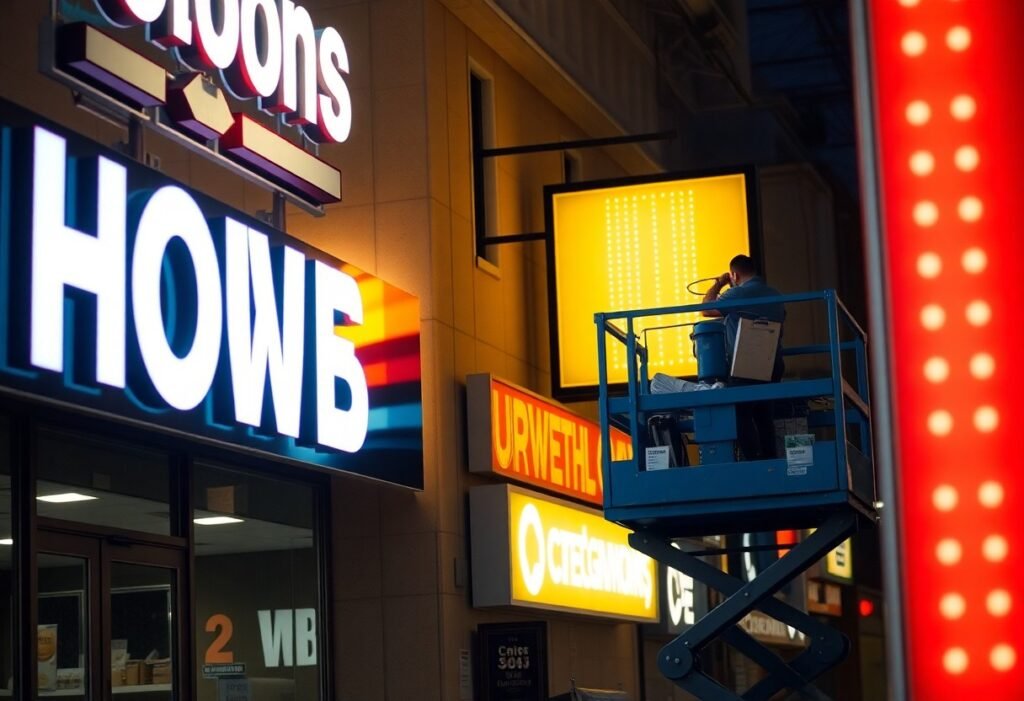
Many factors influence illuminated sign cost, and understanding them helps you budget accurately; size, materials, lighting technology (LED, neon), design complexity, installation requirements, permits, and ongoing maintenance all affect price. Your location, power availability, and custom finishes add variability, while energy efficiency and expected lifespan alter long-term cost. Assessing these elements lets you compare quotes and choose the best value for your signage investment.
Key Takeaways:
- Size and scope drive price – larger signs and higher mounts require more materials, structural support, and labor, so cost scales with square footage and height.
- Materials and lighting type matter – choices like aluminum, acrylic, LED, neon, or backlighting vary widely in upfront cost and energy efficiency.
- Design complexity and customization increase cost – custom shapes, multi-color faces, intricate graphics, and specialty finishes add fabrication time and expense.
- Installation, site conditions, and permits add fees – electrical hookups, cranes/scaffolding, difficult access, and local permitting or inspections raise total cost.
- Ongoing costs affect lifetime value – energy consumption, maintenance, repairs, and warranty/service plans influence long-term expense beyond initial purchase.
Types of Illuminated Signs
Different applications drive the choice of sign: storefronts favor channel letters for brand clarity, roadside locations use pylons for long-range visibility, and campuses often select monument signs for a grounded, architectural look. You’ll weigh installation depth, electrical runs, and local permit costs when comparing options, and material choices like aluminum, acrylic, stone, or steel change both upfront price and lifetime maintenance.
- Channel letters – individual illuminated letters for storefronts and malls.
- LED cabinet signs – routed or printed faces with internal illumination for durability.
- Monument signs – low-profile, ground-mounted for entrances and wayfinding.
- Pylon signs – tall, high-visibility structures for highways and shopping centers.
- Knowing which type suits sightline, budget, and code will narrow cost drivers quickly.
| Sign typeTypical installed cost (USD) | |
|---|---|
| Channel letters | $150-$400 per letter (storefront sets $3k-$15k) |
| LED cabinet signs | $2k-$15k depending on size and graphics |
| Monument signs | $5k-$50k (stone/brick veneers and foundations raise cost) |
| Pylon signs | $7k-$100k+ (height, structural steel, and permitting are major factors) |
Channel Letter Signs
You’ll typically pay $150-$400 per illuminated letter depending on depth (3″-12″), face material, and internal LED density; a 12-letter sign often falls between $3,000-$8,000 installed. Fabrication uses aluminum housings with acrylic faces, LEDs rated ~50,000 hours, and mounting can be direct, raceway-mounted, or floating for different façade conditions.
Monument Signs
Monument signs usually cost $5,000-$50,000 based on size, materials, and site work; you should budget for a concrete footing (often 3′-5′ deep), conduit for power, and masonry or cast stone finishes that add durability and style. Local setback rules and HOA guidelines often constrain dimensions and lighting methods.
For example, a 6’×4′ monument with stone veneer, push-through acrylic letters, LED modules, and a reinforced concrete footing commonly lands around $12k-$22k; permitting and utility locate can add $500-$2,000 and extend lead time by 2-6 weeks. You’ll also factor in routine LED driver replacements and resealing masonry joints over a 10-15 year window.
Pylon Signs
Pylon signs range from simple off-premise pole signs to multi-tenant highway beacons; costs typically start near $7k for small single-tenant units and exceed $50k for engineered multi-sided structures. You’ll need wind-load engineering, deeper footings (often 4′-8′ depending on height), and possible FAA or DOT coordination for very tall installations.
In practice, a 25′ double-faced pylon with steel column, LED cabinet, and standard footing might run $20k-$35k installed, while adding an LED changeable message center or extra height can push the price to $60k-$100k+. You should plan for inspection access, periodic cabinet reseals, and electrical service upgrades if the site lacks sufficient capacity.
Materials Used
Your material choices drive performance and price: acrylic faces, polycarbonate, aluminum composite panels (3-6 mm), extruded aluminum frames, and galvanized or stainless steel supports each add different costs and lifespans. Acrylic offers ~92% light transmission and is common for channel letters, while polycarbonate trades clarity for impact resistance. You’ll also factor in finish types (powder coat vs. PVDF), fasteners, and diffusion films-all of which change fabrication time and the sign’s expected 5-30+ year service life.
Sign Face Materials
You typically pick acrylic (1/8″-1/2″) for clarity and ease of cutting, polycarbonate when vandal resistance matters (roughly 200-250× glass impact resistance), or aluminum composite (Dibond/ACM, 3mm) for routed pan signs. Translucent vinyl and LED-diffusing films control brightness and color uniformity; for example, a 1/8″ opal acrylic face with diffuser film produces even illumination at lower LED density, reducing electrical and maintenance costs.
Frame and Structural Materials
You’ll find extruded aluminum used for lightweight channel letter frames and routed cabinet rings, while structural steel or galvanized steel is common for pylons and large cabinets. Stainless steel (304 or 316) is chosen near coasts for corrosion resistance. Wall-mounted signs under ~50 sq ft often have aluminum framing; anything larger usually needs engineered steel supports and heavier fasteners to meet code.
For larger installations you must account for wind and foundation requirements: pylon bases often require 3,000-5,000 psi concrete footings and anchor bolt templates, and engineers size steel members to local wind loads (design speeds commonly range 90-150 mph depending on zone per ASCE guidelines). Hot-dip galvanizing, stainless upgrades (2-3× material cost vs. mild steel), and PVDF coatings add upfront cost but reduce long-term maintenance and repaint cycles.
Illumination Options
You’ll weigh LED, neon, and fluorescent based on energy use, look, and long‑term costs: LEDs often deliver 50-80% energy savings and 50,000+ hour lifespans, neon offers unmatched color saturation and vintage appeal with 8-15 year service life, and fluorescents remain a low up‑front cost choice for backlit cabinets but typically need lamp or ballast replacement every 7,000-15,000 hours.
LED Lighting
You’ll find LEDs dominate modern signs because they use far less energy and need little maintenance; typical modules run 50,000-100,000 hours, deliver high CRI options (80-95), and enable pixel mapping for animated effects. For example, retrofitting a 4×8 cabinet from fluorescent to LED can cut wattage by roughly 50-70% and reduce replacement cycles to decades rather than years.
Neon Lighting
You’ll choose neon when you want saturated, continuous lines and a handcrafted look that LEDs struggle to mimic; neon uses bent glass tubes filled with noble gases and high‑voltage transformers, produces vivid reds and ambers without pixelation, and typically lasts 8-15 years depending on usage and transformer condition.
You should budget higher labor costs because glass bending is artisanal-simple neon words (2-4 ft) commonly start in the low hundreds, while elaborate multi‑color or large installations can exceed $2,000. Expect periodic transformer replacements (~10 years) and fragile tubing that raises shipping and repair charges compared with solid‑state LEDs.
Fluorescent Lighting
You’ll see fluorescents mainly in older cabinet signs and trough lighting because they’re inexpensive up front and provide even illumination; typical lamp life is 7,000-15,000 hours, they require ballasts that can fail or flicker, and color rendering tends to be lower than LEDs, which affects how your brand colors appear after hours.
You should plan for more frequent maintenance: lamp swaps every 1-3 years in high‑use signs and occasional ballast replacement. Many businesses switch fluorescents to LED retrofits to cut energy 40-60% and eliminate ballast‑related failures, often paying back the upgrade in 1-4 years depending on run hours and electricity rates.
Size and Design Considerations
Your sign’s size and design directly affect material, fabrication time, and permitting: larger faces need heavier framing and wind-rated engineering, while complex shapes require more labor and finishing. Typical installed LED illuminated signs range widely-small storefront channel letters might run $1,000-$3,000, whereas large backlit cabinet signs or multisided pylons can exceed $10,000. For market trends and benchmarks see Illuminated Signs – Market Intelligence.
Dimensions and Scale
When you double surface area, material and mounting costs don’t just double – engineering, permit fees, and crane or lift rentals often push total cost up 20-40%; mounting above 20 ft frequently requires a crane and OSHA-compliant rigging that adds several hundred to several thousand dollars. Choose dimensions that balance visibility with structural and installation budgets, and mock up sightlines at street level to verify legibility at expected viewing distances.
Custom Designs vs. Standard Options
Custom designs deliver distinctive branding but typically cost 1.5-3× standard modules due to tooling, hand-finishing, and unique materials; for example, a standard routed aluminum sign might be $800 installed, while bespoke illuminated channel letters with sculpted acrylic and metal trim can be $3,500+. You should factor longer lead times and prototype approvals into your schedule when opting for custom work.
More detail: custom pieces often require engineering drawings, one-off molds or CNC programs, and color-matching, which can add $500-$2,000 in upfront fees; maintenance can also differ – intricate trims may need periodic repainting or resealing, whereas standard powder-coated metal faces typically endure longer with minimal upkeep, affecting total lifecycle cost.
Location and Installation
Placement drives many costs: a ground‑level lightbox is cheaper than a rooftop or pole sign because your crew avoids lift/crane time and complex anchoring. If your sign sits above 12-15 ft you’ll likely pay $150-$300/hr for aerial lift or crane rental, plus added structural bracing and an engineer stamp that can run $300-$1,500 depending on building type and wind‑load requirements.
Permitting and Regulations
You’ll face local permit fees, zoning reviews, and electrical inspections that vary widely-small municipal permits often run $25-$500, while downtown or coastal jurisdictions can charge $500-$1,500 or require design review up to $2,500. Historic districts may add weeks and require materials or color changes; expect variance applications to cost $500-$2,500 and take several weeks to months for approval.
Installation Costs
Installation labor typically ranges $75-$150/hr per installer; a simple storefront lightbox can be installed for $200-$1,500, while a run of channel letters frequently costs $1,000-$10,000 installed depending on length and height. Large pole signs with concrete foundations often start at $5,000 and can exceed $30,000. Add permit, inspection, and crane time to the base install estimate.
Beyond base labor, factor logistics: material handling, temporary traffic control, and electrical hookup add $200-$2,000. UL‑listing and certified electrical connections may increase costs but shorten inspection time. Small installs often finish in 1 day with two installers; complex rooftop or pole installs can require 2-5 days, multi‑crew coordination, and site restoration that can add another 5-10% to the invoice.
Maintenance and Longevity
To protect your investment, plan for routine care and realistic replacement cycles: budget roughly 1-3% of the sign’s initial cost per year for upkeep, schedule cleaning every 3-6 months, and perform a full inspection annually to catch moisture, wiring, or mounting issues before they escalate into costly repairs.
Routine Maintenance
You should clean faces with a mild detergent and soft cloth every quarter, avoid pressure washing, and check seals and fasteners for gaps; test transformers and LED drivers annually and replace failing bulbs or modules promptly-typical service visits run $75-$250 depending on access and size, and proactive part swaps often halve emergency replacement costs.
Expected Lifespan
LEDs commonly rate 50,000-100,000 hours (about 11-22 years at 12 hours/day), neon typically 10,000-20,000 hours, and fluorescents 8,000-15,000 hours; warranties for LED modules and drivers usually span 3-10 years and 2-5 years respectively, while outdoor materials like acrylic faces often show UV yellowing after 7-12 years depending on exposure.
In practice, environmental stressors shorten those numbers: a coastal restaurant may see corrosion and face degradation in under 7 years, while a shaded mall sign lasts beyond 15 years. You can often extend life by replacing drivers at year 6-8, swapping LED modules instead of the whole cabinet (typically 20-40% of replacement cost), and using marine-grade finishes in harsh environments.
Final Words
The cost of an illuminated sign depends on factors you can control and those you can’t: size, materials, lighting type (LED vs neon), design complexity, mounting and installation difficulty, electrical upgrades, and local permits and codes. Your location, visibility requirements, maintenance needs, energy efficiency, custom finishes, and warranty terms all influence pricing; budget by prioritizing durable materials, efficient lighting, and competitive quotes.
FAQ
Q: What primary factors determine the cost of an illuminated sign?
A: Size and surface area, materials and finishes, type of illumination (LED, neon, or backlit), design complexity (custom shapes, 3D letters, artwork), electrical components and controls, mounting method and structural supports, installation difficulty and access, required permits or engineering, shipping and lead time, and ongoing maintenance or warranty coverage all combine to set the final price.
Q: How does size and material choice affect pricing?
A: Larger signs need more raw materials, lighting, and labor, so cost scales with square footage or number of letters. Typical ranges vary widely: simple illuminated cabinet signs might run roughly $50-$250 per sq ft; channel letters often cost $100-$400 per letter depending on size and finish. Material choices-aluminum, stainless steel, acrylic, polycarbonate, or premium veneers-add incremental costs for cut, fabrication, and finishing. Weather-resistant or corrosion-resistant materials raise both material and installation expenses.
Q: How do illumination types (LED vs neon vs backlit) change cost and operating expenses?
A: Neon often has higher initial fabrication cost and specialized installation but distinct visual effect; lifespan is shorter and maintenance higher. LED solutions usually cost less to operate and maintain, with typical lifespans of 50,000-100,000 hours, lower energy draw, and modular replaceable components. Backlit (halo or reverse-lit) channel letters add complexity and diffusion components, increasing fabrication cost versus front-lit letters. Operating cost depends on wattage and runtime; LEDs generally yield the lowest utility costs per month.
Q: What installation, site, and permitting factors can increase overall cost?
A: Site access (height, scaffolding, cranes), structural mounting or reinforcement, electrical hookups and circuit upgrades, traffic control or lane closures, local sign permits, engineering stamps, and historic-district approvals all add time and expense. Labor rates and travel can vary by region; specialty equipment (boom trucks, hoists) and required inspections or utility coordination can add hundreds to thousands to the project budget.
Q: What ongoing costs should be factored into a sign budget beyond upfront purchase and installation?
A: Regular maintenance (cleaning, bulb/LED module replacement, transformer or driver replacement), electricity, repairs after weather damage, and periodic repainting or face replacement. Warranties and service contracts can reduce unexpected expenses but may increase upfront cost. Example energy estimate: a 200 W sign running 12 hours/day at $0.15/kWh uses 0.2 kW × 12 h × 30 d = 72 kWh/month → about $10.80/month; larger or more numerous fixtures scale proportionally.