
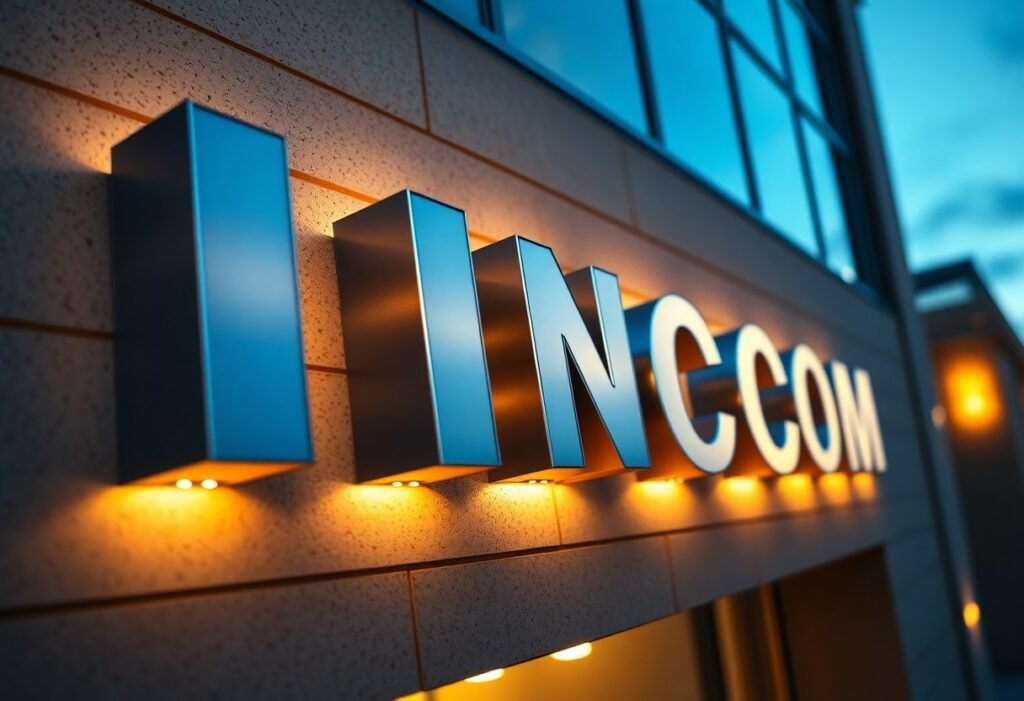
It’s a premium signage style you can use when you want individually formed letters mounted slightly off the wall so backlighting creates a soft halo glow. Halo lit channel letters deliver elegant, high-visibility branding for upscale retail, hospitality, and corporate façades, perform well in low-light settings, and preserve architectural character on historic or sensitive exteriors-ideal when your goal is distinctive, readable signage without direct frontal glare.
Key Takeaways:
- Reverse-lit channel letters with LEDs set inside a metal or plastic cabinet that shine toward the mounting surface to create a soft backlit halo.
- Best for upscale storefronts, hospitality, corporate headquarters and architectural signage where a refined nighttime presence and brand distinction are desired.
- Produce an elegant, subtle glow that improves contrast on opaque or textured walls; avoid very thin fonts or transparent/glass façades, which reduce the halo effect and legibility.
- Require a standoff/air gap and suitable substrate for even light dispersion; planning for wiring access, mounting depth and weatherproofing is important.
- LED illumination offers energy-efficient, long-lasting performance; choose durable materials and sealed electronics to minimize maintenance and extend outdoors lifespan.
What are Halo Lit Channel Letters?
When you specify halo-lit channel letters, you get individually formed metal or plastic letters mounted on spacers so LED light washes the wall behind them, producing a soft silhouette. They’re commonly 12-48 inches tall for storefronts and use 1-3 inches of setback to create a visible halo. You’ll see them on high-end retail, restaurants, and corporate façades where subtlety and legibility at night matter more than front-facing brightness.
Definition and Characteristics
In practice, halo-lit letters are reverse-lit: LEDs face inward toward an open or translucent back so light reflects off the mounting surface, giving an even glow. You can choose color temperatures from warm 2700K to cool 6500K, and most installations aim for uniformity with diffusers or painted backers. Durability-wise, letters typically use aluminum returns and last with quality SMD LEDs rated 50,000+ hours under normal operating conditions.
Components of Halo Lit Channel Letters
Key parts include the returns (aluminum or stainless steel), a back panel (clear, frosted acrylic, or open), internal LED modules or strips, a driver/power supply (120V input to 12/24V output commonly), mounting studs or standoffs, and wiring harnesses. You’ll also encounter optional elements like backer boards, weather gaskets, and transformers sized to total LED wattage to ensure consistent output across multiple letters.
For example, a typical 24-36 inch letter will use several runs of high-density LED strips and a driver sized to the cumulative wattage; installers often paint the back panel white or use frosted acrylic to smooth hotspots. You can specify deeper returns (4-6 inches) for a broader halo, or tighter spacers (1 inch) for a crisp outline, and choose IP-rated components for exterior, coastal, or high-moisture environments.
Benefits of Halo Lit Channel Letters
You enhance nighttime visibility and brand perception while keeping energy use low: LEDs last 50,000+ hours and often draw under 10W per large letter, reducing operating costs versus neon. You also gain flexible materials and finishes-aluminum returns, acrylic faces, and color temperatures from 2700K-6500K let you match brand guidelines. Installations commonly use 2-4 inches of halo depth for legibility and elegance, making them effective for storefronts, malls, and high-traffic streets.
Visibility and Illumination
You achieve superior legibility after dark by mounting letters 2-4 inches off the wall so the LED backlighting forms a consistent halo; this increases contrast against most substrates and reduces glare. Typical output ranges from ~300-1,200 lumens per letter depending on size, and you can add photo sensors or timers to maintain uniform brightness from dusk through peak evening hours.
Aesthetic Appeal
You get a refined, architectural look because the soft halo separates the letter from the wall, creating depth without oversized graphics. Designers often specify 2-6 inch offsets and finishes like brushed aluminum or matte powdercoat to control shadow softness and harmonize with façades, producing signage that photographs well and elevates perceived brand quality.
You can tailor the visual tone by choosing color temperature-2700K for warm hospitality tones or 4000-5000K for crisp retail environments-and by mixing illuminated faces with reverse-lit returns for layered effects. A common build spec is a 4-inch halo with 3000K LEDs for consistent evening appearance across multiple locations, while maintenance-friendly finishes such as powdercoat or anodized metal preserve the premium look over time.
Installation and Maintenance
Your installation and ongoing care determine how well halo lit channel letters perform over years; proper mounting, wiring, and scheduled upkeep reduce light loss and physical damage. You should plan site surveys, permitting, and structural checks before ordering; factor in LED lifespan (50,000-100,000 hours) and power-supply placement to simplify future access. Routine inspections and a documented maintenance schedule cut service calls and preserve the halo effect in high-wind or coastal locations.
Installation Process
You’ll start with a site survey and precise layout-measurements to ±1/8″ for even halo spacing. Use stainless steel studs or mounting rails anchored per local wind-load codes, seal connections with UV-resistant silicone, and wire LED modules to a Class 2 power supply; a typical 6-8 letter storefront install takes 2-6 hours but mains tie-in should be done by a licensed electrician. Test for uniform halo brightness and color temperature (typically 3000K-5000K) before final sealing.
Maintenance Tips
You should clean faces every 3-6 months with mild detergent and a soft cloth, inspect gaskets and fasteners annually, and monitor LED output for signs of dimming or color shift. Replace power supplies every 5-7 years or sooner if voltage fluctuates; many manufacturers rate LEDs for 50,000 hours, so expect gradual lumen loss. Keep a log of service dates and parts replaced to support warranties and spot recurring issues quickly.
- Clean acrylic faces and return bends with pH-neutral soap to avoid material degradation.
- Inspect seals and gaskets annually; replace if the IP rating is compromised to maintain halo consistency.
- Check mounting hardware and anchor torque after severe weather events to prevent sagging.
- Any major electrical repairs should be handled by a licensed technician to ensure code compliance and safety.
You can improve longevity by scheduling predictive maintenance: log lumen readings, record color temperature shifts, and swap diffusers when transmission drops below ~85%. For example, a regional retailer with 12 locations cut service-related downtime by 60% after adopting biannual cleanings and replacing power supplies every six years. Use that data to negotiate longer warranties or bulk replacement pricing with suppliers.
- Keep a maintenance log with dates, part numbers, and before/after photos for each service event.
- Test power-supply voltage under load; expect DC readings within ±5% of the nominal value.
- Replace discolored acrylic panels when they reduce halo quality to avoid uneven illumination.
- Any warranty claim will be processed faster if you submit dated photos, maintenance logs, and original install specs.
Best Applications for Halo Lit Channel Letters
You’ll find halo lit channel letters work best where nighttime visibility and a premium aesthetic matter most: storefront façades, hotel marquees, restaurant fronts, and office lobbies. With a typical 1-3 inch setback creating a soft glow, they deliver legible branding from 50-200 feet depending on letter size and mounting height. You can pair 3000-6500K LEDs with painted aluminum returns to match architectural finishes while keeping energy use low and maintenance minimal.
Retail and Business Signage
For retail and strip centers, halo lit letters offer refined presence without overpowering streetscapes; you can highlight a storefront along a busy corridor and stay compliant with many municipal lighting ordinances. Installations commonly use 1-4 foot tall letters for primary IDs and 8-18 inch letters for secondary signs, giving consistent readability at dusk and after dark while preserving brand color fidelity with acrylic faces and sealed LED modules.
Branding and Marketing Usage
You should use halo lit letters when you want subtle sophistication in brand expression-luxury boutiques, craft breweries, and tech showrooms often choose them to signal quality. They integrate into campaigns by reinforcing logo shapes and colors at night, improving top-of-mind recall. Typical projects standardize LED color (often 3000-4000K warm-neutral) and halo gap (1-3 inches) across locations for consistent on-brand lighting.
To maximize marketing impact, run a 30-90 day A/B test comparing halo lit letters to front-lit alternatives: track night-time foot traffic, store visits, and social media impressions. You can also measure luminance with a handheld meter-aim for 10-50 lux on the surrounding wall for an even halo-and document results to justify rollout costs and guide specifications across multi-site rollouts.
Comparison with Other Signage Options
You can quickly contrast halo lit channel letters on visibility, depth and cost; halo gives a soft back-glow for depth while front-lit prioritizes face brightness and backlit panels give uniform illumination. Typical install needs for halo are 3-6″ returns and a 1-2″ offset from the wall. For design guidance see What type of Channel Letters are right for your business?
Quick comparison
| Feature | How Halo Lit Compares |
|---|---|
| Night visibility | Provides halo silhouette and depth; front-lit is brighter on the face; backlit panels are even but flat |
| Depth & mounting | Typically requires 3-6″ depth and 1-2″ standoff; front-lit can be shallower; cabinet signs are shallow but bulky |
| Energy & maintenance | LED halo uses similar wattage to front-lit letters (10-40W per letter depending on size); backlit cabinets often cost less to maintain for large areas |
Halo Lit vs. Front Lit Channel Letters
You get a different visual priority: front-lit channel letters put luminance on the face for maximum legibility-often 2-3× higher lux at 3 m-while halo lit emphasizes a soft glow and three-dimensional separation from the building. Costs are comparable; simple front-lit builds can be 5-15% less, but halo elevates perceived value for premium brands.
Halo Lit vs. Backlit Signs
Backlit signs (cabinet or illuminated panel) deliver uniform brightness across a surface, ideal for large-format messages and wayfinding; halo lit gives individual letter depth and a high-end look. For long, continuous copy you may find backlit cabinets more economical per square foot, while halo excels at logo and brand clarity.
When you weigh specifics, consider application: a retail storefront aiming for upscale curb appeal often chooses halo lit letters for silhouette and texture, whereas a 10×3 ft backlit cabinet can be 10-30% cheaper to produce and easier to service for long copy. Also note mounting constraints-halo needs a standoff and slightly thicker returns, so if your façade is flush or restricted, a backlit panel may be the practical choice.
Cost Considerations
Factors Influencing Cost
You’ll pay more for larger letters, custom faces, and metal backers; a single 24″x24″ halo-lit channel letter can cost $250-$600 depending on finish. Complex mounts, wiring, and permits typically add $150-$1,000, and multi-location installs increase logistics and freight. LED quality and color temperature add 10-40% to materials. The installer’s hourly rate-commonly $65-$120-often determines the final installed price.
- Size and letter height
- Materials (aluminum, stainless, acrylic)
- LED type and color/temperature
- Mounting method and site access
- Permits, electrical work, and engineering
- Design complexity and custom faces
- Quantity and production run
- Shipping, installation labor, and warranty
Budgeting for Your Project
When budgeting, get three itemized bids covering fabrication, installation, permits, and electrical hookup. You should set a 10-20% contingency; typical single-location projects range $2,000-$8,000, while custom façades can exceed $15,000. Ask for per-letter unit costs, shipping, and estimated labor hours so you can compare apples-to-apples.
Break expenses into fabrication (materials, LEDs), installation (labor, lifts, hardware), and soft costs (permits, engineering). For example, a 10-letter run at 18″ tall with mid-grade LEDs might be fabrication $1,800, installation $900, permits $250, shipping $150-about $3,100 before contingency. You should also factor lifecycle costs: average halo-lit letters draw 10-30W each, so 10 letters at 20W running 12 hours/day costs roughly $26/month at $0.13/kWh, and LED lifespans (~50,000 hours) affect long-term value.
Final Words
On the whole, halo lit channel letters are metal or acrylic characters with rear-mounted LEDs that cast a soft glow around each letter. They are best when you want refined, nighttime visibility and brand elevation-ideal for storefronts, hospitality, and architectural applications-because they deliver subtle elegance, clear legibility, energy-efficient illumination, and strong curb appeal that helps your identity stand out without overpowering the façade.
FAQ
Q: What are halo lit channel letters?
A: Halo lit channel letters are three-dimensional signs with illuminated backs that cast a soft glow onto the mounting surface. They consist of metal or plastic returns (sides), a solid back, internal LEDs and an outer face or open front; when mounted with a small standoff the light produces a halo around each character for a premium, floating appearance.
Q: When are halo lit channel letters the best choice?
A: They work best where nighttime visibility and an upscale look are priorities – storefronts, hotels, corporate offices, restaurants and architectural façades. They perform especially well on solid, contrasting backgrounds (stone, brick, painted metal) that showcase the halo; they are less ideal where direct front illumination is needed for legibility or where a very tight budget rules out custom fabrication.
Q: What materials and illumination options are available for halo letters?
A: Common materials include aluminum, stainless steel or formed plastic for the returns and a flat metal or acrylic back. LEDs are the standard light source, offered in cool/warm whites or RGB for color effects. Finishes range from powder coat and painted colors to brushed or mirrored metal; diffusers and backpaint choices control halo softness and color temperature.
Q: What should be considered for installation and ongoing maintenance?
A: Plan for power access and wiring (surface raceway or concealed), mounting method (stand-offs or routed wall pockets), and local permitting. Ensure weatherproofing around the back and wiring, allow access for LED driver servicing, and schedule periodic cleaning and inspection of seals and LEDs to maintain even illumination and prevent corrosion or moisture intrusion.
Q: How can designers maximize halo effect and legibility?
A: Use adequate standoff distance (commonly 1-2 inches or more depending on letter size), choose thicker strokes and simple typefaces for readability, select wall colors that contrast with the halo, and control backpaint/finish to shape halo color. Test scale and viewing angles in situ and avoid placing halos against highly textured or multicolored backgrounds that break up the glow.