
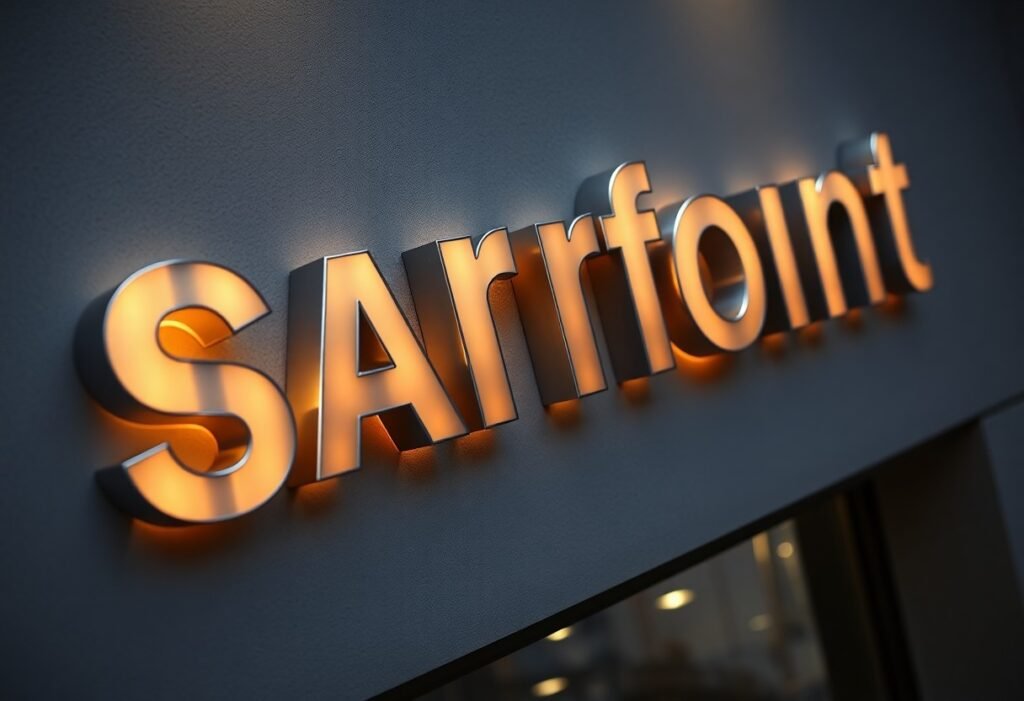
You can elevate brand visibility by designing logo channel letters that reflect your brand identity, choosing materials, finishes, lighting, proportions, and mounting to maintain legibility and consistency across applications. Assess site visibility, color temperature, font weight, and halo vs. face-lit options, then prototype at scale to ensure durability and compliance with local codes while aligning with your brand guidelines.
Key Takeaways:
- Prioritize brand and legibility by matching letterforms, scale, and spacing to viewing distance so the logo reads clearly at intended sightlines.
- Select materials, return depth, and face options that balance durability, dimensionality, and mounting-aluminum, acrylic, and routed returns affect finish and shadowing.
- Choose an illumination strategy (front-lit, backlit/halo, or combination) and set LED color temperature and diffusion to reinforce brand mood without glare.
- Match brand colors precisely, test finishes under day/night conditions, and use contrast (trimcap/returns) to maintain legibility against backgrounds.
- Provide production-ready vector art with exact color specs, detail mounting/wiring/service access, and coordinate with fabricator for local code and installation logistics.
Understanding Logo Channel Letters
When you refine logo channel letters you balance visibility, brand fidelity, and installation constraints: choose 3-6″ depths for storefront legibility, 1/8″-1/4″ acrylic faces for crisp color reproduction, and LED modules with ~50,000-hour rated life to limit maintenance. You’ll weigh front-lit versus halo illumination to match brand tone, plan mounting (stud vs. raceway) for façade integrity, and budget for power runs, permits, and potential dimming controls to meet local signage rules.
Definition and Purpose
You rely on logo channel letters to translate a flat logo into three-dimensional branded signage that performs day and night; they articulate typography, color, and iconography while increasing nighttime recognition and walk-up recall. Typical uses include retail storefronts, mall façades, and corporate campuses where you need clear visibility from 50-200 feet and consistent brand appearance under various lighting conditions.
Key Characteristics
Materials, illumination method, and fabrication tolerances define the outcome: aluminum returns and crowns for durability, acrylic faces for color fidelity, and choices of front-lit, back-lit (halo), or reverse-lit configurations to convey different brand moods. You’ll specify color temperature (commonly 3000-5000K), LED lumen output to suit mounting height, and mounting hardware to address wind load and service access.
For example, you might pick 3″ deep letters with 1/8″ acrylic and 3000K warm-white LEDs for a boutique look, or 6″ deep, reverse-lit letters with a 4000-5000K neutral output for a tech brand seeking high contrast; acrylic thickness, gasketing, and powder-coated aluminum finishes directly affect weather resistance, weight (important for façade anchoring), and long-term color retention.
Design Principles for Logo Channel Letters
When you design logo channel letters balance visibility, brand fidelity, and fabrication limits: maintain a clear hierarchy, consistent stroke proportions, and mounting depth between 4-8 inches to optimize halo or face‑lit effects. Use the 1″ = 10 ft readability rule to size letters for primary sightlines, test contrast for day and night, choose acrylic faces for saturated color or brushed metal for premium texture, and always prototype at full scale to catch spacing or illumination issues early.
Typography and Font Selection
When you pick a typeface favor high x‑height, open counters, and sturdy stems-Gotham, Helvetica, and Futura are common choices for channel letters because they retain form at distance. Apply the 1″ = 10 ft rule to set minimum height, keep stroke widths at least ~8-12% of letter height to avoid loss of detail when lit, loosen tracking slightly for halo designs, and build full‑scale mockups for scripts or custom logotypes to verify legibility and fabrication feasibility.
Color Psychology in Branding
When you choose color tie hue to brand meaning-blue for trust, red for urgency/energy, yellow for visibility and appetite-and plan for LED color temperature: 3000K warm vs 5000K cool shifts perceived saturation. Match Pantone specs with acrylic vendors, prioritize high contrast against the façade, and check night appearance under intended illumination to prevent colors from washing out or shifting.
Also factor in material finish and light interaction: glossy acrylic amplifies saturation while brushed metal mutes it, and halo vs face‑lit construction alters perceived hue (a warm 3000K halo can make a blue face read greener). Account for UV fade using UV‑stable pigments and coatings, run weathering tests, document daytime/nighttime mockups at typical approach distances, and confirm color consistency across production batches before installation.
Materials and Construction
You select substrates and fabrication methods to match brand intent, budget, and site conditions: aluminum for light, rust-resistant housings; acrylic or polycarbonate for illuminated faces; and stainless steel for premium polish. For wet locations you use sealed housings and serviceable LED modules, while welded or riveted joins affect long-term rigidity and finish. See detailed specs at Store Front Channel Letters 101: Everything You Need To …
Types of Materials Used
You often choose between aluminum, stainless steel, acrylic, polycarbonate, and foam PVC for logo channel letters; each presents trade-offs in cost, weight, and finish. Typical thicknesses run: aluminum faces 0.063-0.125 in, returns 0.040-0.063 in, and acrylic faces 1/8-1/4 in. Assume that heavier metals need reinforced mounting and thicker returns to prevent buckling.
- Aluminum – lightweight, corrosion-resistant, easy to paint or anodize.
- Acrylic – high clarity, excellent for translucent illuminated faces.
- Polycarbonate – impact-resistant, used in high-vandal or coastal sites.
- Stainless steel – premium appearance, minimal corrosion in harsh climates.
- Foam PVC – cost-effective for non-illuminated dimensional logos.
| Aluminum | Common faces/returns; 0.063-0.125 in; anodize or powder coat |
| Acrylic | Illuminated faces; 1/8-1/4 in; diffuses LEDs evenly |
| Polycarbonate | High-impact, UV-stable option for exposed sites |
| Stainless Steel | Premium finish; use 304 or 316 in corrosive environments |
| Foam PVC | Lightweight routed letters for interior or non-illuminated use |
Durability and Maintenance Considerations
You design for access and longevity: specify IP65 or higher LED modules, use sealed housings with desiccant packs in humid climates, and select anodized or powder-coated finishes to resist fading. Schedule inspections every 6-12 months and expect typical LED lifespans of 5-8 years depending on temperature and duty cycle.
In coastal or industrial sites plan inspections every 3-6 months and consider 316 stainless returns or marine-grade anodizing; case studies show aluminum with high-quality powder coat lasts 7-12 years inland but under 5 years within 5 miles of saltwater. You mitigate thermal degradation by using LED drivers rated for −20°C to 50°C, and design modular LED trays so a single technician can replace modules in 15-30 minutes, minimizing downtime and maintenance costs.
Installation and Placement Strategies
Plan installation around structural anchors, electrical feed proximity and municipal permitting timelines (often 2-6 weeks). You should specify wind-load ratings (e.g., 90-110 mph zones), choose through-bolt or raceway-mounted methods per façade type, and confirm roof or wall load capacity with an engineer for letters larger than 4 sq ft. Coordinate with your electrician to minimize runs and maintain IP65 ratings for exterior LEDs.
Location Selection
Place letters where sightlines match primary viewers: for sidewalks mount at 8-12 ft, for arterial roads 18-25 ft; apply the 1 inch of letter height per 10 feet of viewing-distance rule to size graphics. You must avoid window reflections, cornices and HVAC obstructions, and use the sign band or a custom backer to maintain consistent sightlines across storefronts.
Visibility and Lighting Factors
Decide between face-lit, halo/backlit, or combo styles based on ambient luminance: use 3,000-5,000 K LEDs for perceptible color fidelity, add diffusers to reduce hotspots, and program dimming to 30-50% after midnight to comply with light-pollution ordinances. Contrast of at least 4:1 between letter face and background improves legibility at 50+ feet.
- Assess ambient light levels at peak and off-peak hours to set baseline LED output.
- Measure reflective surfaces nearby-glass can wash out low-contrast faces between 30-60 feet.
- Factor in viewer speed: drivers at 35 mph need larger, higher-contrast letters than pedestrians.
- Perceiving changes in background illumination helps you decide between halo and direct face lighting for maximum brand impact.
For tighter budgets, you can optimize visibility by increasing letter stroke width rather than overall height; a 20% wider stroke can improve legibility nearly as much as a 15% size increase. You should also specify LED spacing (commonly 3-6 inches) to avoid banding on 24-48 inch tall letters, and test color temperature on-site-what reads warm on paper may read washed out against a 10,000-lumen advertising board.
- Prototype a 1:1 mockup at full brightness to check halo bleed and shadowing on textured façades.
- Include flexible dimming scenes for seasonal events and local curfews to stay compliant.
- Plan maintenance access-rear-removable modules reduce service time and ATV costs.
- Perceiving how passersby approach your site lets you prioritize angle, height and luminous intensity for optimal brand recognition.
Brand Consistency and Channel Letters
For brand cohesion you must translate logos into physical letterforms without altering proportions, color, or negative space: use vector files (EPS/SVG), specify Pantone spot colors for paint or vinyl, and hold fabrication tolerances to ±1-2 mm so stroke widths and kerning remain faithful. Apply the 1″ per 10 ft viewing-distance rule to set letter height, and document materials and LED color temperature (e.g., 3000K vs 5000K) so every facade reads the same under real-world lighting.
Aligning with Overall Branding
When adapting your logo for channel letters, convert brand artwork to outlines and preserve key metrics-stroke width, x-height, and clear space-so the sign reads like the original at distance; for example, keep stroke widths within ±10% of the artwork and scale the mark so it occupies roughly 60-70% of the sign band for balanced visibility. Use identical finishes (anodized aluminum, brushed stainless, gloss acrylic) to match tactile brand cues used in your interiors and packaging.
Importance of Consistency Across Platforms
Consistent channel letters must mirror your digital and print assets so customers instantly recognize the brand across storefronts, vehicles, and social media: specify Pantone/CMYK/RGB values, font files, and approved lighting (LED color temp and module spacing) in a signage standard to avoid visual drift and maintain recognition at scale.
To operationalize that consistency, create a one-page sign specification sheet per logo variant including vector artwork, Pantone + RGB values, approved materials, LED color temperature (e.g., 3500K for warmer retail fronts, 5000K for high-contrast urban sites), letter-height-to-view-distance ratios, and fabrication tolerances. Require a physical sample or mockup photo under standard daylight and night conditions for approval, mandate vendor sign-off logs, and perform periodic audits-brands that enforce these steps reduce site-to-site variation and ensure your channel letters present the same identity whether seen on a highway, a storefront, or in a marketing photo.
Case Studies of Effective Channel Letter Designs
You can compare projects to extract what works: five detailed case studies below show scale, materials, illumination, budgets and measured impact across retail, hospitality and corporate sites. Data highlights letter heights (18-72 in), LED power per letter (5-45 W), installation durations (1-14 days), permitting lead times (1-6 weeks), and observed evening foot-traffic uplifts (8-28%).
- 1) Flagship retailer – 72″ halo-lit logo channel letters, .125″ aluminum faces, 300 cd/m², 45 W per letter, install 10 days, permit 4 weeks, fabrication $28,000, total project $45,000; measured +12% footfall and +18% evening sales in 3 months.
- 2) Independent café – 30″ face-lit routed letters with acrylic faces, 12 W per letter, install 1 day, permit waived, sign cost $3,200; evening patron increase +22% and social-media photos rose 35% in first month.
- 3) Medical clinic – 48″ halo + face combo, brushed aluminum, 150 cd/m², 20 W per letter, install 3 days, permit 2 weeks, budget $9,500; improved wayfinding reduced late arrivals by 14%.
- 4) Automotive dealer – 96″ channel logo with backlit halo, 600 lm per letter, 60 W per module, crane-assisted install 14 days, permit 6 weeks, capex $62,000; brand visibility index up 27% across local surveys.
- 5) Tech startup office – 42″ illuminated cabinet logo inside lobby, 8 W LED modules, color-temp 3500K, install 2 days, cost $4,800; staff satisfaction with workspace branding +33% in internal poll.
- 6) Grocery chain endcap – 36″ edge-lit letters, polycarbonate faces, 10 W per letter, install 5 days across 3 locations, per-site cost $11,000; average weekly foot traffic increase 8% and promotional conversion +6%.
Successful Brand Examples
You can replicate high-impact strategies: use halo illumination for premium visibility like the flagship case (72″ letters, +18% evening sales), choose mid-scale face-lit letters for hospitality (30″ letters, +22% evening patrons), and adopt mixed halo/face solutions for institutional settings to improve wayfinding by double digits; adapt materials and lumen output to match viewing distance and brand tone.
Lessons Learned
You should size letters to viewing distance (approx. 1″ of letter height per 10 ft of typical viewing), specify LED CRI ≥80 and target 200-400 cd/m² for storefronts, budget 5-10% of initial sign cost annually for maintenance, and plan permitting 2-6 weeks depending on jurisdiction to avoid schedule slips.
You can further reduce risk by ordering spare LED modules (≈10% of installed count), standardizing color temp across locations (3000-4000K for warm/neutral, 5000K for cool), scheduling cleaning every 6-12 months, and documenting electrical feeds and anchor points in your shop drawings to cut onsite delays. Plan for 5-7 year LED lifespans and include easy access for module replacement to keep long-term operating costs predictable.
Final Words
Hence you design logo channel letters by prioritizing clear typography, proportional scale, durable materials, and consistent color and illumination to reflect your brand identity. You must consider viewing distances, mounting, and maintenance while coordinating with fabricators and installers to preserve fidelity. Applied thoughtfully, your channel letters increase visibility, convey professionalism, and strengthen brand recognition across environments.
FAQ
Q: What are logo channel letters and why use them for branding?
A: Logo channel letters are three-dimensional, fabricated letters or shapes that replicate a brand mark and are mounted to a building facade or sign cabinet. They create strong daytime presence through material and finish, and nighttime visibility with integrated lighting. Their depth, shadow, and lighting reinforce brand recognition, convey quality, and allow custom finishes and textures that align with brand identity.
Q: How do you translate a flat logo into a channel letter design?
A: Start with vector artwork and simplify complex elements to maintain structural integrity and legibility when fabricated. Preserve key proportions and spacing, convert thin strokes into minimum manufacturable widths, and plan internal supports for large cutouts or floating elements. Define face, returns, and back construction to match the logo’s visual weight, and create scaled mockups or 3D renderings to confirm how negative space, depth, and lighting affect the logo.
Q: What materials, finishes, and lighting options should you choose for brand consistency?
A: Choose materials that match the brand tone: aluminum or stainless for premium, painted or powder-coated finishes for color fidelity, brushed metal or plated faces for texture. Use acrylic faces for saturated colors and diffused lighting, and translucent vinyl or color-matched paints for precise brand hues (specify Pantone values). For lighting, select front-lit for strong color face illumination, back-lit/halo for elegant outlines, or hybrid lighting to highlight accents. Consider LED color temperature and CRI to maintain consistent appearance day and night.
Q: How do you ensure legibility, scale, and optimal sightlines for channel letters?
A: Determine viewing distances and viewing angles, then size letter height and stroke widths accordingly (larger distance = larger height; standard legibility charts and local sign codes help). Maintain high contrast between letter face and mounting surface, avoid overly thin serifs or tight counters, and test with full-scale mockups or digital signage overlays. Account for mounting height, angle of approach, and surrounding signage clutter to ensure the logo reads quickly from primary sightlines.
Q: What fabrication, installation, and maintenance considerations support long-term brand performance?
A: Work with an experienced fabricator who produces engineering drawings, wind-load calculations, and permits-ready documentation. Plan mounting methods, power routing, and access panels for future service. Specify marine-grade fasteners, sealed LED modules, UV-stable paints, and gasketing for weather resistance. Include a maintenance schedule for cleaning, LED inspections, and repainting, and ensure warranties and replacement-part availability to preserve brand presentation over time.