
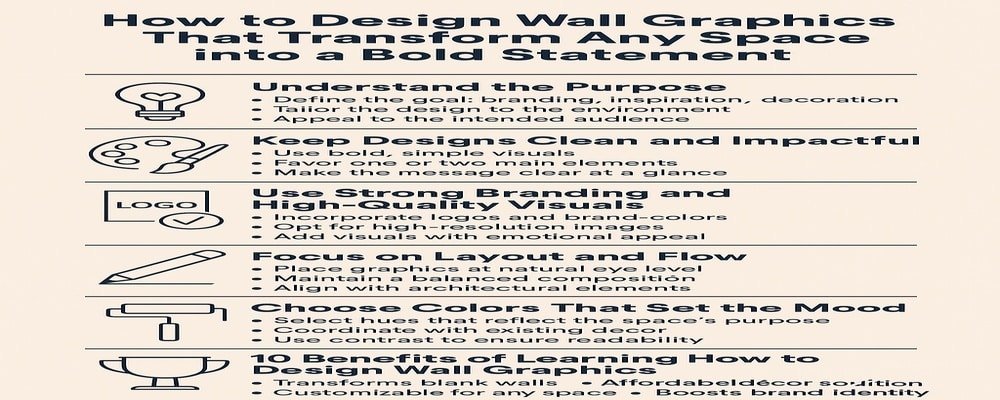
Walls don’t have to stay plain or boring. They can become the centerpiece of any room. When you design wall graphics, you create a story on your walls that inspires, motivates, or simply adds beauty.
From bold branding in offices to playful designs in children’s rooms, wall graphics make a powerful impact. They’re cost-effective, versatile, and much easier to update than traditional décor. A smart design can turn your space from ordinary to unforgettable.
Key Takeaways
- Designing wall graphics transforms blank spaces into purposeful, engaging environments.
- Clean, simple designs with strong visuals have the most impact.
- High-quality materials and professional installation ensure long-lasting results.
- Wall graphics are perfect for businesses, schools, and homes.
Understand the Purpose Before You Design Wall Graphics
The first step is knowing why you want the graphic. Without purpose, a design can feel random and ineffective.
For businesses, wall graphics often reinforce branding. Think of a company’s mission statement in the lobby or motivational quotes in a workspace. For retail, graphics guide customers or highlight promotions. For homes, they add personal style — family names, favorite quotes, or artistic murals.
When you design wall graphics with intention, you create focus. The message becomes clear, and the wall does more than decorate — it communicates.
Tips:
- Write down your goal before designing: branding, inspiration, or decoration.
- Match the purpose to the environment — an office graphic should feel different than one for a living room.
- Consider your audience: employees, customers, or guests.
Keep Wall Graphics Clean and Impactful
In wall design, simplicity wins. People don’t want to squint to read long text or struggle to make sense of busy layouts. A clean design communicates at a glance.
For example, a large logo on a solid background can speak louder than a wall covered with paragraphs. Simple icons, shapes, or single phrases often leave the strongest impression.
When you design wall graphics, think about visibility. Can someone understand your message within seconds of entering the room? If yes, your design is working.
Tips:
- Limit your design to one or two main elements.
- Use large, bold fonts that are readable from across the room.
- Don’t be afraid of white space — it makes the design stand out.
Use Strong Branding and High-Quality Visuals in Wall Graphics
Branding is what makes businesses memorable. Incorporating logos, slogans, and brand colors into wall graphics reinforces identity and professionalism. Visitors see consistency across your marketing, website, and physical space.
High-quality visuals are essential. A blurry or pixelated image will ruin even the most creative idea. Crisp, sharp images show professionalism and attention to detail. For homes, family photos, travel pictures, or custom artwork should always be printed at the highest resolution possible.
Tips:
- Always design using high-resolution or vector files.
- Stick to your official color palette if using graphics for business.
- Choose visuals that spark emotion — joy, pride, calm, or excitement.
Focus on Layout and Flow When You Design Wall Graphics
Your wall isn’t a blank page — it has corners, windows, and furniture that affect design. Good layout planning ensures your design fits naturally into the space.
Think of the wall as a 3D canvas. If you place text too low, it might get blocked by furniture. If you spread elements randomly, the message feels disconnected. Instead, arrange graphics in a way that guides the eye smoothly across the wall.
Tips:
- Measure the wall before finalizing your design.
- Place important elements at natural eye level.
- Create flow by aligning graphics with architectural lines or furniture.
Choose Colors That Set the Mood in Wall Graphics
Color changes how people feel in a space. That’s why choosing the right palette is critical when you design wall graphics.
Red, orange, and yellow are energetic and attention-grabbing. Blue and green create calm and professionalism. Neutral tones, combined with a pop of accent color, can add sophistication. Whatever colors you choose, they should reflect the mood and purpose of the room.
Contrast is also vital. Dark text on a light background or light text on a dark background ensures readability. Without contrast, your message might disappear into the wall.
Tips:
- Use no more than three main colors to avoid clutter.
- Match colors with the existing décor for harmony.
- Test your design in different lighting — both natural and artificial.
Add a Clear Message or Theme in Wall Graphics
A wall graphic isn’t just art — it’s communication. Whether it’s a motivational quote in a gym or a brand tagline in an office, your graphic should carry a theme.
Businesses can highlight values, culture, or customer promises. Schools can promote learning and inspiration. Homes can focus on family values, travel memories, or favorite hobbies. A strong theme connects people with the environment and leaves a lasting impression.
Tips:
- Keep messages short and powerful.
- Use fonts and visuals that match the tone of your theme.
- Align the message with your overall brand or personal identity.
Practical Tips for Printing and Installing Wall Graphics
Even the best design can fail with poor execution. Printing and installation matter as much as the design itself.
Use durable vinyl materials for long-term use. For rentals or temporary setups, removable vinyl works best. Professional installation prevents wrinkles, bubbles, or misalignment. It’s worth the investment to make your wall look flawless.
Tips:
- Design in vector format for the sharpest printing.
- Prep the wall by cleaning and smoothing surfaces.
- Hire professionals for large or complex designs.
Common Mistakes to Avoid When You Design Wall Graphics
The most common mistake is overcrowding. Adding too many elements confuses people. Another error is using low-quality images that pixelate when enlarged.
Designs can also fail if they ignore the wall’s structure. Don’t place key visuals behind furniture or near awkward corners. Always test a digital mockup of the design on the actual wall before printing.
Tips:
- Keep it simple and bold.
- Avoid stretching images beyond their resolution.
- Always preview before final production.
10 Benefits of Learning How to Design Wall Graphics
- Turns plain walls into visual storytelling.
- Affordable compared to other décor methods.
- Customizable for any space — business or home.
- Builds stronger brand identity.
- Creates memorable experiences for visitors.
- Boosts employee morale and creativity.
- Long-lasting with the right materials.
- Easy to update or swap out designs.
- Works in large rooms, small offices, or personal spaces.
- Turns walls into tools for marketing and inspiration.
Why Smart Design Wall Graphics Transform Any Space
When you design wall graphics thoughtfully, you do more than add décor — you transform how a space feels and functions. Graphics can motivate teams, impress clients, inspire students, or make a home feel warm and personal.
Unlike paint or posters, wall graphics are flexible, customizable, and impactful. They give you the power to tell your story visually, turning every wall into an opportunity for connection. That’s why smart design wall graphics are one of the most powerful upgrades you can make in any space.
FAQs About How to Design Wall Graphics
1. What is the best way to design wall graphics for an office?
Focus on branding. Include logos, company values, or motivational quotes to inspire employees and impress clients.
2. How do I design wall graphics for small rooms?
Use one strong image or short phrase. Avoid overcrowding, which can make the room feel smaller.
3. What software is best to design wall graphics?
Adobe Illustrator and Photoshop are industry standards. Canva and CorelDRAW also work well for beginners.
4. Can I design wall graphics that are removable?
Yes. Removable vinyl graphics are perfect for rentals, seasonal campaigns, or temporary messages.
5. How much text should I use when I design wall graphics?
Keep it short. One headline, a tagline, or a motivational quote is enough. People should understand it instantly.