
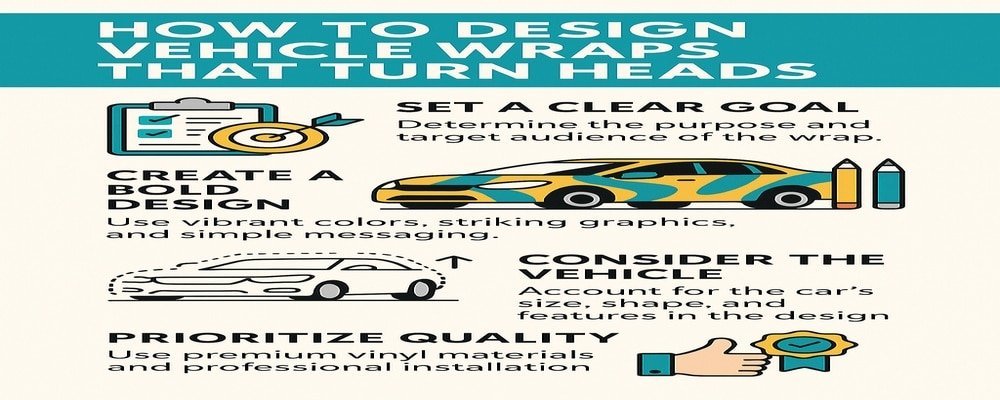
Your vehicle is more than just a way to get from point A to point B. It’s also one of the most powerful marketing tools you own. When you design vehicle wraps correctly, you transform cars, trucks, or vans into moving billboards that get noticed by thousands of people every single day.
A poorly designed wrap blends into traffic. A smart design, on the other hand, turns heads, builds brand recognition, and attracts new customers wherever you drive.
Key Takeaways
- Vehicle wraps are one of the most affordable and high-impact marketing tools.
- Designing vehicle wraps with simplicity and boldness ensures visibility on the road.
- Strong branding and clear calls-to-action convert traffic into leads.
- Every design choice should account for the vehicle’s shape and movement.
Understand the Purpose Before You Design Vehicle Wraps
Before you dive into fonts and colors, step back and think about your goal. Why are you wrapping the vehicle? Is it to promote a new product? Advertise your services? Or give your fleet a consistent, professional image?
When you design vehicle wraps with purpose, your message becomes clear. For example, a delivery van might focus on brand recognition and a website link, while a contractor’s truck might highlight a phone number and tagline. The right purpose shapes the right design.
Tips:
- Define one main goal for the wrap before starting.
- Tailor your design to the setting — city traffic may require bigger fonts and bolder colors than a vehicle parked outside a retail store.
- Always design with your target audience in mind.
Keep Your Vehicle Wrap Design Simple and Bold
Your vehicle is always in motion, and drivers only have seconds to process what they see. That’s why the best wraps are bold and simple. Too much text or too many graphics create confusion.
When you design vehicle wraps, think in headlines, not paragraphs. Use a short slogan, your logo, and one call-to-action. Big fonts make sure people can read from a distance. White space isn’t wasted space — it makes your design easier to read.
Tips:
- Stick with 3–4 key points max.
- Use fonts that are clear and easy to read, even at 40 mph.
- Let graphics and images speak louder than long sentences.
Use Strong Branding and High-Impact Graphics in Vehicle Wraps
Consistency builds trust. If your website, social media, and business cards use one style, your vehicle wrap should match. The goal is for people to recognize your brand instantly.
That means using your logo, brand colors, and fonts consistently. Pair them with a powerful image that reflects your product or service. For example, a landscaping business could use a bold image of fresh green lawns. A food truck could feature vibrant, close-up photos of food.
Tips:
- Always use high-resolution images (at least 300 dpi).
- Avoid cluttered collages. Stick to one or two powerful visuals.
- Make sure your brand identity is the star of the design.
Focus on Layout and Shape When You Design Vehicle Wraps
A vehicle isn’t a flat canvas — it has curves, handles, windows, and panels. A design that looks great on paper may not work once installed. Smart wrap design takes these shapes into account.
Place important elements like your logo and contact details on large, flat areas such as doors and side panels. Avoid putting phone numbers across door seams or wheel wells. The rear of the vehicle is also prime real estate since drivers spend time behind you in traffic.
Tips:
- Use a vehicle-specific template when designing.
- Test placement visually before final printing.
- Ensure your call-to-action is placed at eye level where people can read it.
Choose Colors That Pop When You Design Vehicle Wraps
Color creates mood and captures attention. Bright tones like red, yellow, and orange grab eyes quickly, while blue and green build trust and calmness. But no matter what you choose, readability comes first.
Contrast is key. White text on a dark background or black text on a bright background ensures readability from a distance.
Tips:
- Limit your palette to 2–3 colors for a clean look.
- Match colors to your brand while maintaining high contrast.
- Test designs under different lighting — wraps must be visible in daylight, shade, and evening.
Make Calls-to-Action Clear on Vehicle Wraps
Every vehicle wrap needs a next step. Do you want people to call, visit your website, or follow you on social media? That’s your call-to-action (CTA), and it should be easy to find.
Keep CTAs short and bold:
- “Call Us Today”
- “Visit OurWebsite.com”
- “Follow Us @YourBrand”
Place CTAs where people will see them: back bumpers, side panels, or rear doors. That way, even when stopped in traffic, your message works.
Tips:
- Use big, bold fonts for CTAs.
- Add a QR code for instant mobile engagement.
- Make CTAs contrast with the background for maximum visibility.
Practical Design and Printing Tips for Vehicle Wraps
Designing the wrap is only half the job. Printing and installation matter just as much. Always create your design in the actual dimensions of the vehicle template. This prevents stretching or distortion.
Choose quality vinyl designed for outdoor durability. Weather, sunlight, and car washes can all damage low-quality materials. Professional installation ensures your design lines up perfectly and lasts for years.
Tips:
- Use CMYK color mode for accurate printing.
- Leave safe margins around edges to avoid trimming important details.
- Invest in a professional installer for the best finish.
Mistakes to Avoid When You Design Vehicle Wraps
It’s easy to get excited and add too much. But less is always more. Don’t overload your wrap with tiny text or multiple photos. Avoid busy designs that make your vehicle hard to read.
Common mistakes include using low-quality graphics, placing text in awkward areas, or forgetting about white space. A cluttered wrap isn’t just ineffective — it can actually harm your brand’s image.
Tips:
- Stick with one message, not ten.
- Use one strong image instead of several weak ones.
- Leave white space so your design looks clean and professional.
10 Benefits of Learning How to Design Vehicle Wraps
- Turns your car into a moving billboard.
- Reaches thousands of viewers every day.
- Costs less than ongoing ad campaigns.
- Protects your vehicle’s paint from scratches and sun damage.
- Builds strong local recognition.
- Can be applied to one vehicle or a full fleet.
- Creates a professional image instantly.
- Customizable for special campaigns or promotions.
- Durable and long-lasting with proper care.
- Generates leads and sales while you drive.
Smart Ways to Design Vehicle Wraps That Drive Success
When you design vehicle wraps with clarity, branding, and bold visuals, you turn your vehicle into more than transportation — you turn it into a marketing powerhouse. Every mile you drive is a chance to win new business and spread awareness about your brand.
The best wraps are simple, memorable, and purposeful. They deliver your message quickly, even at 40 mph. That’s why investing in a professional wrap design pays off again and again.
FAQs About How to Design Vehicle Wraps
1. What is the best way to design vehicle wraps that get noticed?
Keep them simple, bold, and clear. Use large fonts, high contrast colors, and one call-to-action.
2. How do I design vehicle wraps for different vehicles?
Use specific templates for each vehicle model. What works on a car may not fit correctly on a van or truck.
3. What software is best to design vehicle wraps?
Adobe Illustrator and Photoshop are industry standards. For beginners, design software with vehicle templates is helpful.
4. How much text should I use when I design vehicle wraps?
Very little. Use a headline, your logo, and one call-to-action. Viewers should get your message in under 5 seconds.
5. Can I design vehicle wraps with QR codes or social media links?
Yes! QR codes and handles are excellent, but make sure they are large enough to scan or read quickly.