
Programmable LED signage is one of the most powerful marketing tools available today. It combines light, motion, and color to grab attention instantly. But not all LED signs work well. Poor design and weak programming can turn even the most expensive sign into wasted potential.
That’s why learning how to design programmable LED signage properly is so important. It’s not just about making something look good — it’s about creating a display that delivers results, day and night, in any season.
Key Takeaways
- Short, bold messages are easier to read and remember.
- High-contrast colors and clear fonts improve visibility.
- Scheduling and rotating content keeps viewers engaged.
- Regular maintenance ensures your LED sign lasts for years.
What is Programmable LED Signage?
Programmable LED signage is a type of electronic display made up of light-emitting diodes. These LEDs form images, text, or animations that can be changed anytime. Unlike static signs, programmable LED signs can show different messages throughout the day, giving you more flexibility.
They can be single-color for simple messages or full-color for complex graphics and videos. Businesses use them to advertise products, share event details, or guide visitors. Schools, churches, and government offices also rely on them for announcements.
Tip: When planning your design, decide whether you need simple text or full graphic capabilities. Your choice will affect cost, size, and resolution requirements.
Who Should Design Programmable LED Signage?
Programmable LED signage is perfect for anyone who needs high visibility and flexible messaging. This includes:
- Small businesses wanting to attract more foot traffic.
- Retail stores running frequent promotions.
- Restaurants updating specials daily.
- Schools and universities announcing events.
- Churches sharing service times and community messages.
- Real estate offices promoting listings.
- City or county offices communicating public notices.
If your goal is to reach people quickly and make an impact, designing programmable LED signage is a smart choice.
Tip: Consider your target audience before designing. A school’s sign might need larger fonts for quick drive-by reading, while a storefront can use smaller text and more detail.
How Design Programmable LED Signage Will Make Life Better
A well-designed LED sign can do the work of multiple marketing campaigns at once. It can display multiple messages in rotation, highlight urgent promotions, and run 24/7 without extra staff.
Instead of printing new banners every time you run a sale, you can simply update your LED display. This saves money and time while keeping your marketing fresh. Plus, a bright, professional-looking sign boosts your brand image and makes your business appear more established.
Tip: Keep your most important message first in the rotation. Many passersby will only glance at your sign for a few seconds.
Why Design Matters for Programmable LED Signage
The design of your sign determines whether people read your message or ignore it. The right font size ensures legibility from a distance. High-contrast colors like white on blue or yellow on black stand out in all lighting.
Animations and effects can help catch the eye, but too much movement can make text hard to read. The goal is a balance between attraction and clarity. A flashy but unreadable sign doesn’t help your business.
Tip: Test your design by simulating the distance and speed at which people will pass your sign. Adjust fonts and colors accordingly.
Choosing the Right Hardware and Software
When you design programmable LED signage, hardware and software choices are just as important as visuals.
- Pixel Pitch: This measures the space between LEDs. A smaller pixel pitch gives sharper images, which is better for close viewing.
- Brightness Levels: Outdoor signs need higher brightness to compete with sunlight.
- Size: Your sign should match the viewing distance. Bigger doesn’t always mean better if it’s poorly placed.
- Software Features: Look for scheduling, animation control, and remote update options.
Tip: Always match your hardware to your environment. A sign in a shaded shopping center may not need the same brightness as one on a sunny roadside.
Best Practices to Design Programmable LED Signage
To get the most from your display:
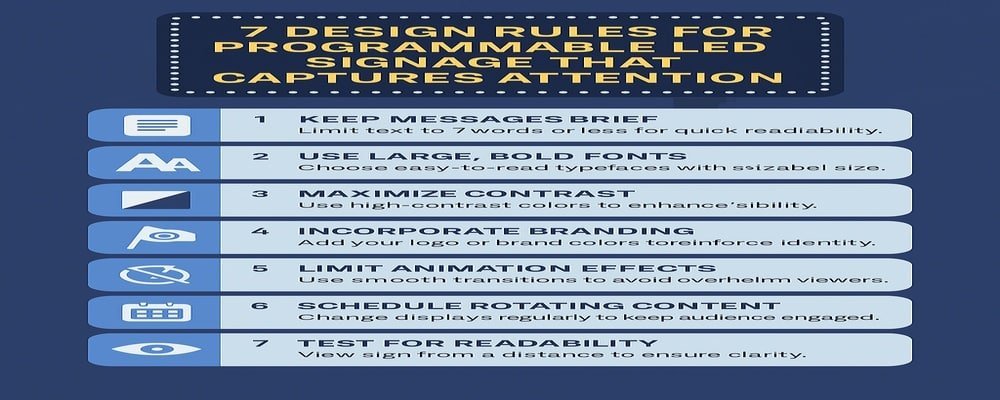
- Keep messages under 7 words for quick reading.
- Use large, bold fonts with strong color contrast.
- Stick to one main idea per screen.
- Add branding elements like your logo, but avoid clutter.
- Use animation sparingly to draw attention without distraction.
Tip: Include a clear call-to-action, like “Visit Today” or “Call Now,” so viewers know what to do next.
Programming Tips for Maximum Engagement
Even the best design can lose its impact if the programming is off. Smart scheduling ensures your message reaches the right people at the right time.
- Schedule promotions during peak foot or vehicle traffic hours.
- Rotate between multiple messages to hold interest.
- Update content for seasons, holidays, and special events.
- Test different message lengths to see which performs best.
Tip: Avoid long pauses between messages — a 2–5 second transition is ideal for most roadside signs.
Compliance and Local Regulations
Many cities have rules for LED signs, including brightness limits, animation speed, and message duration. Failing to follow these can result in fines or even having to turn your sign off.
Tip: Check your local sign code before designing. This ensures your sign meets regulations from the start, avoiding costly changes later.
Maintenance Tips for LED Signage Longevity
Your sign’s lifespan depends on proper care. Dust, dirt, and weather can affect performance over time.
- Clean the screen regularly to keep it bright.
- Inspect for dead pixels and replace faulty modules quickly.
- Keep wiring and power sources protected from moisture.
- Update software to prevent glitches.
Tip: Schedule a quarterly inspection to catch problems early before they lead to downtime.
10 Benefits of Learning to Design Programmable LED Signage
- High visibility in all lighting conditions.
- Works day and night without extra cost.
- Messages can be updated instantly.
- Attracts more walk-in and drive-by customers.
- Saves money on printing and physical banners.
- Increases engagement with motion and color.
- Can be tailored for any industry.
- Supports seasonal or event-based marketing.
- Enhances brand credibility and professionalism.
- Functions as a 24/7 marketing tool.
Lasting Impact – How to Design Programmable LED Signage That Works for Years
A programmable LED sign is not just a display — it’s an investment in long-term visibility and growth. With the right design, your message will be seen, remembered, and acted upon.
By focusing on clarity, strong visuals, and strategic programming, you can make your sign one of your most effective marketing tools. Add regular maintenance, and your investment will pay off for many years.
If you’re ready to take your business visibility to the next level, it’s time to design programmable LED signage that works as hard as you do.
FAQs About How to Design Programmable LED Signage
Q1: What’s the first step when you design programmable LED signage?
Decide on size, brightness, and resolution based on where it will be installed and who will be viewing it.
Q2: How long does programmable LED signage last?
With good care, most LED signs last between 7–10 years.
Q3: Is it expensive to design programmable LED signage?
Initial costs can be high, but the ability to update content instantly often offsets the expense.
Q4: Can I update programmable LED signage myself?
Yes. Most systems include software for easy message updates.
Q5: What colors work best when you design programmable LED signage?
High-contrast colors like white on blue, yellow on black, or red on white stand out best.