
Post and panel signs are one of the most dependable outdoor sign styles. They are cost-effective, highly visible, and adaptable for almost any use — from business branding to directional wayfinding. But if they’re not designed right, they can fade, warp, or break in just a few years.
That’s why knowing how to design post and panel signs for durability matters. Choosing the right materials, planning your layout, and installing them properly will keep your sign looking new year after year.
Key Takeaways: Design Post and Panel Signs
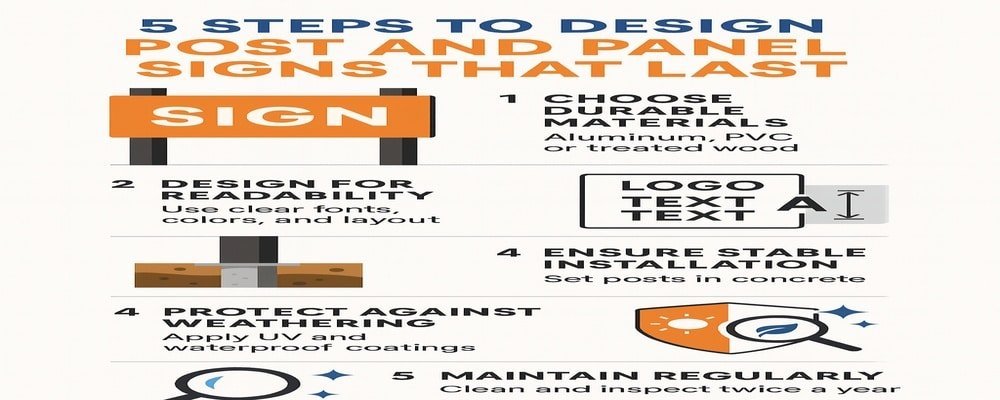
- Use durable materials like aluminum, PVC, or treated wood.
- Keep designs clean and readable for long-term visibility.
- Install with proper footings and hardware for stability.
- Maintain regularly to extend lifespan and protect your investment.
What Are Post and Panel Signs?
Post and panel signs are made from upright posts that hold a flat panel displaying your message. They’re often used for business entrances, real estate advertising, construction site notices, or directional information.
The design is simple, but that’s what makes them so versatile. You can design post and panel signs in different sizes, colors, and layouts to fit any purpose. Whether you need a temporary job site sign or a permanent business marker, the basic structure stays the same.
Tip: When designing, think about where the sign will be placed. A sign next to a busy road will need bigger fonts and fewer words than one in a parking lot.
Who Should Design Post and Panel Signs?
Post and panel signs are ideal for:
- Small businesses wanting affordable branding.
- Large corporations needing consistent signage across multiple sites.
- Real estate agents marketing properties.
- Developers promoting new projects.
- Construction companies marking job sites.
- Schools and churches sharing events or directions.
- Government offices posting public notices.
If your goal is to communicate a clear message that lasts outdoors, this type of sign is one of the best investments you can make.
How Designing Post and Panel Signs Can Make Your Life Easier
A well-made sign is a silent salesperson. Once installed, it works for you 24/7 without needing extra effort. Designing post and panel signs with longevity in mind saves you money and hassle.
Instead of replacing a faded or damaged sign every year, you’ll have a piece that stays sharp for years. This means fewer trips to the printer, lower repair costs, and less downtime for your branding.
Tip: Invest in high-quality UV-resistant inks. They prevent fading from sunlight and keep colors bright.
What to Consider When You Design Post and Panel Signs
When designing for durability, think about:
- Material: Choose aluminum for rust resistance, PVC for affordability, or treated wood for a natural look.
- Coating: Add weatherproof paint or laminate for extra protection.
- Graphics: Use fade-resistant vinyl or direct-print UV inks.
- Readability: Stick to bold fonts and strong contrast.
- Placement: Avoid areas prone to flooding or constant shade where mold could grow.
Tip: Don’t overcrowd the sign with text. Viewers often have just 3–5 seconds to read your message.
How to Choose Materials for Post and Panel Signs That Last
Your choice of material will directly affect the lifespan of your sign:
- Aluminum: Lightweight, rust-proof, and long-lasting.
- PVC: Budget-friendly and resistant to water damage.
- Treated Wood: Strong and attractive but requires more upkeep.
Adding a clear protective coating shields your sign from rain, snow, and UV rays. This small step can add years to your sign’s life.
Tip: If you’re in a windy area, use thicker posts and reinforced panel mounts.
Design Tips for Post and Panel Signs That Stand Out
A sign that lasts is only effective if people can read and remember it. When you design post and panel signs, follow these guidelines:
- Keep your message short and direct.
- Use brand colors but test them for contrast and visibility.
- Include your logo for instant recognition.
- Consider reflective vinyl for nighttime visibility.
Tip: Test your design by printing a small version and viewing it from 20 feet away. If it’s hard to read, adjust your font size or colors.
Installation Tips for Post and Panel Signs That Stay Put
Even the best-designed sign can fail if installed poorly. Secure your investment by:
- Digging deep post holes (at least 1/3 the post length).
- Using concrete footings for stability.
- Choosing galvanized or stainless hardware to avoid rust.
- Ensuring posts are level to prevent leaning over time.
Tip: For signs in high-wind areas, angle the panel slightly or use wind slits to reduce strain.
Maintenance Tips to Extend the Life of Your Post and Panel Signs
Maintenance doesn’t have to be complicated. Just follow these steps:
- Clean twice a year with mild soap and water.
- Check for cracks, chips, or loose parts.
- Touch up paint as needed.
- Reapply protective coatings every 3–5 years.
Tip: Keep landscaping trimmed so plants don’t block the sign or cause scratches.
10 Benefits of Learning to Design Post and Panel Signs
- They provide long-lasting advertising with minimal upkeep.
- They require low maintenance, saving time and money.
- They give a professional appearance to your property.
- They work across multiple industries.
- They’re easy to customize to fit your brand.
- They’re weather-resistant when made with the right materials.
- They’re budget-friendly compared to other sign types.
- They can be temporary or permanent.
- They improve brand recognition in your community.
- They offer high visibility from a distance.
Common Mistakes to Avoid When You Design Post and Panel Signs
- Overcrowding the panel with too much text or imagery.
- Using cheap materials that fade or break quickly.
- Skipping protective coatings.
- Placing the sign in poorly visible or high-damage areas.
Tip: Always check local sign codes before designing to avoid costly redesigns.
Real Examples of Post and Panel Signs That Last
Some construction site signs remain crisp for years because they use durable aluminum panels and vinyl graphics. Real estate developers often reuse the same sign structure for multiple projects by swapping out the panel — saving money while keeping a professional look.
Lasting Impressions – How to Design Post and Panel Signs That Work for Years
Your sign is often the first impression your business makes. By using strong materials, smart design choices, and proper installation, you can create a post and panel sign that works for you 24/7 for years to come.
Don’t treat your sign as an afterthought. Treat it as a long-term investment in your brand.
FAQs About How to Design Post and Panel Signs
Q1: What materials work best when you design post and panel signs?
Aluminum, PVC, and treated wood last the longest outdoors.
Q2: How long can a well-designed post and panel sign last?
With proper care, it can last 5–10 years or more.
Q3: Is it expensive to design post and panel signs that last?
No. Good materials cost more upfront but save on replacements later.
Q4: Can I design post and panel signs myself?
Yes, but a professional can ensure better durability and compliance with local codes.
Q5: Do I need permits to install post and panel signs?
In most areas, yes. Check with your local zoning office before installing.