
When your business sits along a busy road or highway, you have seconds to grab a driver’s attention. A well-designed pole sign can make that happen. These towering structures rise above buildings, billboards, and traffic, acting like beacons that call customers in.
Pole signs don’t just advertise your location; they signal your presence long before people arrive. Done right, they’re one of the most cost-effective, high-impact marketing tools you can invest in.
Key Takeaways to Design Pole Signs
- Pole signs create unmatched visibility for roadside businesses.
- Proper height, scale, and lighting boost effectiveness.
- Material choice impacts durability and weather resistance.
- Professional design ensures compliance and visual impact.
- Regular maintenance keeps pole signs looking new for years.
What Is a Pole Sign?
A pole sign is a freestanding sign mounted high above ground level, supported by one or more sturdy poles. They’re typically found near highways, shopping centers, or high-traffic areas where visibility from a distance is critical.
These signs can be single-sided or double-sided, illuminated or non-illuminated, and range from simple branding panels to elaborate multi-tenant displays. Their defining feature is their height, which allows them to rise above competing signs, trees, and buildings.
Tip: The higher the speed limit in the area, the taller your pole sign should be to give drivers time to read and react.
Who Should Design Pole Signs?
A Design pole signs is ideal for:
- Gas stations and travel centers – Attract travelers from far distances.
- Restaurants and fast-food chains – Trigger impulse visits from passing drivers.
- Shopping centers and plazas – Display multiple business names in one structure.
- Hotels and motels – Make locations visible for out-of-town guests.
- Auto dealerships – Showcase brand logos and promotions.
- Service businesses – From tire shops to car washes, visibility drives foot traffic.
If you rely on customers finding you while driving, a pole sign isn’t just nice to have — it’s essential.
Why Design Pole Signs Improves Your Business
A professionally design pole sign is like a permanent salesperson that never takes a break. It can:
- Increase brand recognition.
- Help drivers find you even in crowded commercial districts.
- Promote specials or events when paired with changeable or digital displays.
- Differentiate you from competitors with bold, unique design.
Tip: Limit your main message to seven words or less. This ensures drivers can read and process it quickly at high speeds.
Popular Pole Sign Styles
Single-Pole Signs
Clean, minimal, and modern. A single-pole structure supports the sign face and keeps focus on your brand.
Twin-Pole Signs
Offer greater stability, especially in windy climates, and can support larger, heavier sign faces.
Multi-Tenant Pole Signs
Perfect for malls and plazas. They allow multiple businesses to share the same structure while maintaining brand identity.
Tip: When designing a multi-tenant pole sign, ensure all panels are equally visible and follow consistent typography rules for readability.
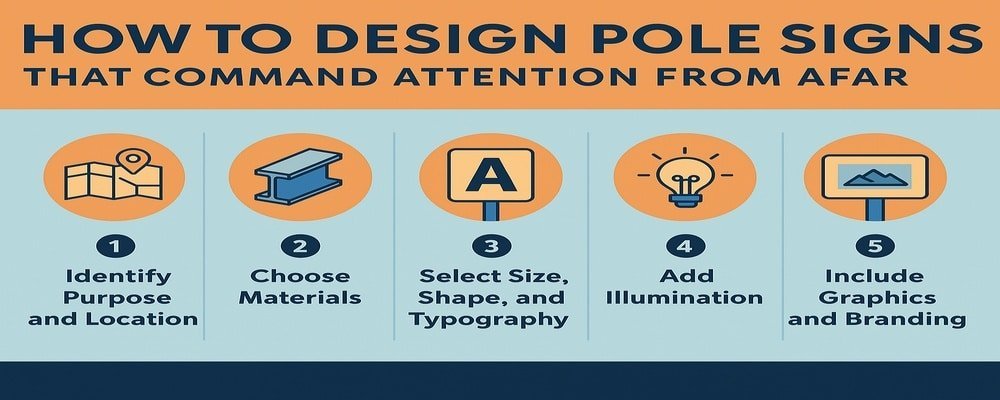
Step-by-Step: How to Design Pole Signs
Step 1 – Identify the Purpose and Location
Before designing your pole sign, clarify the main goal. Is it to:
- Advertise your brand name?
- Promote sales or events?
- Guide people to your location?
Also, consider the installation site. Road speed, line-of-sight obstructions, and nearby signs all influence how tall and large your pole sign should be.
Tip: Conduct a “visibility walk” — drive past the location at normal speed to see how early you can spot the proposed sign location.
Step 2 – Choose the Right Materials
Pole signs are exposed to the elements year-round. Selecting durable materials is critical:
- Steel poles – Strong, long-lasting, and ideal for heavy sign structures.
- Aluminum panels – Lightweight, rust-resistant, and great for vibrant graphics.
- Acrylic or polycarbonate faces – Offer bright, smooth surfaces for illuminated designs.
Tip: For coastal or high-humidity regions, prioritize rust-proof coatings and corrosion-resistant metals.
Step 3 – Select the Size, Shape, and Typography
Your sign’s proportions should fit its surroundings while standing out from them. Larger is not always better — too large can overwhelm the design and reduce readability.
Use bold, sans-serif fonts for the main message. Keep color contrast high (e.g., white text on a dark background) so the sign pops in all weather conditions.
Tip: Avoid script fonts for primary messages; they’re harder to read from a distance.
Step 4 – Add Illumination for 24/7 Impact
Lighting can make or break your pole sign’s effectiveness. Options include:
- LED lighting – Bright, energy-efficient, long-lasting.
- Fluorescent lighting – Cost-effective, but shorter lifespan.
- Internal illumination – Lights up the sign face evenly from within.
Tip: Consider automatic timers or light sensors to save energy without sacrificing visibility.
Step 5 – Include Eye-Catching Graphics and Branding
Your pole sign should match your other marketing materials in color scheme, font choice, and logo use. This consistency builds recognition and trust.
High-resolution graphics and bold color choices help grab attention. Avoid overcrowding with too many images or words — simplicity wins.
Tip: Use your brand’s primary colors but add a contrasting accent shade to make the design pop from afar.
Working With Professional Sign Designers
Designing and building a pole sign isn’t a DIY project. A professional sign company can:
- Ensure compliance with local zoning and permitting laws.
- Engineer the structure for safety and durability.
- Provide mockups so you know exactly what to expect.
- Advise on lighting, materials, and long-term maintenance.
Tip: Always request both daytime and nighttime renderings to see how your sign will perform in different lighting conditions.
Design Pole Signs for Maintenance Tips for Long-Lasting Pole Signs
- Wash sign faces regularly to remove dirt and grime.
- Inspect poles for rust, peeling paint, or structural damage.
- Replace burned-out bulbs immediately to maintain a professional look.
- Repaint or recoat poles every few years for protection and aesthetics.
Tip: Schedule seasonal inspections to catch small issues before they turn into costly repairs.
10 Benefits to Design Pole Signs
- Exceptional visibility from long distances.
- Works 24/7 without recurring ad costs.
- Increases impulse visits from passing traffic.
- Reinforces brand recognition.
- Built to last in tough weather conditions.
- Customizable for any industry or location.
- Can display multiple tenants in one structure.
- Compatible with LED and digital display upgrades.
- Adds value to your property.
- Serves as a one-time investment with long-term returns.
Conclusion: Design Pole Signs – Drive Traffic and Sales
Designing pole signs is about more than putting your name high in the sky. It’s about creating a landmark that customers can spot instantly and trust at first glance. From selecting durable materials to choosing the right lighting, every detail matters. A well-designed pole sign doesn’t just help people find you — it draws them in, builds brand loyalty, and works for you around the clock.
FAQs About Design Pole Signs
1. What’s the ideal height when you design pole signs for maximum visibility?
Most range between 20 and 80 feet, depending on speed limits, local codes, and visibility needs.
2. How long do pole signs last once installed?
With quality materials and regular upkeep, they can last 10–20 years or more.
3. Can I design pole signs with LED or digital displays?
Yes, adding LED panels increases flexibility for promotions and real-time updates.
4. How much does it cost to design and install pole signs?
Prices vary by height, materials, and features, but expect to invest in long-term value.
5. Do I need a permit to install a pole sign?
Almost always — and a professional sign company can handle the entire permitting process for you.