
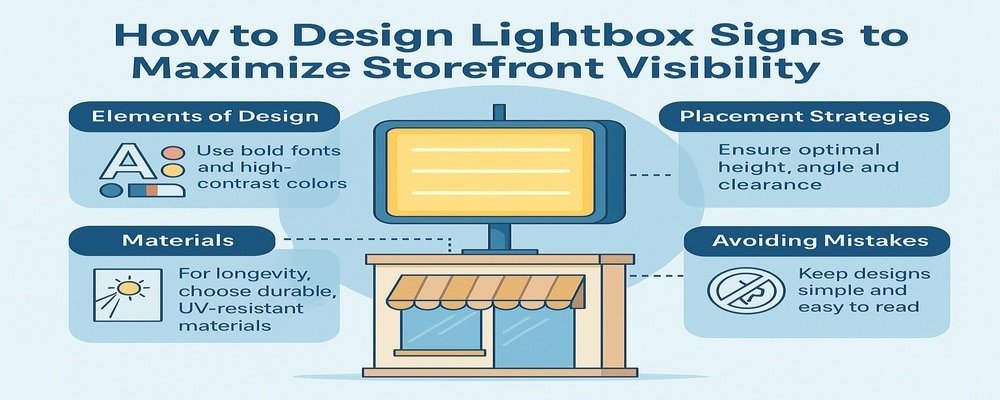
Your storefront is your handshake to the world. If it doesn’t stand out, customers may never step inside. That’s why learning how to design lightbox signs is so important. Unlike regular signs, lightbox signs glow day and night, keeping your brand visible when it matters most. Whether you’re in retail, hospitality, or services, a lightbox sign can transform foot traffic into loyal customers.
Key Takeaways
- Lightbox signs boost visibility both day and night.
- The right design increases customer recognition and trust.
- Smart material choices ensure long‑lasting durability.
- Placement and compliance are just as important as design.
- Investing in a quality lightbox sign pays back with higher sales.
Why Design Lightbox Signs for Your Storefront
A lightbox sign is more than just a piece of advertising—it’s your brand’s beacon. When you design lightbox signs, you’re creating a powerful way to grab attention 24/7. Unlike static signs that fade into the background, lightbox signs glow brightly, even in poor weather or low light.
Retailers love them because they drive more walk‑ins. Restaurants benefit because customers can spot them at night from down the street. Service providers, from gyms to salons, use lightbox signs to stand out in crowded areas. A well‑placed, well‑designed sign can literally stop customers in their tracks.
Tip: Think of your sign as a silent salesperson—always on duty, rain or shine.
What Is Designing Lightbox Signs?
Designing lightbox signs means creating a sign that has lighting built inside. The face, often acrylic or polycarbonate, displays your brand name, logo, or custom graphics. Behind it, LED lights provide a steady glow.
This combination makes your storefront pop, even on busy streets with lots of competition. A lightbox sign is not just about looks—it’s about function. It improves wayfinding, builds your brand image, and encourages impulse visits.
Tip: Always use energy‑efficient LEDs for longer life and lower energy bills.
Who Needs to Design Lightbox Signs?
Any business with a storefront benefits from lightbox signs. But some industries see the biggest gains:
- Retail Stores: From boutiques to supermarkets, they use lightbox signs to pull in traffic.
- Restaurants and Cafés: These signs boost visibility for late‑night hours.
- Medical Clinics: Lightbox signs help patients easily locate facilities, especially after dark.
- Gyms and Salons: They rely on signs to show they’re open and welcoming.
- Start‑Ups: New businesses need the strong presence that lightbox signs deliver.
If you want your storefront to be easy to find and hard to forget, a lightbox sign is essential.
How Designing Lightbox Signs Makes Life Better
The right lightbox sign does more than improve your curb appeal. It changes the way customers experience your brand. A glowing sign builds trust, signals professionalism, and draws people in even when your competitors are just around the corner.
For you, the benefits include more traffic, more sales, and a stronger brand image. With today’s efficient LED technology, you also save on operating costs while keeping your business lit all night.
Tip: Match your sign design with your brand’s personality to create a lasting impression.
10 Benefits of Designing Lightbox Signs
- 24/7 Visibility – Always visible, no matter the time of day.
- Increased Foot Traffic – Draws customers into your store.
- Brand Recognition – Creates lasting impressions with bold designs.
- Professional Look – Shows customers you’re serious and reliable.
- Energy Efficiency – LED lights save money on power bills.
- Custom Design Options – Tailor the look to fit your branding perfectly.
- Durability – High‑quality materials withstand weather and wear.
- City Code Compliance – Professional sign companies ensure regulations are met.
- Low Maintenance – LEDs can last up to 50,000 hours without replacement.
- Higher Sales Conversion – More visibility often means more customers walking through your door.
Elements of Effective Lightbox Sign Design
The design itself determines how effective your sign will be. To design lightbox signs that stand out, focus on these essentials:
- Font Choice: Bold, clear fonts are easier to read at a distance. Avoid cursive or overly decorative styles.
- Color Contrast: Dark backgrounds with light letters—or vice versa—improve readability.
- Logo Placement: Make sure your logo is big enough to be noticed.
- Lighting Quality: LEDs give consistent brightness and last longer than older bulbs.
Tip: Step across the street from your storefront and ask yourself if the sign is easy to read. If not, simplify.
Choosing the Right Materials for Long‑Lasting Lightbox Signs
Not all signs are created equal. Materials matter when you design lightbox signs for lasting results.
- Acrylic Faces: Offer a sleek, glossy look that enhances vibrant colors.
- Polycarbonate Faces: Extremely durable and resistant to impacts.
- Aluminum Frames: Lightweight yet strong, perfect for outdoor use.
- LED Lighting: Energy‑efficient, low heat, and long‑lasting.
Tip: If your storefront faces direct sunlight, request UV‑resistant coatings to prevent fading.
Placement Strategies to Maximize Storefront Visibility
Even the best lightbox sign won’t work if people can’t see it.
- Height: Mount the sign high enough for drivers and pedestrians to notice.
- Angle: For busy sidewalks, projecting lightbox signs perpendicular to the building capture more views.
- Avoid Obstacles: Don’t let trees, poles, or awnings block your sign.
- City Codes: Work with a professional installer who understands local rules.
Tip: Walk and drive past your storefront at different times of day to test visibility.
Common Mistakes to Avoid When You Design Lightbox Signs
Many businesses waste money on signs that don’t deliver. Avoid these mistakes:
- Overcrowding the Sign: Too much text makes it unreadable.
- Poor Color Choices: Signs that blend into the building won’t stand out.
- Cheap Materials: They may crack, fade, or yellow quickly.
- Ignoring Local Codes: Non‑compliant signs may need costly replacements.
Tip: Keep your message short and your design clean. Clarity always wins.
Real‑World Examples of Successful Lightbox Sign Designs
A small coffee shop in a busy downtown area upgraded from a painted sign to a sleek LED lightbox. Within a month, they reported a 25% increase in evening traffic.
A clothing boutique added a double‑sided projecting lightbox. Shoppers spotted it from two blocks away, helping the store triple its walk‑ins during the holiday season.
Tip: Look for design inspiration in businesses like yours and note what works.
How to Get Started Designing Lightbox Signs for Your Storefront
Here’s a simple roadmap:
- Set a Goal: Decide if you want to boost traffic, improve branding, or highlight promotions.
- Hire Professionals: Work with a sign company that specializes in lightbox design.
- Approve the Design: Check colors, fonts, and lighting before final approval.
- Get the Permits: Stay compliant with your city’s sign rules.
- Install and Shine: Launch your sign and monitor its impact.
Tip: Start with one high‑impact lightbox sign before expanding to additional displays.
Light Up Your Storefront with a Custom Lightbox Sign
Designing lightbox signs is one of the most powerful steps you can take to make your business stand out. It’s not just a sign—it’s your brand’s invitation to the world. When designed well, a lightbox sign delivers visibility, trust, and increased revenue.
Now is the time to brighten your storefront and draw in more customers. Don’t let your competition shine brighter than you.
Call to Action: Contact us today for a free consultation and discover how a custom lightbox sign can transform your storefront visibility.
FAQs About Designing Lightbox Signs
1. What is the best way to design lightbox signs for a small storefront?
Keep the design simple. Use bold fonts and high‑contrast colors. Avoid clutter so customers can read your sign in seconds.
2. How much does it cost to design lightbox signs?
Costs depend on size, materials, and lighting. Most small to medium lightbox signs range from $2,000 to $7,000, depending on customization.
3. Are LED lights better when you design lightbox signs?
Yes. LEDs are brighter, last longer, and cost less to run compared to fluorescent bulbs. They also reduce maintenance needs.
4. What materials last the longest for lightbox sign design?
Polycarbonate faces paired with aluminum frames and LED lighting give the longest lifespan and require minimal maintenance.
5. How can I design lightbox signs that meet city codes?
Work with a professional sign company familiar with your local regulations. They’ll handle permitting and ensure compliance with size, height, and brightness rules.