
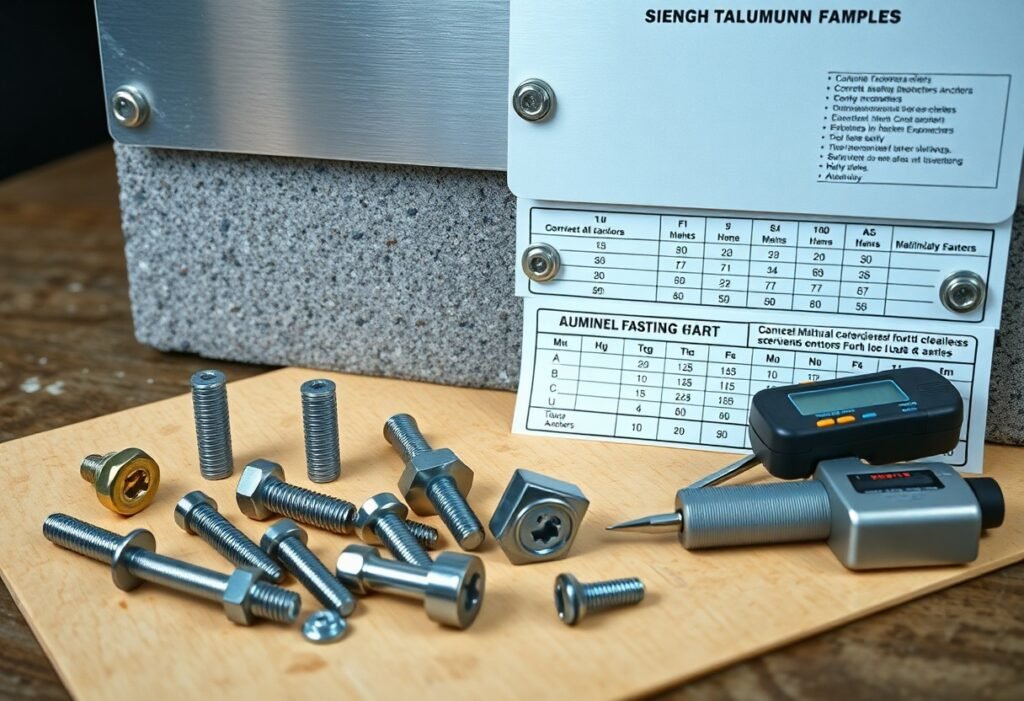
Load ratings determine which sign fasteners will safely support your sign in wind, vibration, and mounting substrate conditions; you should assess material (stainless steel, aluminum, nylon), head type (lag bolts, anchor bolts, toggles, rivets), shear and tensile loads, and environmental factors like corrosion and temperature. Match fastener strength and embedment depth to sign size and local codes, and consult manufacturer specs and load tables to verify safe working loads for your installation.
Key Takeaways:
- Select fastener type based on substrate and condition: toggle/ Molly anchors for hollow walls, lag screws for wood, expansion or epoxy anchors for concrete/masonry, and stud/through-bolts for steel.
- Design for both shear and tensile (pull-out) loads and use the manufacturer’s published working load limit (WLL); apply a safety factor (commonly 4:1 or greater) against ultimate capacity.
- Consider wind, vibration, and dynamic loads in addition to dead weight; use multiple fasteners or backing plates to distribute loads and reduce edge/spacing failures.
- Specify corrosion-resistant materials (316 stainless, hot-dip galvanized, or suitable coatings) and proper embedment depth for outdoor or coastal installations.
- Use tested, rated anchors and follow manufacturer instructions and local codes; consult a structural engineer for large, heavy, or critical signage.
Understanding Sign Fasteners
You need fasteners sized for both static weight and dynamic forces: wind, vibration and thermal cycling. Assess each sign’s surface, exposure and expected loads; small wayfinding signs often need 200-600 lb per anchor, while channel-letter or mounted LED signs may demand anchors rated 1,000-5,000 lb. Factor safety margins (typically 2-4× expected load) and local codes when selecting spacing, embedment depth and corrosion protection for long-term performance.
Types of Sign Fasteners
You’ll choose from lag bolts, masonry anchors, toggle bolts, rivets and standoffs depending on substrate: lag bolts for wood, wedge or sleeve anchors for concrete, toggles for hollow walls, pop rivets for thin-sheet connections and standoffs for architectural mounting; typical single-anchor capacities range from approx. 50 lb (hollow-wall toggles) up to several thousand pounds for heavy-duty masonry anchors.
- Lag bolts – effective in timber posts and plywood backings; use with washers and helix screws for pullout resistance.
- Masonry anchors – sleeve, wedge or chemical anchors; choose embedment depth to reach 60-80% of rated pullout.
- Toggle bolts and hollow-wall anchors – good for drywall or insulated panels; expect lower shear but usable for light signs.
- Rivets and blind fasteners – suited to thin aluminum or composite panels; shear-rated rather than tension-rated.
- Perceiving how installation method alters capacity is key: torque, hole size and edge distance can cut rated performance by 20-50% if ignored.
| Lag Bolt | Approx. 300-1,500 lb in wood; use with washer and full thread engagement |
| Masonry Anchor (wedge/sleeve) | Approx. 500-3,000+ lb in concrete depending on diameter and embedment |
| Toggle Bolt | Approx. 50-300 lb in hollow walls; best for lightweight signs and fixtures |
| Pop Rivet | Shear ~100-600 lb depending on material and size; common for thin-sheet joins |
| Standoff | Decorative mounts supporting 200-1,000 lb depending on anchors and backing |
Materials Used in Sign Fasteners
You should match fastener material to environment and galvanic compatibility: stainless steel (304 or 316) for outdoors, 316 for coastal chloride resistance, hot-dip galvanized steel for buried or masonry use, aluminum for lightweight corrosion resistance, and nylon or polymer anchors where insulation or vibration damping is needed.
When you specify stainless, pick 316 for marine or salt-spray exposure because its molybdenum content reduces pitting; 304 works for general outdoor use. Choose hot-dip galvanizing (Class A or specific µm thickness per spec) for long-term protection in masonry. Use aluminum fasteners with aluminum panels to avoid galvanic corrosion, and select nylon anchors for low-load indoor signs where electrical isolation or thermal expansion flexibility matters; always verify compatibility and service-life expectations with supplier test data.
Load Ratings and Their Importance
When you size fasteners, rely on published tensile and shear ratings rather than guesswork; metric grades like 8.8 (≈800 MPa) and 10.9 (≈1,040 MPa) give predictable capacities, while A2/A4 stainless typically yields lower tensile strength (~500-700 MPa) but better corrosion resistance. Check working load limits and match them to expected wind uplift and vibration, and consult resources such as Understanding Fastener Grades and Classes for grade-to-strength conversions.
Factors Influencing Load Ratings
Material, diameter, thread engagement and base substrate all determine real-world capacity; temperature, corrosion and dynamic loads (gusts, vibration) reduce usable ratings.
- Material: stainless vs. alloy steel
- Size: tensile area scales with diameter²
- Engagement: use ≥1-1.5× diameter in steel, more in softer substrates
- Installation: torque and washers affect clamp load
Any selection should use manufacturer working loads and a safety factor commonly between 3:1 and 4:1 for overhead signage.
Standard Load Ratings for Common Applications
For small parking or wayfinding signs under 5 kg you can often use M4-M6 stainless fasteners with working shear ~1-3 kN; medium retail signs (5-25 kg) typically require M8-M10 in 8.8 steel or A4 stainless with 8-20 kN capacity per fastener; large or overhead signs demand high‑strength 10.9 bolts or structural anchors rated 30-100 kN and a 3:1-4:1 safety factor.
For example, a 20 kg wall‑mounted sign using four anchors should have each anchor rated well above the ~200 N static share to account for wind; specifying 2-10 kN anchors (depending on exposure) is common practice, and you should verify pull‑out data for the substrate and use appropriate edge distances and embedment depths.
Selecting the Right Sign Fastener
Assessing Environmental Conditions
You should evaluate exposure to salt spray, moisture, UV and prevailing winds: coastal sites favor 316 stainless over 304 or zinc-plated options. Design for local wind loads (for example, 90 mph / 145 km/h gusts in many codes) and apply a safety factor of about 2. Thermal swings (‑30 to 60°C) can loosen connections, so use locknuts, threadlocker or spring washers. Schedule inspections yearly in harsh environments and every 3-5 years elsewhere to catch corrosion or loosened hardware early.
Matching Fasteners to Sign Types
You match fastener choice to sign weight, surface and load type: use 1/4″-3/8″ lag bolts for wood posts, 1/2″ wedge anchors for heavy concrete-mounted signs supporting kips-scale loads, toggle bolts for hollow walls (150-300 lb capacity), blind rivets for sheet metal and tamper‑resistant screws in public sites. Factor shear versus tension loads and dynamic forces from vibration or wind when sizing hardware.
- Weight class: light (under 10 kg), medium (10-50 kg), heavy (50+ kg).
- Substrate: wood, concrete, hollow masonry, thin-gauge metal, composite panels.
- Corrosion needs: choose 316 SS for coastal or chemical exposure.
- Installation access: blind fasteners where you lack backside access.
- This gives you predictable long-term performance when combined with proper spacing and edge distance.
| Wedge Anchor (1/2″) | Best for concrete; typical working shear ~1,500-3,000 lb depending on embedment |
| Toggle Bolt | Hollow walls/drywall; effective shear ~150-300 lb per fastener |
| Lag Bolt (1/4″-3/8″) | Wood posts/frames; pullout varies 200-800 lb based on timber quality |
| Blind Rivet (Pop) | Sheet metal/composite panels; shear ~50-200 lb depending on material |
| Security/Torx Screw (SS) | Public signage; corrosion resistant, shear ~100-400 lb per fastener |
You should also account for spacing, edge distance and combined loading: keep anchor spacing at least 10× the anchor diameter and edge distance ≥6× diameter when possible, stagger multi-anchor layouts to distribute shear, and use a factor of safety of 2 for wind and dynamic loads. Use backing plates for thin substrates and specify proof testing for critical assemblies over 500 kg. Inspect torque and embedment at installation to validate performance.
- Spacing example: for a 1/2″ anchor, target ≥5″ between anchors when practicable.
- Edge distance: increase when substrate is cracked or low-strength.
- Use backing plates on thin or composite panels to spread load.
- Specify 2× design load for safety on wind-exposed signs.
- This approach reduces failure modes from pullout, shear and fatigue over service life.
| Substrate: Concrete | Use wedge or sleeve anchors (1/2″ to 3/4″) with deep embedment |
| Substrate: Wood | Lag bolts or through-bolts with washers; pre-drill to avoid splitting |
| Substrate: Hollow Wall | Toggle bolts or expanding anchors sized to expected shear |
| Substrate: Thin Metal | Blind rivets or self-clinching nuts; consider backing plates |
| Substrate: Composite Panels | Use bonded washers, backing plates and stainless fasteners to prevent pull-through |
Installation Guidelines
When installing signs, plan for load distribution, maintenance access, and corrosion control; you should set anchors plumb and torque to manufacturer specs using a calibrated torque wrench. Aim for thread engagement of at least 1× bolt diameter in steel and 1.5-2× in aluminum, maintain edge distance ≥4× anchor diameter (e.g., 1.5″ for a 3/8″ anchor), leave ~1/8″ for thermal expansion, use neoprene washers for sealing, and specify 316 stainless in coastal exposures.
Tools and Techniques
Use an SDS hammer drill for concrete, a cordless impact with torque-limiting for structural steel, and a calibrated torque wrench for final tightening; you should also carry calipers, hole templates, and a center punch to verify fit. Bring stainless locknuts or Nylock inserts, blue threadlocker for removable joints, anti-seize for dissimilar metals, and backing plates (at least 2″ square for signs over 24 sq ft); for example, a 4×6 ft panel commonly uses four 3/8″ anchors with backing plates to spread wind loads.
Common Mistakes to Avoid
Frequent errors you’ll see are under- or over-torquing fasteners, choosing the wrong alloy for salt-air, insufficient embedment or edge distance, omitting backing plates on large panels, and failing to allow thermal movement; using self-tapping screws in thin-gauge aluminum or relying on single-point attachment in high-wind sites often leads to failure. Check substrate, wind exposure, and fastener compatibility before final selection.
You can mitigate those mistakes by following numeric guidelines: re-torque after 24-48 hours and at scheduled inspections, maintain thread engagement and edge distance rules, and use torque ranges aligned to bolt size (typical guidance: 1/4″ ≈ 8-12 ft·lb, 3/8″ ≈ 20-30 ft·lb, 1/2″ ≈ 50-70 ft·lb). Perform a pull-test on representative anchors for high-risk sites and log fastener types, torque values, and installation dates for future maintenance.
Maintenance of Sign Fasteners
Ongoing maintenance prevents failures and extends service life; you should inspect, retorque, and document fastener condition on a schedule based on exposure. For coastal sites inspect every 3 months, for inland sites every 6 months, and always after storms or impacts. Track torque readings, corrosion progression, and any hole elongation so you can compare against original load ratings; swap zinc-plated hardware for 316 stainless in high-salt exposures and log replacements in an asset register.
Regular Inspection Practices
You should use a consistent checklist: check for visible corrosion, loose or missing washers, movement of the sign more than 5 mm, sealant failure, and elongation of mounting holes. Retorque fasteners with a calibrated wrench to the manufacturer’s spec and record values. Perform a sample pull-out or torque-retention test on about 10% of fasteners every 3-5 years, and inspect immediately after winds above ~25 m/s or after vehicle impacts.
Signs of Wear and When to Replace
Replace fasteners if you see pitting that removes >30% cross-sectional area, threads stripped along >25% of their length, fractures, crushed washers, or hole elongation exceeding 2 mm. Also replace anchors if embedment concrete spalls or the fastener loses more than 20% of retorque within a month. These thresholds protect the sign’s rated capacity and prevent progressive failure under wind or vibration.
To assess deterioration, measure shank diameter with calipers, use dye-penetrant or magnetic particle testing for cracks, and photograph deficits for trend analysis. If an expansion anchor shows slippage in a pull test, replace the anchor and consider epoxy-set alternatives or a larger diameter anchor; for coastal arrays, upgrade to 316 stainless or specify a protective sleeve and inspect replacements after the first 12 months to confirm performance.
Case Studies
Several real-world projects show how correct fastener selection, load rating and maintenance intervals change outcomes: you can see installations that lasted 10+ years with simple measures, and failures that occurred within months after specification errors or corrosion. The following case studies include weights, anchor counts, rated loads and environmental notes to inform your choices.
- Storefront aluminum panel – 12 kg sign, 4 anchors (M6 toggles), required shear per anchor ≈ 800 N; you get zero failures after 5 years when using grade 316 screws and 2:1 safety factor for wind gusts to 25 m/s.
- Channel-letter façade – 45 kg, 6 epoxy-set M8 anchors, pullout capacity tested at 6.1 kN each; you maintained annual torque checks and avoided anchor creep for 10 years in urban environment.
- Illuminated highway gantry – 320 kg sign + frame, 8 high-strength bolts (8.8), design loads 2.2 kN static and 4.0 kN dynamic per fastener; you applied 3:1 safety factor and scheduled biannual inspections, preventing fatigue failures under 120 km/h crosswinds.
- Hollow-wall blade sign failure – 8 kg sign, 2 hollow-wall anchors (molly), measured cyclic vibration led to anchor loosening after 24 months; when you switched to toggle bolts with nylon isolation, service life extended beyond 4 years.
- Coastal installation – 30 kg aluminum sign, 4 lag screws in 316 stainless; salt spray testing 2,000 hrs showed.
- Event banner system – 6 m span exposed to gusts up to 40 m/s, peak uplift ~3.2 kN; you used temporary rated anchors at 5 kN each plus spreader bars and achieved safe short-term deployment for month-long installation.
Successful Installations
You find the most durable installations use substrate testing, conservative safety factors (typically 3:1 for overhead signs), and corrosion-resistant materials; for example, a municipal wayfinding program used M10 stainless anchors rated 8 kN tensile, tested substrates to >4 kN pullout, and logged zero failures over eight years.
Lessons Learned from Failures
You will see failures stem from underestimating dynamic loads, choosing anchors unsuited for hollow or degraded substrates, and ignoring corrosive environments; inadequate edge distances and single-point attachments often magnify these mistakes into sudden detachments.
More specifically, one coastal case used zinc-plated screws rated 1.0 kN each for a 200 kg sign with four fasteners; after three years salt corrosion reduced capacity by ~60%, producing a pullout when wind loading spiked. You mitigate this by specifying 316 stainless or coated high-grade bolts, increasing anchor count or safety factor to 3-4 for overhead signs, and requiring substrate pull tests and annual inspections to catch loss of capacity early.
Summing up
As a reminder, when choosing sign fasteners you should match fastener type and load rating to the sign weight, wind and seismic loads, and the substrate; select materials with appropriate corrosion resistance; use rated anchors or structural fasteners with documented working load limits and safety factors; follow manufacturer specs and local codes; and inspect and maintain attachments regularly to ensure your installation meets required load capacities and long‑term performance.
FAQ
Q: What types of sign fasteners are available and when should each be used?
A: Common fasteners include wood screws for timber, machine screws with nuts or carriage bolts for through-bolted steel/wood connections, hex/head bolts for heavy loads, sheet‑metal and self‑tapping screws for thin metal, blind rivets (pop rivets) and structural rivets for aluminum or when only one side is accessible, standoffs for displays and glass, and a range of anchors for masonry and hollow walls: concrete screws (Tapcon), wedge or sleeve anchors, hugger anchors, toggle bolts, and molly anchors. Adhesives and double‑sided structural tapes (e.g., VHB) are suitable for smooth, clean substrates and low to moderate loads or vibration‑free applications. Choose by substrate (wood, metal, concrete, drywall, composite), load magnitude, access (both sides or one side), corrosion requirements (use stainless or hot‑dip galvanized in corrosive environments), and aesthetic needs (exposed standoffs vs concealed anchors).
Q: How do load ratings – tensile, shear, and pullout – affect fastener selection?
A: Tensile (axial) capacity is the load to pull the fastener out or stretch it along its axis; shear capacity is load across the shank; pullout (or pull‑through) is the anchor’s resistance to being extracted from the substrate. Select fasteners where the governing capacity (highest demand between shear, tension, and pullout) exceeds applied loads with an appropriate safety factor (common practice: design factor of 3 to 4 for building hardware unless code specifies otherwise). Account for combined actions (simultaneous shear and tension), dynamic loads (wind gusts, vibration), corrosion reduction factors, and group effects when multiple fasteners share a load. Use manufacturer published ultimate and allowable loads, and reduce for embedment depth, edge distance, and poor substrate quality.
Q: How do I estimate wind and other lateral loads for outdoor signs and translate that into fastener requirements?
A: Determine the sign’s projected area and local design wind pressure (use local code, ASCE 7, or published wind maps). Multiply pressure (psf) by area to get the total force; apply shape/drag coefficients as required. Split forces into net shear and overturning moment components – convert moments into additional tensile demand on anchor rows. Divide forces among the number and layout of fasteners to find per‑fastener demand, then select fasteners and anchors whose allowable shear and tensile capacities exceed those demands, including a chosen safety factor. For large or highway signs, follow AASHTO/department of transportation or local authority requirements and obtain engineered calculations when overturning or tertiary supports are present.
Q: What installation practices change the effective load capacity of fasteners?
A: Correct hole size, clean holes (remove dust/debris), specified embedment depth, edge distance, and spacing preserve rated capacity. Torque fasteners to manufacturer specifications; under‑torquing reduces clamp force and pullout resistance, overtightening can strip threads or crush substrates. Use washers and lock‑nuts or threadlocker where vibration is present; use backing plates on thin or brittle substrates to distribute load. Match materials to avoid galvanic corrosion (e.g., stainless fastener with aluminum may need isolation). For masonry, drill to correct diameter and depth and follow anchor tightening procedures. Field pullout or proof tests validate performance when uncertainty exists.
Q: Which standards, tests, or certifications should I consult to verify fastener performance for signage?
A: Consult manufacturer data sheets and load tables, and reference standards: ASTM specifications for fastener materials and tests (e.g., tensile and shear), ICC and IBC for building attachments, ASCE 7 for wind loads, and AASHTO for highway sign structures. Look for certified anchor systems with published allowable loads and corrosion testing (e.g., ASTM B117 salt spray for coatings). When in doubt for large, elevated, or safety‑critical signs, require an engineer‑stamped calculation and consider on‑site proof tests (pullout or torque tests) to confirm capacity in the actual substrate.