
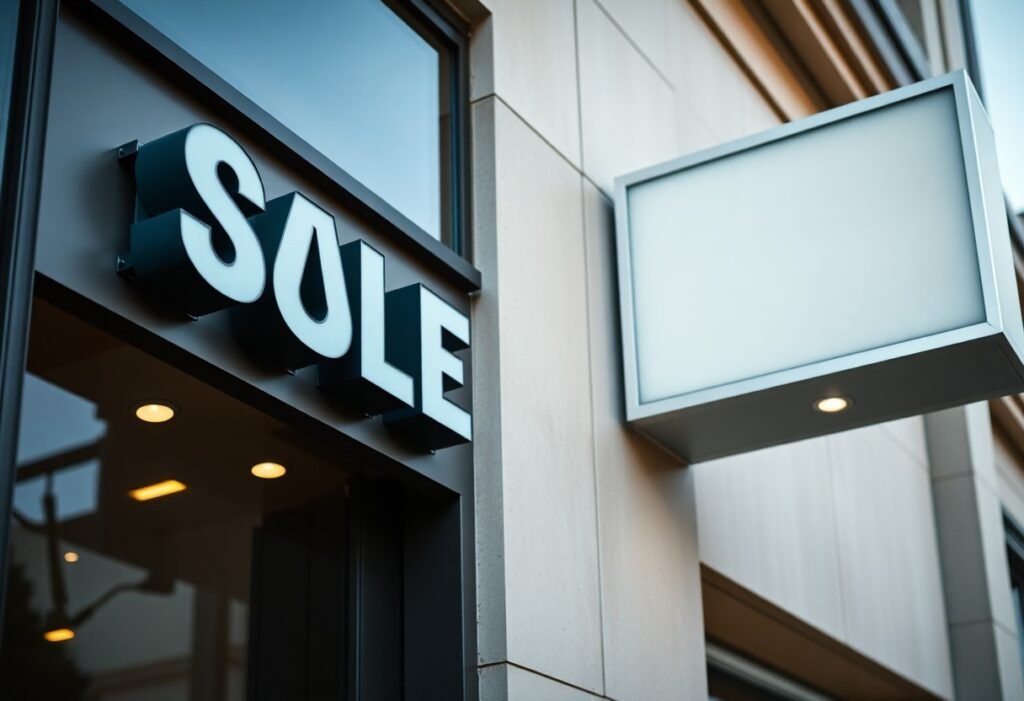
There’s a clear difference in form and function that shapes how your brand is perceived: channel letters are individual, three-dimensional characters with internal LED illumination for sharp, high-impact visibility and custom styling, while cabinet signs are boxed enclosures with a printed or acrylic face that suit larger messages, multi-tenant displays, and often lower upfront costs; choose based on aesthetics, visibility, installation and maintenance needs.
Key Takeaways:
- Construction and look: Channel letters are individual 3D letters or logos with illuminated faces or halo backlighting; cabinet signs are box-style panels with a single flat face that displays graphics or copy.
- Branding and visibility: Channel letters offer crisp, dimensional branding ideal for wordmarks and high legibility; cabinet signs are better for large graphics, multi-color artwork, or unified sign faces.
- Illumination options: Channel letters provide front-lit, back-lit (halo), or combination lighting per element; cabinet signs use internal illumination behind a routed or printed face for even lighting across the panel.
- Cost, installation, and placement: Channel letters are typically priced per letter and require precise mounting and wiring; cabinet signs can be more economical for large surface coverage but are heavier and may need different mounting structures.
- Maintenance and longevity: Channel letters allow individual component replacement and easier targeted repairs; cabinet signs can require full-face replacement for artwork changes and may need more extensive weatherproofing upkeep.
Overview of Channel Letters
As individual 3D characters mounted directly to a building or on a raceway, channel letters give you high-visibility, illuminated branding that reads well day and night; common materials include aluminum returns, acrylic faces and LED modules with roughly 50,000-hour lifespans, while typical letter depths range from 2″ to 14″ depending on scale and viewing distance.
Definition and Characteristics
Channel letters are single, formed letters or logos built with metal returns and translucent faces, available as front-lit, reverse-halo or open-face neon styles, so you can choose crisp front illumination or subtle halo glow; they’re usually stud-mounted or raceway-mounted for secure installation and often come with 3-5 year LED warranties and IP-rated housings for exterior durability.
Common Uses and Applications
Retail storefronts, restaurants, gas stations and shopping centers commonly use channel letters for storefront identity and street visibility because you can tailor size and illumination to arterial roads and mall interiors; larger facilities like hospitals and college campuses also rely on them for wayfinding and corporate identity, with many local permits dictating illumination hours and placement.
Installation is flexible: you can have letters stud-mounted directly into masonry, mounted on a painted backer or attached to a raceway for easier service. Costs typically run $200-$800 per letter depending on height and illumination, and many businesses choose reverse-halo for upscale environments or front-lit LEDs for high-contrast nighttime visibility.
Overview of Cabinet Signs
You’ll see cabinet signs as box-like, self-contained enclosures-often called lightboxes-that house illuminated faces made of acrylic or aluminum. They provide even backlighting for large logos, accommodate changeable panels or digital inserts, and commonly measure from small tenant IDs up to storefront units of 20-50+ square feet with depths around 6-12 inches.
Definition and Characteristics
You should understand cabinet signs are rectangular frames with internal LED illumination behind acrylic faces; framing is usually aluminum for rigidity and weather resistance. Manufacturers size them from 2-6 sq ft for tenant IDs to 20-50+ sq ft for storefronts, and faces can be single- or double-sided with applied vinyl graphics or routed returns.
Common Uses and Applications
You’ll find cabinet signs across retail centers, mall frontages, gas stations, hospital campuses, and office parks; they work well for multi-tenant directories, single-store identification, and municipal wayfinding. Mounting choices-wall, pole, or blade-plus single- versus double-faced designs affect sightlines and visibility from 8-20 feet or farther.
For example, a strip-mall owner might order 3-6 cabinet signs, each 24-36 inches tall mounted every 50-100 feet along the façade to guide drivers; a hospital may spec larger, 6-10 ft-wide cabinets with double-faced illumination for 24/7 wayfinding across 200-500 foot approach distances. Materials and LED drivers vary to meet local codes.
Key Differences Between Channel Letters and Cabinet Signs
Often the decision hinges on scale, mounting and visual intent: channel letters are individual 3D characters (typically 3-6 inches deep) you mount directly to the façade or on a raceway, offering precise logo reproduction and letter-level illumination; cabinet signs are box enclosures (commonly 6-24 inches deep) with a continuous face ideal for large graphics or multi-tenant panels. You trade off granular customization and sculptural depth for easier large-area branding and simpler installation logistics.
Design and Construction
Typically channel letters are formed from 20-24 gauge aluminum returns with acrylic faces and internal LED modules, letting you produce custom fonts, metal returns, or halo backlighting; cabinet signs use welded aluminum frames with acrylic or polycarbonate faces and vinyl or digital prints for artwork. You’ll see channel letters excel at shaping logos and depth, while cabinets simplify large-format graphics and can span long storefronts without individual mounting points.
Visibility and Illumination
In practice channel letters deliver sharp, sculpted visibility up close and from street level, especially when front-lit or halo-lit, whereas cabinet signs provide broad, uniform illumination across a large face-better for long-distance recognition on busy roads. You can expect channel letters to read well from dozens to a few hundred feet depending on letter height; cabinet faces scale more predictably when you need one continuous visual plane.
LED modules in both systems typically last ~50,000 hours, but performance differs: channel letters allow controlled front or halo lighting with minimal light bleed, giving crisp edges against textured façades; cabinets rely on face diffusion so color uniformity and mounting depth determine evenness. You should check color temperature (3,000-6,500K) and LED spacing to avoid hotspots, and note that poorly fabricated cabinet faces can show striping under close inspection.
Cost Considerations
Broadly, channel letters are priced per character-roughly $150-$600 per letter depending on size, finish and illumination-while cabinet signs are often priced by area, typically $100-$300 per sq ft plus installation. You must budget for electrical hookup, mounting hardware, permits and potential scaffolding; complex logos, stainless steel faces, or custom trims will push channel-letter costs higher than a standard cabinet face of the same linear width.
Over time you’ll see different lifecycle costs: LEDs cut energy draw compared with neon (often reducing energy use by up to 70%), and individual letter repairs let you service a single component rather than replace a full face. Permit fees commonly range $50-$500 depending on jurisdiction, and routine maintenance or face replacement for a cabinet is often simpler but may require full-panel removal-factor expected maintenance and a 5-10 year refresh cycle into your budget.
Advantages of Channel Letters
Beyond basic visibility, channel letters deliver flexibility and long-term value: you get 3-12″ deep three-dimensional letters, LED modules with roughly 50,000-hour life and up to 50% lower energy use versus neon, and modular repairs that avoid replacing the whole sign. You can size letters from a few inches to several feet-using the 1″ per 10′ viewing-distance rule-making them suitable for storefronts, malls and highway-facing applications where clarity and nighttime presence matter.
Aesthetic Appeal
Material choices-painted aluminum returns, acrylic faces, brushed metal finishes or translucent colors-let you craft anything from minimalist to premium looks. Backlit halo effects create depth and ambient glow, while front-lit faces boost contrast; businesses like boutiques and upscale restaurants often pair brushed returns with warm LEDs to convey quality and maintain legibility at distances from 50 to 200 feet depending on letter height.
Branding Opportunities
You can replicate exact brand elements: custom fonts, logo contours and Pantone-matched acrylics, plus multi-color illumination and dimming controls for different times of day or campaigns. Channel letters let you maintain consistent signage across multiple locations, enabling instant recognition whether your storefront sits on a busy urban strip or in a suburban center.
Beyond visuals, channel letters enable tactical branding: swap LED colors for promotions, choose halo lighting to create a premium nighttime ambiance, or use RGB modules for limited-time effects. Modular construction and standardized mounting reduce site-to-site variation, and the long LED lifespan (~50,000 hours) keeps color and intensity stable, lowering maintenance and preserving a uniform brand image across franchises or multi-site rollouts.
Advantages of Cabinet Signs
You get a large, unified display area that maximizes brand visibility and often costs less per square foot than multiple channel letters; cabinet signs deliver even, wall-to-wall illumination and simplified graphic swaps via replaceable faces. LEDs can cut energy use by up to 60% and commonly last 50,000+ hours, lowering lifetime costs. For a direct comparison see Channel Letters vs Cabinet Signs.
Versatility and Customization
You can specify cabinet depths from about 4-18 inches, choose faces like acrylic, aluminum composite or translucent vinyl, and print full-color graphics or multi-zone lighting for seasonal campaigns; for example, restaurants swap vinyl faces monthly for menu changes while shopping centers maintain consistent tenant branding across 50-100 ft runs.
Durability and Maintenance
Cabinets made from powder-coated aluminum or galvanized steel withstand corrosion and vandalism, and gasketed seams with IP65/IP66 protection limit moisture ingress; LEDs with 50,000-70,000 hour lives reduce bulb changes, while front- or rear-access panels let you service wiring and modules quickly to minimize downtime.
In harsher environments you should specify marine-grade coatings, sealed cable entries, and desiccant packs to prevent condensation; expect LED drivers to need replacement every 5-7 years depending on ambient temperature and duty cycle, and schedule visual, seal-integrity and electrical inspections every 12 months. Plan a full refurb after about 7-10 years-reprinting faces, replacing diffusers and upgrading LED modules typically returns 20-30% better energy efficiency versus older systems.
Choosing the Right Option for Your Business
Factors to Consider
Weigh budget, street speed, and branding impact: channel letters maximize legibility and brand presence, while cabinet signs simplify multi-tenant identification and can lower upfront costs. You should factor mounting surface, zoning limits, and expected maintenance-LED modules typically last 50,000+ hours and cut lighting energy by roughly 60% versus older fluorescent systems. Assess foot-traffic patterns and viewing distances to match letter height and illumination to your location.
- Budget: initial fabrication vs long-term maintenance and energy use
- Visibility: viewing distance, height, and halo vs face-lit styles
- Installation constraints: wall type, raceway access, and permitting
- Assume that local zoning caps sign area at 50 sq ft, in which case cabinet signage or scaled channel letters may be the compliant choice
Recommendations for Specific Needs
If you want maximum nighttime visibility and a premium look, choose front- or halo-lit channel letters sized to the viewing distance (rule of thumb: 1″ of letter height ≈ 10′ of readable distance). For multi-tenant centers, budget-sensitive projects, or storefronts needing large graphics, a cabinet sign with a changeable face often delivers the best value and simpler permitting.
For highway-facing locations where drivers move at 45-60 mph, pick channel letters 24-36″ tall with bright LEDs for quick recognition; for pedestrian retail corridors, 8-18″ letters or a 6-8 ft cabinet face can be optimal. Historic districts may require reverse-lit or non-illuminated acrylic with painted finishes to meet design reviews. When in doubt, request a photoreal mockup and a sight-line study from your fabricator to compare real-world legibility before committing.
Final Words
So when you choose between channel letters and cabinet signs, weigh visibility, branding flexibility, maintenance, installation complexity, and budget. Channel letters give you bold, three-dimensional individual characters with strong nighttime impact and greater design freedom, while cabinet signs deliver a unified, cost-effective backlit box ideal for simple messaging or multi-tenant applications. Ultimately select the format that best serves your visibility goals and long-term maintenance needs.
FAQ
Q: What are channel letters and cabinet signs?
A: Channel letters are individual three-dimensional letters or shapes, typically made from metal and acrylic, mounted separately on a building façade. They often contain LED or neon illumination for front-lit, back-lit (halo), or fully-lit effects. Cabinet signs (also called raceway or box signs) are flat-faced boxes that house the sign graphics across a single surface; they can display full-color graphics, illuminated panels, or routed faces and are installed as a single unit.
Q: How do channel letters and cabinet signs differ in appearance and visibility?
A: Channel letters provide depth and a premium, dimensional look that reads well from multiple angles and distances; they allow halo or face illumination for high contrast at night. Cabinet signs present a continuous lit surface suited to bold logos or multi-line messaging and offer an even, uniform glow. Channel letters often stand out more architecturally, while cabinet signs give a cleaner, boxy appearance that works well for large graphics or consistent brand panels.
Q: Which option offers more design and branding flexibility?
A: Channel letters offer greater flexibility for custom fonts, shapes, and multi-finish treatments (paint, metal returns, acrylic faces), making them ideal for distinct wordmarks and individual brand elements. Cabinet signs are better for complex artwork, photographic graphics, and multi-tenant displays where a single illuminated face or interchangeable panels are preferred. Choice depends on whether you need sculptural typography (channel letters) or large-format graphic presentation (cabinet sign).
Q: How do installation, maintenance, and durability compare?
A: Channel letters require individual mounting points and separate wiring for each letter, which can increase installation complexity but allows single-letter replacement. They are generally durable and serviceable from the front or back depending on design. Cabinet signs are installed as one heavy unit or on a raceway, with internal access panels that simplify lamp or LED module replacement; they can be easier to service for the whole face but may require crane or lift equipment for removal or repair. Both need weatherproofing and proper electrical work to meet codes.
Q: How do costs compare and when should I choose one over the other?
A: Channel letters typically cost more per character because of labor, custom fabrication, and individual lighting; they are a good investment for high-visibility storefronts and brand-centric retail where appearance matters. Cabinet signs are generally more cost-effective for large-scale signage, multi-tenant directories, or messages that require flexible graphics and lower upfront expense. Choose channel letters for premium, dimensional branding and cabinet signs for large graphic areas, budget constraints, or multi-message applications.