
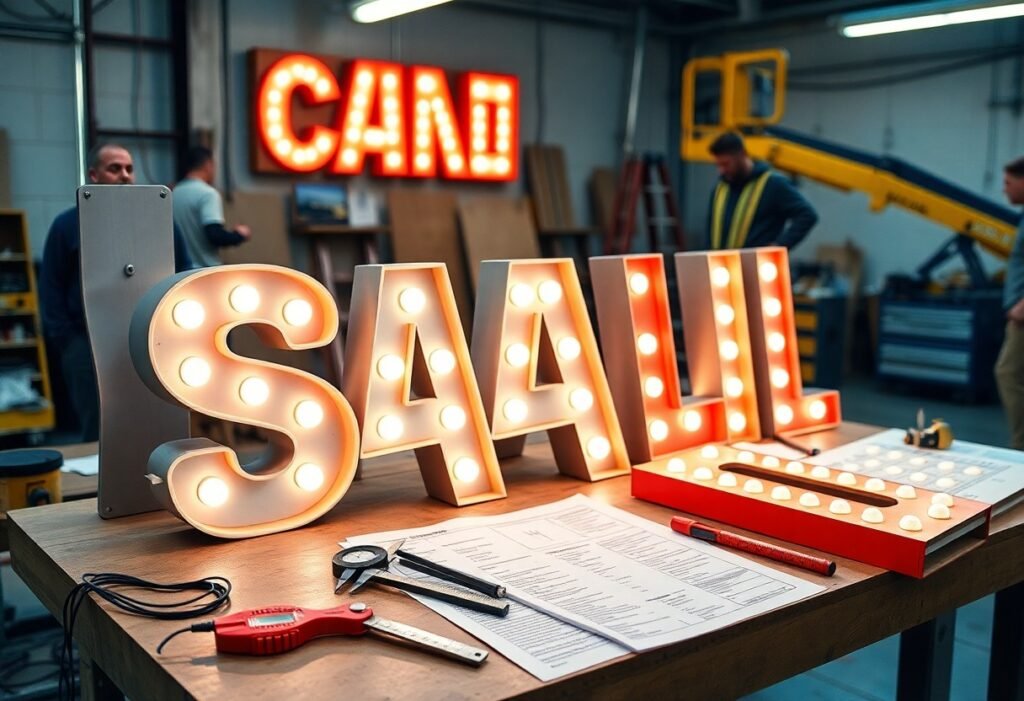
You can expect channel letter sign costs to vary widely depending on size, materials, lighting type (LED vs. neon), face and trim options, letter depth, installation complexity, mounting location, electrical work, permits and design or fabrication intricacy; your choice of aluminum, acrylic, or stainless steel and whether letters are front-lit, halo-lit or routed will drive both material and labor expenses, so factor in site access, local labor rates and maintenance when budgeting.
Key Takeaways:
- Size and letter count: larger signs and more characters increase material, labor, and installation time, raising the price.
- Material and construction: choices like aluminum, acrylic, stainless steel, return depth, and face style significantly affect cost and longevity.
- Lighting and electrical: LED vs neon, color complexity, power supplies, and wiring add to both upfront cost and operating expenses.
- Design complexity and customization: custom fonts, intricate shapes, dimensional effects, and special finishes require more fabrication and engineering time.
- Installation, location, and permits: mounting height, access equipment (lifts/scaffolding), structural reinforcement, electrical hookup, and local permit fees impact the final total.
Overview of Channel Letter Signs
Beyond letter count and size, your final price reflects materials, illumination type, mounting method, electrical work, local permits, and labor. You’ll pay more for thicker returns (3-6 in), premium acrylic faces, and custom paint finishes. Installation options-flush, raceway, or individual studs-change rigging time and electrical runs. When crane or scaffold access is required, expect installation to drive the biggest single cost increase.
Definition and Purpose
Channel letters are three-dimensional, individually fabricated letters or logos that house illumination for storefronts and facades; you use them to boost nighttime visibility, reinforce branding, and guide customers. Municipal codes often limit letter height, illumination levels, and mounting type, so you should verify permits and electrical requirements before approving designs or budgets.
Types of Channel Letter Signs
Common types include front-lit (most economical), back-lit (halo), front/back-lit hybrids, open-face illuminated letters, and exposed neon; each choice alters fabrication time, energy use, and maintenance. Front-lit letters typically dominate retail installs, halo-lit options add aesthetic premium, and exposed neon can multiply service and installation expenses.
| Front‑Lit | Opaque returns, illuminated acrylic face; cost-effective, common for storefronts; easier maintenance. |
| Back‑Lit (Halo) | Light casts a halo on façade; adds 10-30% to fabrication and requires precise mounting gap. |
| Front/Back‑Lit | Combines face and halo illumination; higher LED counts and deeper returns increase price. |
| Exposed Neon | Artisanal look with glass tubes; installation and maintenance can cost 2-4× compared to LED. |
| Open‑Face/LED Strips | Open front with visible LED strips for bold effect; quicker to fabricate but may need more upkeep. |
When choosing types, you should weigh lifetime energy and service costs: LEDs often rate 50,000+ hours and lower running costs, while neon attracts higher repair bills. In one regional case study, a 10‑letter halo set added ~15% to fabrication and 20% to installation time versus front‑lit; you’ll also see permit fees and electrical hookups vary by jurisdiction.
- Visibility: choose front vs. halo based on sightlines and background contrast.
- Cost: factor fabrication, LEDs, transformers, and installation into per‑letter budgeting.
- Maintenance: plan for access, LED driver replacements, and occasional face repairs.
- Perceiving the brand impact, you should balance aesthetic choices against long‑term operating costs.
Key Factors Affecting Costs
Material selection, letter size, illumination type, installation complexity, permits, design intricacy, site access and long‑term maintenance all change price. You’ll see acrylic faces 1/8″-1/2″ thick and return depths from 3″-12″ affect fabrication time; LED modules run ~50,000 hours while neon averages 10,000-15,000 hours; larger letters often scale nonlinearly-doubling height can raise cost 2-3× due to structure and labor. After, gather three local quotes and timelines to refine your budget.
- Material choices (acrylic, aluminum, stainless, polycarbonate)
- Size and scale (letter height, total linear feet)
- Illumination options (LED, neon, RGB, backlit)
- Installation & mounting complexity
- Permits, signage zones, and inspection fees
- Design complexity and custom finishes
- Location, access, and maintenance expectations
Material Choices
You’ll pay differently for acrylic faces, aluminum or stainless returns, and optional trim-cap or polycarbonate; acrylic (1/8″-1/2″) is common and economical, aluminum returns are lightweight and typically 10%-40% cheaper than stainless, while stainless gives a premium finish and higher corrosion resistance. For example, a 24″ letter with aluminum returns might cost $120-$250, whereas stainless could push it to $180-$350 depending on finish and labor.
Size and Scale
Small channel letters (12″-18″ tall) often cost $75-$250 each; medium (24″-36″) typically run $200-$600; large letters (48″+) can be $400-$1,200+ apiece because material area, structural framing and handling escalate costs. You should factor total linear feet and aggregate face area-fabrication and shipping often price by square footage and weight.
When you scale up, note that wind load, mounting brackets and crane time add discrete costs: a 20‑letter storefront with 18″ letters might cost $3,000-$6,000 installed, but the same brand in 48″ letters can exceed $12,000 due to reinforced returns, extra anchors and permit engineering.
Illumination Options
LED modules dominate due to ~50,000‑hour life, energy efficiency and lower maintenance; expect premium custom RGB or color‑changing systems to add 20%-40% to equipment and control costs. Face‑lit (front illuminated) is cheapest, halo/trimless and backlit options require additional metalwork and diffusing, pushing prices higher and sometimes requiring multiple transformers ($50-$300 each).
For finer planning, consider energy and service: an LED channel sign might draw 60-300W depending on size, whereas neon can draw similar or higher power plus higher repair costs; warranties often range 2-5 years for LEDs versus limited options for neon, affecting lifecycle expense and total cost of ownership.
Design Complexity
Complex shapes, multi-level faces and tight tolerances quickly increase fabrication time and cost; you should expect design intricacy to often raise fabrication costs by 20-40% due to extra CNC time, hand finishing and masking. For example, thin serifs or internal cutouts may add $200-$800 in labor per sign. Also consider illumination complexity-halo, face-lit and multi-color zones require additional wiring and modules. See a detailed cost vs. benefit breakdown in this Channel Letter Signs ROI Analysis.
Custom Designs vs. Standard Options
Custom sculpted letters and proprietary finishes can cost 30-60% more than off-the-shelf modules because of tooling, templates and hand labor; you might pay $150-$500 in one-time setup for a unique profile. Standard options-flat faces, common fonts and modular LED trays-keep unit pricing predictable and let you scale by the dozen. When budgeting, compare per-letter savings against brand impact to decide if the premium is justified.
Branding Considerations
Your logo fidelity, brand colors and legibility at distance drive design choices and costs: matching a Pantone spot color or using translucent gradients requires specialty paint or custom-printed acrylic, typically adding $50-$300 per letter. You should also factor nighttime visibility-warm vs cool white LEDs alter perceived color and may affect how customers recognize your brand from 50-200 feet.
Beyond color, consider scale and context: a 6-inch letter that reads well at 20 feet may blur at 100 feet, so you might upsize letters by 25-50% for highway-facing sites. Materials like brushed aluminum or illuminated neon-flex deliver premium texture but can add $200-$1,000 per channel letter; weigh those costs against projected visibility gains and consult case studies-brands often see stronger recall after upgrading to higher-fidelity signs.
Installation Costs
Installation typically adds 10-30% to the total channel letter price; for a $3,000 sign you might pay $300-$900 more. You should budget for labor, permits, crane or lift rental, electrical hookup and inspections. Complexity like rooftop mounting, custom anchors or historic-district permissions pushes costs higher. For example, a downtown storefront install requiring a lift and after-hours work often doubles the installation line-item compared with a ground-level, daytime mount.
Labor Expenses
Installer rates usually run $50-$120 per hour depending on region and certification, and a two-person crew doing a typical 5-10 ft channel letter set can take 2-8 hours; that translates to roughly $200-$1,920 in labor. You’ll pay premiums for night, weekend or traffic-control installs (20-50% more). Highly technical installs needing welders, ironworkers or structural bolting require experienced crews and higher hourly rates.
Site Preparation Requirements
Site prep can cost $50-$1,500+ and covers permits ($50-$500), structural engineer fees ($300-$1,500), scaffolding or lift rental ($150-$1,200/day) and electrician time. You should assess wall condition, clearances, and routing for power; unforeseen repairs or reinforcement add time and money. Projects in historic districts or malls often need additional approvals that extend schedule and budget.
For more detail, you’ll often face electrical upgrades (new junction box or dedicated circuit $200-$800) and conduit runs where an electrician billing $60-$100/hour may need 2-6 hours; that’s commonly $120-$600. Permitting timelines typically range 2-6 weeks and inspections can require rework if mounting or wiring doesn’t meet code. In one case study, a restaurant had to reinforce a stucco façade and obtain a structural sign permit, adding $1,200 in prep costs and delaying install by three weeks-so factor contingency when planning.
Environmental Regulations
Municipal codes and environmental rules often dictate illumination levels, fixture shielding and energy use for channel letters; dark‑sky ordinances, tree‑lined historic districts and waterfront overlays can force lower lumen outputs, opaque faces or time‑of‑day shutoffs. You may need to adjust LED intensity or install timers to meet these standards, which affects both design and long‑term operating costs.
Local Permitting and Zoning Laws
You’ll encounter sign permits, zoning reviews and sometimes design board approvals that add time and fees; permit costs commonly range from $50-$500, while variances or historic‑district reviews can add $200-$2,000 and several weeks to months of lead time. In dense urban areas electrical permits and structural anchoring plans are routinely required and can increase engineering and inspection expenses.
Compliance Costs
Compliance costs cover permit fees, stamped engineering drawings, electrical inspections and any mandated materials or controls, typically adding 5-20% to the project. You might pay $200-$1,000 for structural or electrical stamps, plus inspection fees; choosing low‑wattage LEDs or automatic dimmers can raise upfront costs but lower utility bills and reduce the risk of fines.
More detailed expenses include UL listing or product certification, conduit and meter upgrades, and label/permit placards; for example, on a $3,000 sign you could see $300-$600 in compliance add‑ons. Hiring a sign company to manage permitting often costs $150-$500 but shortens approvals and avoids rework from failed inspections.
Maintenance and Longevity
Ongoing upkeep and environment strongly influence lifetime and total cost: LED modules are energy-efficient but degrade, acrylic faces can yellow, and aluminum returns resist corrosion. If you factor in routine cleaning, inspections and occasional component swaps, maintenance can add several hundred dollars annually and shift replacement timing-salt-air coastal sites often shorten useful life by 30-50%, while sheltered urban locations can extend sign life beyond 15 years with conservative care.
Expected Lifespan of Materials
You can expect LED modules to be rated 50,000-100,000 hours (roughly 7-14 years at average daily use). Aluminum backs and returns often last 15-30 years with powder-coating; painted or raw metal in corrosive environments declines faster. Acrylic faces and diffusers usually need replacement after 8-12 years due to UV yellowing; printed vinyl faces may require new graphics every 3-7 years depending on exposure.
Ongoing Maintenance Expenses
Plan to allocate about 1-3% of the sign’s initial cost each year for routine maintenance; for a $3,000 sign expect $30-$90 annually for basic upkeep, plus periodic $100-$300 inspections. You’ll incur higher costs for component swaps-transformers, power supplies or LED modules-or for damage from storms, graffiti, or pests, which can push annual spending into the several hundreds.
For budgeting, expect LED module replacement at $150-$600 per letter depending on size and density; transformer or power-supply swaps run $100-$400. Routine cleaning 2-4 times yearly typically costs $50-$200 per visit; lift or scissor-rental for facade access adds $100-$300/day. Warranties often cover parts for 3-5 years, reducing early expenses, while emergency or after-hours repairs can double labor rates-factor those into a realistic maintenance reserve.
Conclusion
Now you can better estimate channel letter sign cost by weighing factors like size, materials (aluminum vs plastic), lighting type (LED or neon), face and trim style, mounting and electrical complexity, design customization, permits and inspections, local labor rates, and long-term maintenance needs; prioritizing which elements matter most for your budget helps you make cost-effective, durable choices.
FAQ
Q: What are channel letters and why do their costs vary?
A: Channel letters are three-dimensional letters or logos typically made from metal and translucent face material, used for exterior signage. Costs vary because size, material, illumination method, fabrication technique, and installation complexity all change the amount of raw material, labor, and electrical work required. Small non-illuminated letters can be relatively inexpensive, while large, custom-illuminated letters with specialty finishes and challenging installs drive prices much higher.
Q: How does size and construction affect price?
A: Larger letters use more metal and acrylic, require deeper returns and stronger internal supports, and take longer to fabricate and install – each of these increases cost. Construction details like return depth, welded vs. riveted seams, formed versus flat faces, and the presence of trim caps or edge lighting add labor and material costs. Expect cost growth to be roughly proportional to area and complexity; doubling letter height often more than doubles price due to heavier supports and more difficult installation.
Q: How do illumination options impact cost?
A: Illumination choice is a major cost driver. Front-lit channel letters with LED modules are common and economical; quality LEDs, LED density, and weatherproofing increase price. Reverse halo or back-lit letters require additional spacing, mounts, or a mounting pan and can cost more. Neon or EL lighting is typically pricier and requires different electrical work and maintenance. Add-ons like dimmers, photocells, transformers or remote power supplies, and extra wiring or conduit will further raise material and labor costs.
Q: What installation and site factors change the final price?
A: Installation costs depend on mounting method (direct-to-wall, raceway, or pan), site height and access (lifts, scaffolding, rope access), wall material (masonry, storefront, EIFS), electrical hookup complexity, required permits, and any structural engineering or inspections. High-elevation installs, rooftop mounts, or locations needing traffic control or lane closures add significant labor and rental-equipment expenses. Lead time and schedule constraints (rush jobs) can also increase cost.
Q: How do design complexity, quantity, and local market conditions influence cost?
A: Complex logos, custom shapes, special finishes (powder coating, mirror, brushed metals), color matching, and precision tolerances require more shop time and skilled labor, increasing price. Ordering multiple identical signs lowers per-unit cost through repeatable fabrication. Local factors – labor rates, permit fees, materials availability, and competition among sign shops – affect quotes; urban areas with higher labor costs typically see higher prices. Ongoing maintenance, warranty options, and expected lifespan should be included when comparing total cost of ownership.