
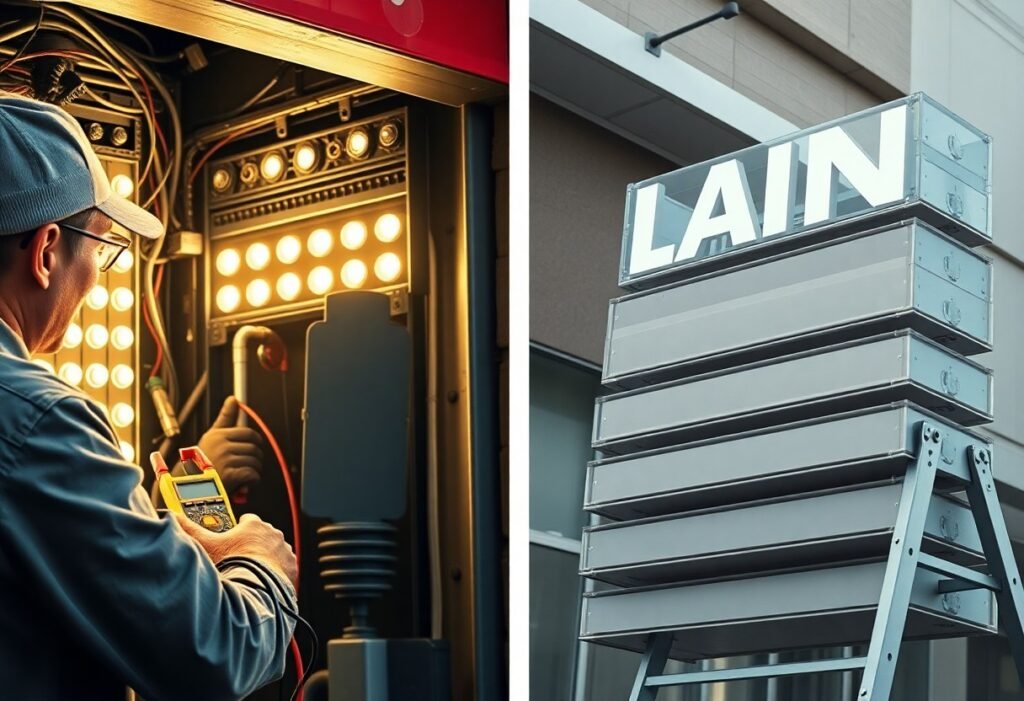
With limited damage-such as isolated LED failures, loose faces, or minor wiring issues-you can often extend your sign’s life through targeted channel letter repair, saving time and cost; however, if your letters show widespread corrosion, outdated components, structural damage, or fail code and warranty standards, replacement becomes the safer, longer-lasting option you should choose to protect visibility and liability.
Key Takeaways:
- Scope of damage: repair when issues are limited to faces, trim, individual LEDs, or minor wiring; replace when returns, frames, or internal housings are corroded, bent, or structurally compromised.
- Age and expected lifespan: repair newer signs with remaining service life; replace older signs with outdated components or severe weathering that make future failures likely.
- Cost vs long-term value: choose repair if repair cost is substantially less than replacement and extends life adequately; choose replacement when cumulative repair costs approach replacement cost.
- Compliance, aesthetics, and brand consistency: replace for code violations, major color/match problems, or when rebranding requires uniform appearance or updated technology.
- Time and logistics: repair for fast turnaround and available parts; replace when extensive fabrication, permits, or long lead times are acceptable for a longer-term solution.
Understanding Channel Letters
Definition and Functionality
Channel letters are three-dimensional sign characters built from aluminum returns and acrylic or polycarbonate faces that house LED modules, transformers, and wiring you can service; they typically range 3-6 inches deep and use LEDs rated around 50,000+ hours. You inspect faces, returns, and internal mounts to diagnose issues, and proper sealing plus a small ventilation gap prevents condensation that would shorten component life.
- Materials: aluminum returns, acrylic faces for diffusion.
- Electrical: low-voltage LEDs with external or internal power supplies.
- Perceiving sign performance depends on LED spacing, diffuser quality, and viewing distance.
Common Types of Channel Letters
You encounter five main types: front-lit (direct illumination through face), reverse-lit/halo (light escapes to create halo), open-face/raceway (no face, exposed neon or LEDs), push‑thru (Acrylic pushed through metal for window or box signs), and combination letters that mix methods; choice affects installation complexity, repair access, and typical cost differences of roughly 10-40% between styles.
| Front‑lit | Standard storefront use; acrylic face, uniform illumination, typical depth 3-6″. |
| Reverse‑lit (halo) | Back-lit for upscale look; requires opaque face and reflective returns, mounts 1-3″ off wall. |
| Open‑face / Raceway | Exposed LEDs or neon on a channel; easier service access, less diffusion. |
| Push‑thru | Letters pushed through cabinet face-durable for illuminated wall signs and translucent façades. |
| Combination | Mixes front and back lighting for contrast; higher fabrication and repair complexity. |
When evaluating types for repair vs replacement, you assess LED spacing (1-2″ for uniform front-lit), face thickness (0.118-0.177″ acrylic common), and mounting style; you then estimate labor-front-lit repairs often take 1-3 hours per letter while halo or combination units may require 3-6 hours due to additional mounting and masking needs.
- Front‑lit: easiest to service, common LED modules available widely.
- Halo/combination: more labor, often needs returned-to-fabricator masking.
- Perceiving which type offers the best ROI depends on your brand visibility needs and long-term maintenance budget.
Indicators for Repair
When damage is confined to faces, trim-cap, individual LEDs or minor wiring, repair is usually the right choice; LEDs typically last 50,000+ hours, acrylic faces yellow after roughly 10-15 years, and localized corrosion often affects only a single return. You should opt for repair when the fix restores at least 80% of original appearance and functionality and the projected repair cost is under about 50% of full replacement.
Signs of Wear and Tear
You’ll notice wear as dimming, color shift, intermittent flicker, cracked or warped acrylic faces, or localized rust on returns; for example, a 20-30% lumen drop often signals driver or module failure rather than entire-unit replacement. Condensation inside letters, peeling vinyl on trim, or exposed wiring are also clear indicators that targeted maintenance will extend the life of your sign.
Assessing Cost-Effectiveness
You should compare repair estimates to replacement quotes and factor expected remaining life: repairs commonly run 20-40% of replacement cost, so a $400 repair versus a $2,000 replace leans toward repair. Also weigh warranty terms, whether parts are OEM, and aesthetic expectations-if repairs restore function but not brand-standard appearance, replacement may be justified.
Drill into soft costs: access (boom lift rental typically $150-$350/day), permit or electrician fees, and downtime. Calculate lifecycle ROI by adding energy savings-new LED retrofits can cut consumption 40-60%-and projected years gained; if total repair plus follow-up costs approach 50% of a full replacement, replacement often becomes the smarter long-term investment.
When to Consider Replacement
If more than half the letters show structural damage, returns are rusted, or frames are bent, replacement is usually the better choice. You should replace when LED modules and wiring problems are recurring, when water intrusion has compromised internal components, or when total repair costs approach 40-60% of replacement. Manufacturers and installers typically recommend replacement after 10-15 years of continuous service or when multiple power supplies fail within a year.
Age and Condition Factors
Older channel letters often hide progressive failures that make repair a short-term fix: seals degrade, aluminum corrodes, and LED lifespans (commonly ~50,000 hours) are exhausted. Inspect for common failure modes:
- Returns warped or perforated from rust
- Frames bent from impacts or wind damage
- Frequent power supply or driver failures
Knowing the distribution and severity of these issues helps you decide whether repair costs will quickly recur or replacement will be more economical long-term.
Impact on Brand Image
Your signage is the first visual cue customers judge; faded faces, dark letters, or flicker signal neglect and can deter walk-up traffic. Visibility at night matters: uneven illumination makes your name hard to read from the road, reducing recognition and perceived professionalism within seconds of a glance.
In practice, franchises often replace signs after a decade to maintain a consistent brand look across locations; a refreshed channel-letter set restores uniform color temperature, improves legibility at 100+ feet, and prevents mixed impressions from patched repairs. You should weigh the reputational cost of patched aesthetics against the one-time investment in a full replacement.
Repair Options Available
Common repair options include LED module replacement, re-lamping, resealing seams, replacing trim caps or faces, patching corroded returns, and rewiring power supplies; small repairs often run $50-$500 while partial rebuilds or structural fixes can reach $1,000-$5,000 depending on letter size and access. You can often spot-fix lighting failures and weather breaches, but full channel replacement is usually chosen when more than 30-40% of letters have structural or wiring failure.
DIY Repairs vs Professional Services
Often you can handle module swaps, silicone reseals, and face replacements yourself with basic tools and a multimeter, saving labor costs; example: swapping five LED modules in a 4-ft letter can take 30-45 minutes. You should hire a pro for structural frame repairs, rooftop rigging, high-voltage ballast work, or jobs over 20 ft where certified lifts and permits are required and labor runs $75-$150/hr.
Tools and Materials Needed
Basic tools include a digital multimeter, insulated screwdrivers, wire strippers, crimpers, a soldering iron, heat shrink, marine-grade silicone sealant, rivets or pop rivet gun, replacement LED modules (12-24 V common), spare power supplies, 18-14 AWG wire, safety glasses, gloves, and a ladder or aerial lift for elevations above 12 ft.
For testing, use a meter capable of measuring DC 0-30 V and current up to 5 A; most LED modules draw 0.3-2 A each so verify power supply amperage and run length. When splicing, prefer soldered joints with heat shrink or properly crimped waterproof connectors for outdoor exposure; use 14 AWG for runs over 30-50 ft to limit voltage drop, and always connect temporary power through a GFCI-protected circuit during bench testing.
Choosing Between Repair and Replacement
If your letters show localized damage, failed LEDs, or minor frame bends, you’ll often save money and downtime by repairing-typical repairs restore visibility quickly and cost roughly 30-50% of full replacement. When corrosion has eaten through channels, acrylic faces are cracked, or multiple LED modules and power supplies fail, replacement becomes wiser: new letters with powder-coated aluminum and modern drivers can deliver 10-15 years of reliable performance and lower maintenance over time.
Cost Comparison Analysis
You should weigh upfront costs against expected lifespan and maintenance: repairs commonly fall in the $300-$1,200 range for single letters, while full replacements typically run $1,000-$6,000 depending on size and complexity; LED modules cost about $20-$50 each and technician labor averages $75-$120/hour, so larger jobs quickly shift the math toward replacement.
Cost Comparison
| Repair | Replacement |
|---|---|
| Typical Cost: $300-$1,200 per letter | Typical Cost: $1,000-$6,000 per letter |
| Expected Life Gain: +2-5 years | Expected Life: 10-15 years |
| Downtime: 1-3 days | Downtime: 3-10 days |
| Example: Replace LED driver, reseal seams | Example: New LED modules, drivers, powder coat finish |
Longevity and Performance Expectations
When you repair, expect modest life extension-usually 2-5 years-if the structural shell and face are sound; LED brightness typically drops about 2-3% per year, so replacing modules and drivers can restore luminance quickly. Full replacement with new drivers and sealed construction usually yields a decade or more of consistent output, better IP ratings, and lower annual maintenance costs, especially in coastal or high-UV environments where corrosion and fading accelerate failure.
Plan annual inspections: you’ll catch driver heat issues, moisture ingress, and loose wiring before they force larger repairs. For example, a 10-year-old sign with failing drivers may be cheaply revived if channel seams remain intact, but if you find pitting or flange corrosion across multiple letters, a full replacement will avoid repeated service calls and lost nighttime visibility.
Maintenance Tips for Channel Letters
You should inspect and service channel letters every 3-6 months, replacing failed LED modules (typical lifespan ~50,000 hours), resealing seams, and tightening trim caps; for quick cleaning and repair pointers see Top Tips for Sign Repair: Keep Your Business Signage …
- Quarterly visual and nighttime checks
- Immediate LED or wiring swaps for single-letter outages
- Use pH-neutral soap and soft microfiber cloths
Any routine log with photos reduces long-term costs and speeds decisions about repair vs replacement.
Regular Inspection Practices
You should conduct a thorough inspection every 3 months and after severe weather: check seams for water intrusion, returns for rust, trim caps for looseness, and wiring insulation for abrasion. Test at night to reveal intermittent LED failures, measure driver voltage with a multimeter, and record photos and readings so you can track degradation trends and schedule repairs before multiple-letter outages occur.
Cleaning and Care Guidelines
You should clean faces quarterly with a pH-neutral detergent and soft microfiber, rinse with low-pressure water, and avoid abrasive pads or solvents that can scratch acrylic or degrade vinyl. For polycarbonate fronts use a cleaner rated for plastics and never exceed 1200 psi if pressure-washing; always spot-test any chemical on an unseen area to prevent discoloration.
In coastal or industrial environments you should increase cleaning to monthly to remove salt and soot that accelerate corrosion and staining; remove bird droppings or grease within 72 hours. Apply a UV stabilizer or clear coat annually on acrylic faces to slow yellowing, and plan to replace foam gaskets every 5-7 years to prevent water intrusion and extend service life.
To wrap up
Following this assessment you should choose repair when damage is cosmetic or limited to replaceable parts, costs are low, and your sign meets current safety and code standards; choose replacement when the cabinet or wiring is compromised, LEDs and components are obsolete, repairs are recurrent, or your brand needs a refreshed appearance. Prioritize long-term reliability, energy efficiency, and total lifecycle cost-ask a certified sign technician to inspect, provide diagnostics, and a repair-versus-replace estimate to make the most cost-effective, code-compliant decision for your business.
FAQ
Q: How do I decide whether to repair channel letters or replace them entirely?
A: Start with a thorough inspection: check the aluminum returns and backs for corrosion, examine internal LED modules and power supplies, look for water intrusion or rot in mounting structures, and compare the sign’s age to expected service life (typically 10-15 years for quality materials). Obtain a repair estimate and a replacement estimate that includes design, fabrication and installation. Choose repair when structural integrity is intact, electrical problems are localized, or cosmetic damage is limited and repair cost is substantially lower than replacement relative to remaining useful life. Choose replacement when corrosion, widespread electrical failure, non-serviceable components, code violations, or brand changes make continued use impractical or unreliable.
Q: What common problems can usually be fixed without full replacement?
A: Localized issues that are often repairable include single LED strip/module failures, blown power supplies, cracked or discolored acrylic faces that can be patched or replaced individually, loose mounting hardware, damaged trim caps or returns that can be reformed or welded, and shallow water intrusion that can be dried, resealed and treated for corrosion. Many wiring faults and controller issues can be repaired or retrofitted. Repairs that restore function and appearance quickly and affordably are good candidates for avoiding full replacement.
Q: Which conditions indicate replacement is the better long-term choice?
A: Replace when there is extensive rust or perforation of returns/backs, pervasive water damage to internal structures, multiple failing LED channels across many letters, components that are obsolete or non-repairable, or when a brand update requires new fonts, colors or illumination styles. Also consider replacement when repeated repairs are required within a short period, when safety or code compliance is in question, or when the cost of repairs approaches a significant fraction (often 50% or more) of replacement cost combined with limited remaining life.
Q: How do cost, timeline and access affect the repair vs replacement decision?
A: Repair costs depend on parts, labor complexity and access; simple on-site fixes can take hours and be inexpensive, while disassembly, transport to a shop, or high-elevation work raises expense and time. Replacement adds design and fabrication lead time (days to weeks), rigging or crane scheduling, and disposal of old letters. For high-mounted signage, mobilization and safety requirements increase both repair and replacement costs. Balance immediate budget and downtime needs against long-term reliability and aesthetics when choosing the option that provides the best return on investment.
Q: What maintenance and design choices reduce the need for future repairs?
A: Use quality anodized or powder-coated aluminum for returns and backs, specify sealed LED modules with IP-rated power supplies, incorporate drainage and ventilation to prevent moisture buildup, apply UV-stable acrylic faces and fade-resistant paints, and design for modular components so individual letters or LED strips are serviceable. Implement a scheduled inspection plan (visual checks and electrical testing), install surge protection and accessible wiring points, and keep spare modules and documentation on hand. These practices extend service life and make targeted repairs faster and cheaper.