
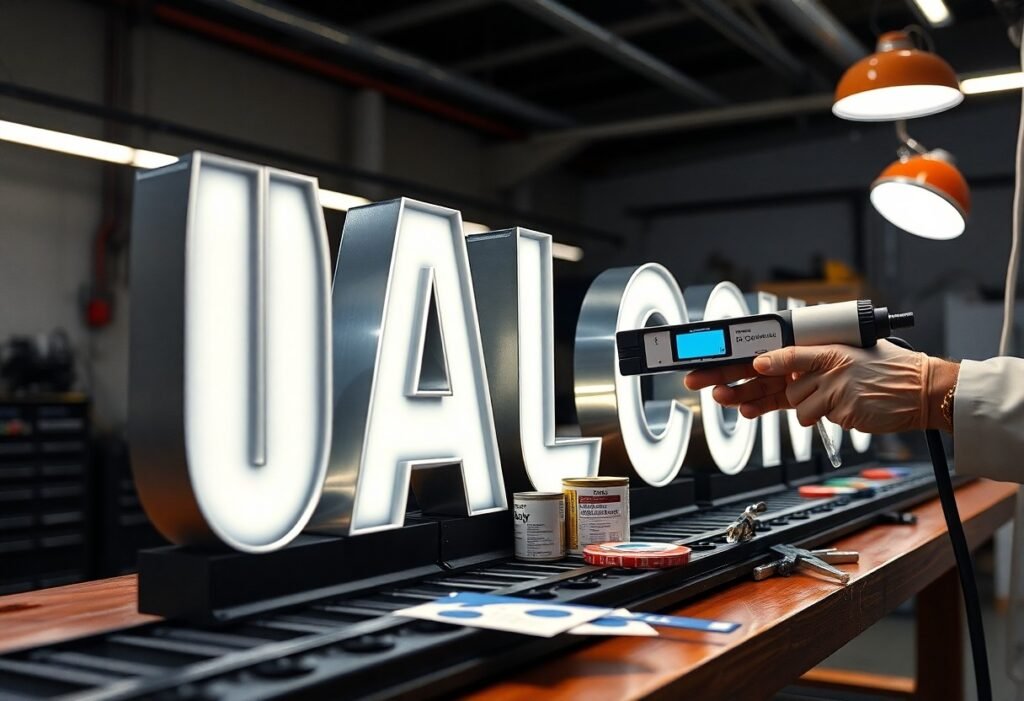
Most successful raceway paint matches start by identifying your substrate, finish, and target color (Pantone or custom) so you can select compatible primers and coatings; you should prepare test panels, apply the intended topcoat and clear, and evaluate under your installed lighting and viewing distances to ensure visual consistency, account for gloss and weathering, and document paint codes and procedures for future touch-ups.
Key Takeaways:
- Identify the raceway substrate and original coating system, then degrease, sand, and prime with a compatible primer before topcoating.
- Use a spectrophotometer or Pantone/RAL reference and spray sample panels; verify color under the sign’s installed lighting.
- Match gloss and sheen, batch-mix paint for consistency, and document the exact formula for future touch-ups.
- Apply paint to the raceway with HVLP or airless spray for uniform coverage, control film build, and allow proper cure times between coats.
- Test on scrap panels and use UV-stable pigments or clear coats to reduce fading; keep records of materials and application parameters.
Understanding Raceway Paint Matching
You need precise color and sheen alignment between the raceway and channel letters to keep the sign uniform at distance and close‑up; that means using spectrophotometer readings (ΔE2000 target ≤2 for most retail work), matching gloss (measured at 60°), and choosing compatible paint systems (PVDF vs. polyurethane) and primers for the substrate to avoid adhesion or weathering mismatches.
Importance of Color Consistency
You protect brand integrity and reduce costly callbacks when you keep color consistent across runs and components; studies show a ΔE above 2 often triggers client complaints, and visible sheen differences can appear from 10-20 feet, so consistent formulas, documented lot numbers, and sample panels save time and typically avoid $300-$1,200 rework bills on medium jobs.
Factors Affecting Paint Match
You must account for substrate (aluminum extrusion vs. acrylic face), primer chemistry, pigment metamerism under D65 versus LED lighting, film thickness (30-50 µm typical), application method (spray pressure, nozzle size), cure profiles (temp/humidity), and age/weathering of existing paint when evaluating matches.
- Substrate and primer influence final hue and gloss.
- Paint system: PVDF holds pigment better outdoors than standard polyurethane.
- Application variables: spray technique, flash time, and bake affect color depth.
- Lighting and metamerism change perceived color under D65, TL84, or LED.
- Assume that small batch-to-batch pigment shifts will be visible unless controlled by spectro tolerances.
You should perform both instrumental (ΔE2000 measurements at 45°/0° geometry under D65) and visual checks in a light booth; for example, when matching a 12‑ft sign fabricated six months apart, a 1.8 ΔE reading plus a 60° gloss match within 3 GU usually passes client review, while thicker film builds (+20 µm) can darken the tone and require recipe adjustment.
- Create labeled sample panels with target, proposed mix, and application notes for each job.
- Record spectro values, gloss units, lot numbers, and cure conditions in the job file.
- Send digital and physical samples to the painter and request a dry-fit photo under the intended site lighting.
- Use a 2% tolerance (ΔE ≤2) for street‑level signage and tighter tolerances for brand marks.
- Assume that ordering a touch-up or second run after six months may require reformulation due to pigment batch variance.
Types of Paints Used for Channel Letters
| Acrylic Enamel | Fast-dry, cost-effective, good UV resistance for 3-7 years; widely used on aluminum faces and interior raceways. |
| Polyurethane | High abrasion and chemical resistance, superior gloss retention, outdoor life typically 7-12 years; preferred for coastal or high-wear sites. |
| Epoxy | Excellent adhesion and chemical resistance on steel; commonly used as primers or for interior raceways because most epoxies yellow under UV. |
| Polyester Powder Coat | Durable, uniform finish applied by baking; offers excellent color match and film thickness control for aluminum raceways and returns. |
| PVDF / Fluoropolymer | Premium coating with 10-20 year color and gloss retention; used where long-term fade resistance and warranty-backed performance matter. |
Acrylic vs. Polyurethane
You’ll pick acrylic for quick turnarounds and lower budgets because it dries faster and delivers acceptable UV resistance for 3-7 years; for exposed raceways in salt-air or industrial environments choose polyurethane instead, since it offers 7-12 years of superior gloss and chemical resistance-for example, coastal storefronts that previously needed repainting every 4 years extended to 8-10 years after switching to two-component polyurethane systems.
Finish Options: Gloss, Matte, and Satin
You should match sheen to viewing distance and lighting: high-gloss (60-90 GU) amplifies color but creates hotspots at night, satin (20-40 GU) balances reflectivity and uniformity, and matte (<15 GU) reduces glare and hides surface flaws-pick the sheen that keeps your illuminated face and raceway visually consistent from 10-50 feet.
You can also consider how finish affects maintenance and legibility: gloss surfaces are easiest to clean and resist staining but accentuate scratches, while matte finishes hide imperfections but may trap dirt and require more frequent touch-ups; satin is often used as a compromise for channel letters because it preserves color depth without producing pronounced glare under LED modules-field tests show satin raceways reduced perceived brightness variance by about 25% compared with high-gloss on multicolor signs.
- Choose paint chemistry based on substrate: epoxy or primer on steel, powder coat or acrylic/PU on aluminum.
- Specify two-component polyurethane when you need extended outdoor life and chemical resistance, especially near highways or coasts.
- Match sheen numerically (use gloss meter readings) to ensure consistent reflection between face acrylic and raceway finish.
- Any final spec should include manufacturer data sheets, expected lifespan, and field samples for daylight and night viewing.
Steps for Achieving a Perfect Paint Match
You begin by measuring the existing color and sheen with a spectrophotometer and gloss meter, then prepare the substrate, apply primer, and create test panels for iterative adjustments; typically you target a color deltaE under 1.5 and a sheen match within 3-5 gloss units. Use 2-3 spray passes on panels, assess under D65 and 3000K lighting, and record exact mix ratios and batch numbers so you can reproduce the match on the raceway and letters.
Surface Preparation
You strip contaminants with a solvent wipe, etch or sand bare aluminum with 220-320 grit, then apply a self-etch primer or epoxy primer in two coats; allow a 15-60 minute flash between coats and a 24-hour cure before sanding with 400-600 grit scuff. Keep ambient temperature 60-80°F and relative humidity below 60% to avoid fish-eyes and adhesion issues; use tack cloths and compressed air to remove dust before topcoating.
Mixing and Applying Paint
You mix two-component polyurethane often at roughly 4:1 base-to-activator with 5-10% reducer, filtering through a 60-90 micron mesh; pot life will be about 1.5-3 hours at 70°F. Set an HVLP gun with a 1.3-1.4 mm nozzle and 18-25 psi at the cap, apply 2-3 light, cross-coated passes with 5-10 minute flash times, and verify coverage and sheen on test panels before moving to production.
You should use a spectro to refine tints-add 1-3% pigment increments for metameric shifts-and create at least two color-control panels (one flat, one curved) to check viewing angles. Consider oven-bake at 140°F for 20-30 minutes for faster cure on aluminum, note that pot life shortens as temperature rises, and always log exact ratios, reducer type, gun settings, and ambient conditions for reproducible matches and future touch-ups.
Tools and Techniques for Color Matching
You rely on a mix of instruments and shop practices to hit both color and sheen; spectral devices give quantifiable data while hands-on methods refine visual appearance. Use ΔE targets (≤1 for brand-critical work, ≤2 for most applications) and measure multiple points across the raceway and letter face to account for substrate differences and application variability.
Colorimeter and Spectrophotometer Usage
You use spectrophotometers for full spectral reflectance (typically 380-730 nm) and precise CIE L*a*b* values, and colorimeters for quick, repeatable checks. Instruments like the X-Rite Ci64 or Konica Minolta CM-2600d let you compare samples to a target and report ΔE; choose spectro for metallics, pearlescents or when you need ΔE ≤1, and a good colorimeter for daily QC.
Manual Color Matching Techniques
You perform iterative spray-outs on the actual substrate, compare samples under D65 daylight and incandescent, and use Pantone or manufacturer chips as visual anchors. Start with a base recipe, make 1-2% incremental tint adjustments, and document each step so you can reproduce a match across future batches and locations.
You can improve outcomes by batching control samples: mix a 50 mL trial batch, apply the same film build as production, and evaluate after full cure. For instance, matching a deep red on 0.06″ aluminum often required adding 1.5% transparent red and adjusting reducer; measuring gloss with a 60° gloss meter (target within ±3 GU) helped align sheen as well as color.
Common Challenges in Raceway Paint Matching
When you match raceway paint you face substrate differences, metamerism, batch variability and environmental exposure that shift appearance over time. For example, aluminum raceways often need conversion primer while acrylic faces use polyurethane topcoat, causing sheen and color shifts. You should compare samples under 5000K lighting and aim for ΔE ≤2; for complex installs consult product specs and guidance like Channel Letters on Raceway | Face Lit Letter & Logo.
Fading and Weather Resistance
High UV exposure (UV index >7) accelerates fading, so you should specify UV-stable systems such as 70% PVDF (Kynar) or premium polyurethane, which can hold ΔE ≤2 for 10-15 years in harsh climates. Perform ASTM G154 accelerated weathering on test panels and inspect yearly; if ΔE exceeds ~3 or chalking appears, schedule touch-up or replacement to keep the sign uniform.
Handling Multiple Colors
Matching several colors across letters and raceway requires consistent formulas, same paint lot, and documented Pantone or L*a*b* targets. You should produce 2-3 spray mockups per color, order 10-15% extra material for touch-ups, and use a spectrophotometer to keep ΔE between adjacent pieces under 1.5-2.
In practice you control spray parameters, bake times and film thickness-variations of ±5 µm alter gloss and perceived hue. For a 12-letter job with five colors adjust pigment by 0.5-1.2% and tweak gloss (e.g., 60→40 GU) until L*a*b* readings meet targets, then verify final ΔE with a handheld spectro before installation.
Tips for Maintaining Paint Integrity
Schedule routine inspections every 3 months and catalog fading, chalking, or edge wear so you can intervene before larger issues develop. Perceiving subtle shifts in hue under LED and daylight helps you catch metamerism early and avoid full-panel repaints.
- Clean with pH-neutral detergent and soft brushes; avoid abrasive pads that abrade clear coats.
- Store matched touch-up paints by batch code and factory date to prevent batch variability.
- Document repairs with photos, gloss readings (using a gloss meter), and touch-up serial numbers.
- Use color control panels on-site to compare under actual illumination before approving touch-ups.
Regular Maintenance and Touch-ups
Inspect raceways every 3 months, record locations of chips and edge wear, and wash surfaces quarterly in coastal or high-UV areas. When you touch up, use factory-matched aerosols or hand-applied kits, feather edges with 320-400 grit, apply thin, even coats, and allow full cure per manufacturer-this preserves sheen and reduces visible lap lines.
Choosing the Right Protective Coating
Select coatings by exposure: fluoropolymer/PVDF systems typically deliver 10-20 years of color retention, polyurethane systems 7-12 years, and acrylic enamels 3-7 years. Specify UV-stable pigments, a dry film thickness of 40-80 microns (1.6-3.2 mils), and ask for gloss retention data to match long-term appearance between raceway and letters.
For harsh environments specify 70% PVDF (Kynar-class) with a non-chromate pretreatment and require supplier data from ASTM G154 accelerated UV and ASTM B117 salt spray tests; request 5- and 10-year gloss/color retention figures and in-situ sample panels so you can validate performance before committing to large runs.
Conclusion
With this in mind, you should document the original color and finish, capture spectrophotometer readings and physical samples, and select a paint system and gloss that match the channel letter substrate. Test mixes on scrap, allow for surface prep and cure differences, and plan for on-site touch-ups to blend weathering. Coordinate with your fabricator and installer and keep records of formulas and batch numbers so you can reproduce the match reliably.
FAQ
Q: What does “raceway paint match” mean for channel letters and why is it important?
A: Raceway paint match means making the paint on the sign’s raceway (the back/connector housing holding channel letters) visually consistent with the letters, logo panel, or nearby building surfaces. Consistent color, gloss and texture ensure the sign looks professional from installation day forward and avoids distracting color shifts, visible seams or a patchwork appearance after lighting and weathering.
Q: How do you measure color and gloss to achieve an accurate match?
A: Use a spectrophotometer to record color coordinates (L*a*b) and measure gloss units at a standard angle (usually 60°). Produce a lab formula from the instrument reading, then spray test panels on the same substrate and primer used in production. Evaluate samples in a controlled light booth under D65, A and TL84 sources to detect metamerism. Aim for a Delta E below 2 for most signage; stricter projects may require ≤1. Also match sheen and texture because gloss differences are more noticeable than small color shifts.
Q: Which paint systems and surface preparations are best for raceways?
A: Choose a coating system compatible with the raceway material: PVDF or coil-coated finishes for pre-finished aluminum, two-component (2K) polyurethanes or acrylics for field-sprayed metal, and epoxy primers for bare steel. Clean and degrease, remove oxidation, and apply the correct primer or etch treatment for adhesion. Use the same chemistry and pigment family for the raceway as the channel faces whenever possible to ensure similar fading characteristics.
Q: What steps do you follow when matching paint on-site or doing touch-ups after installation?
A: Bring factory-mixed test panels or the spectrophotometer to site. Clean the raceway surface, mask adjacent areas, and apply a small spray patch using the lab formula. Cure fully and verify under multiple light sources. For touch-ups, feather the edges and blend into surrounding paint; avoid brush-only repairs on large areas because brush marks and gloss changes are obvious. If a full-match is not achievable on-site, replace or recoat the whole raceway section to ensure uniform appearance.
Q: How do you minimize color mismatch over time and handle fading or batch differences?
A: Specify paint systems with good UV resistance and matching pigment families to reduce differential fading. Order paint from the same manufacturer and indicate lot numbers; keep a record of formulas and production batch codes. For long-term consistency, provide maintenance instructions and schedule inspections. If mismatches appear from fading or different production runs, either refinish the affected components with a single new coating batch or replace panels to restore uniformity.