
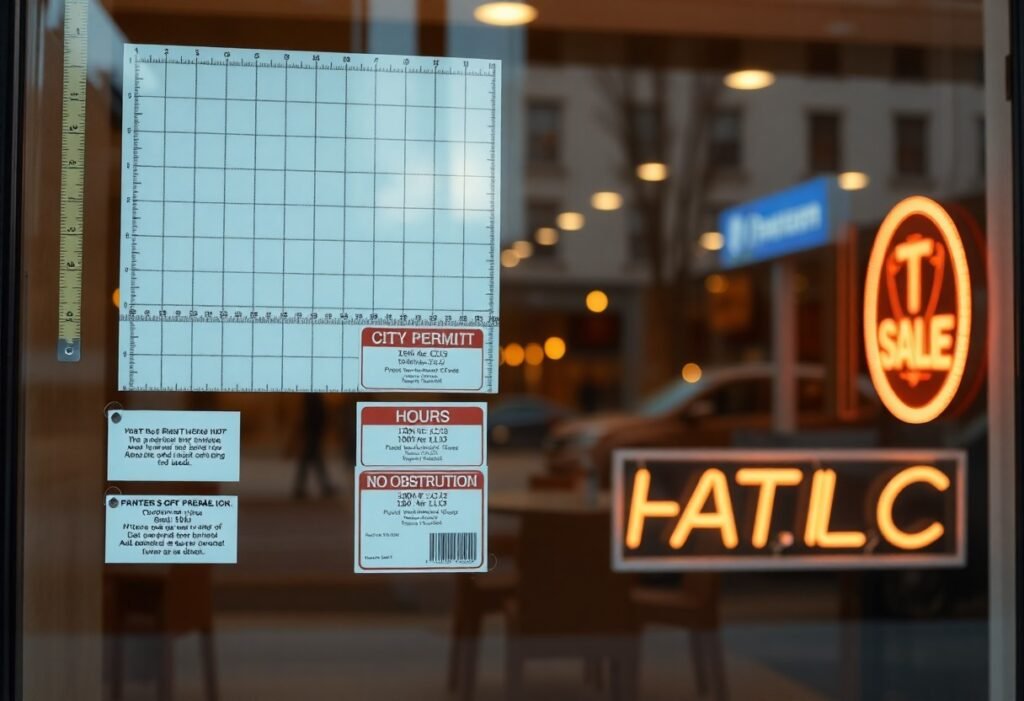
Signage on your storefront is regulated by local zoning, building codes, and safety rules, so you need to know size, placement, lighting, and content limits to avoid fines or removal. Permit requirements, historic-district restrictions, and accessibility and visibility standards for windows can affect branding and operations, so consult local ordinances and apply for permits where required.
Key Takeaways:
- Local ordinances and zoning codes govern window signs-check municipal/county rules for permits, fees, and allowable sign types.
- Size and placement limits are common-many jurisdictions cap the percentage of window area that can be covered and prohibit blocking exits or required safety signage.
- Illumination and materials are regulated-restrictions often apply to neon, flashing, backlit, or electronic displays and may require electrical permits or brightness limits.
- Temporary vs. permanent distinctions matter-seasonal or temporary signs typically face shorter display windows and different permit or posting rules than permanent signage.
- Other constraints include landlord/lease terms, historic district or HOA design review, content restrictions (e.g., illegal or obscene material), and compliance with ADA/emergency signage requirements.
Understanding Window Sign Regulations
Municipal codes often set precise limits you must follow: many cities cap permanent window coverage at about 25-35% of total glazing, restrict temporary posters to 14-30 days, and ban illuminated signs in certain zones. Zoning maps, historic-district overlays, and downtown business improvement district rules can add layer-specific requirements. Permit fees typically range from $25-$300 and processing usually takes 7-30 days, so factor timelines into your marketing calendar.
Purpose of Window Signage
You rely on window signage for sales, branding, hours, wayfinding and legal notices; an effective display can boost impulse visits by 10-15%. Retailers use changeable vinyl to promote daily specials, while service businesses post occupancy limits and license numbers to meet local requirements. Strategic placement-eye level for pedestrians, readable from 10-25 feet-directly affects conversion rates.
Importance of Compliance
Noncompliance can trigger fines, removal orders or even business-license impacts: typical penalties range from $50-$1,000 per violation, with enforcement often requiring removal within 48-72 hours. Repeated violations may lead to liens or court orders, and unpermitted illuminated signs can result in utility disconnects or mandated darkening. You need to treat signage as part of regulatory risk management.
To reduce exposure, you should verify local code sections, measure glazing and calculate percent coverage before production, and submit permits 7-30 days ahead. Keep vendor contracts and proof-of-payment, photograph installed signs, and retain approval letters; these documents help when contesting fines. If in a historic district, obtain design-review sign-off-failure to do so commonly doubles wait times and increases redesign costs.
Local Zoning Laws
Zoning maps and use classifications determine how much of your storefront you can cover: many downtown commercial zones limit permanent window signage to about 25% of window area, while mixed‑use corridors may permit up to 40% with a variance. Setbacks, historic overlays, and sign districts often add design, illumination, and height constraints that affect awnings and projecting signs.
Municipal Ordinances
Your municipal code will specify permit types, application materials, and fees; for example, a mid‑size city commonly charges $75-$200 per sign permit and requires scaled drawings for signs over 50 sq ft. Enforcement can include daily fines of $100-$500 or removal orders, so check your local planning or building department portal before ordering fabrication.
Permitted Sign Types
Typical permitted types include vinyl lettering, interior posters, neon, temporary banners, A‑frame/sandwich boards, and limited digital displays; you’ll often see temporary banners capped at 32 sq ft for 90 days and A‑frames limited to 6 sq ft. Digital signs are frequently subject to brightness, animation, and timing restrictions to limit distraction.
- Vinyl decals: low‑cost, allowed up to 25% of window area in many zones.
- Temporary banners: often limited to 32 sq ft and 30-90 days per year.
- After you confirm local limits, obtain any required permit prior to installation.
| Sign Type | Common limits / examples |
| Vinyl Decal | Typically 25% of window or ≤6 sq ft |
| Banner (temporary) | ≤32 sq ft, 30-90 days per placement |
| A‑frame / Sandwich | ≤6 sq ft, must not block pedestrian flow |
| Digital Display | Brightness caps, static/animation timing rules |
When you choose a sign type, balance visibility with compliance: interior window decals are easy to update and often exempt from structural review, whereas illuminated or projecting signs usually need electrical permits and design review; plan for a typical 2-6 week permit turnaround in many jurisdictions.
- Illuminated signs: may require electrical permits and dark‑sky compliant fixtures.
- Projecting/awning signs: often limited by setback, mounting height, and historic guidelines.
- After you factor permit timelines and fabrication lead times, schedule inspections into your rollout plan.
| Requirement | Typical specification |
| Permit fee | $75-$200 per sign in many municipalities |
| Size cap | Often 25-40% of window area or a fixed sq ft limit |
| Display time | Temporary signs commonly limited to 30-90 days |
| Enforcement | Fines $100-$500/day or removal orders |
Size and Placement Restrictions
You must follow both size limits and placement rules set by municipal and zoning codes: many cities cap permanent window coverage at about 25% of each pane or storefront, while temporary promotions are often allowed up to 50% for limited periods (commonly 7-30 days). Exceeding percentage- or square-foot thresholds typically triggers permit requirements, design review, or variances, so plan measurements before production.
Maximum Dimensions
Typical regulations express limits as a percentage of glazing or an absolute area; for example, many ordinances restrict permanent coverage to roughly 25%, while single sign maximums commonly range from about 2-15 sq ft depending on zoning. You should total planned graphics across all windows-municipalities will enforce combined area limits and may require permits or fees if you exceed them.
Location Guidelines
Placement rules focus on safety and sightlines: you cannot block exits, emergency equipment, or the clear-vision triangle at intersections (commonly protected for 20-30 feet). You should avoid covering ADA routes or emergency signage; interior-mounted decals are often required in historic districts or high-pedestrian corridors, and canopy or awning attachments may have separate standards.
More on Location Guidelines
Historic and downtown zones frequently impose additional constraints-design review, prohibition of neon or backlit window signs, or limits to interior-only displays. You should also consider vertical placement: many jurisdictions restrict signage within typical eye-level corridors to preserve driver and pedestrian sightlines (for example, avoid obstructing 3-7 feet above the sidewalk). When unsure, request a pre-application review from planning or the fire marshal to avoid forced removal.
Design and Aesthetic Requirements
Compliance often extends to aesthetics: you may be limited to window signage that complements building facades, historic districts or shopping center fronts; many codes cap signage coverage at 25-40% of window area and ban adhesives that damage glass. If you need clarity on permit triggers, consult Does Your Business Need a Sign Permit? Here is How … for local permit procedures and examples.
Material Standards
Ordinances frequently enumerate approved materials-tempered-glass-safe adhesives, acrylic panels, outdoor-rated vinyl and non-abrasive paints-and forbid corrosive solvents, permanent etching or mechanically invasive fasteners; in historic districts you may be required to use reversible attachment methods so you can restore the window after removal.
Color and Illumination Rules
Regulations commonly restrict color intensity, flashing and hours of illumination: you may be limited to non-flashing displays, maximum brightness levels (often 300-500 nits for storefronts) and curfews that require lights off after business hours; colored neon or LED outlining can be banned within residential buffers.
Enforcement often involves on-site brightness readings, fines of several hundred dollars per violation and mandated removal for noncompliant signs; for example, a downtown overlay might cap backlit displays at 200 nits after dusk and require automatic dimmers, so you should specify controllable LEDs and verify luminance with a handheld meter before applying for approval.
Temporary vs. Permanent Signs
Temporary signs are short-term displays-banners, A-frames, or seasonal posters-often allowed for 14-90 days depending on jurisdiction, while permanent signs like painted logos, frosted film, or mounted neon are intended for long-term use and usually count toward your overall window coverage limits (commonly 20-30%). You should plan placement according to visibility needs and anticipated permit requirements to avoid fines or forced removal.
Definition and Examples
Temporary examples include A-frame sidewalk signs, window banners, coroplast event boards, and sandwich boards for promos or grand openings; permanent examples include vinyl lettering, etched glass, internally illuminated box signs, and applied films. You can deploy temporary materials for short campaigns-real estate or seasonal sales-and reserve permanent options for branding and wayfinding. Pay attention to mounting: removable adhesives for temporary signs, structural anchors and electrical permits for illuminated permanent fixtures.
Duration and Renewal Regulations
Many municipalities limit temporary displays to 14-90 consecutive days or set an annual cap of 120-180 days; some allow repeated short-term placements spaced throughout the year. Permits for temporary signs can be free or carry fees from $25-$200, while permanent signs typically require building or sign permits, inspections, and compliance with size, illumination, and historic-district rules. You should calendar expiration dates and fee deadlines to remain compliant.
Extensions and renewals vary: some cities permit one-time extensions or special-event permits if you apply 7-30 days before the start date, while others require new permits upon tenant change or message alteration. Enforcement ranges from $50-$500 fines to immediate removal; historic districts may demand design review and longer processing times. Keep copies of approvals, dated photos, and permit receipts to support appeals or inspections.
Enforcement and Penalties
Code enforcement officers, building departments and zoning inspectors commonly respond to complaints or perform routine checks, and you can expect written notices ordering correction; many municipalities give you 7-14 days to comply, with fines typically ranging from $50-$1,000 per violation and daily penalties thereafter. If ignored, enforcement can escalate to removal orders, abatement at your expense, or referral to collections or court, so prompt action on notices usually limits costs and operational disruption.
Common Violations
You frequently see violations like exceeding window coverage caps (often around 25% of glass), installing unpermitted illuminated or animated signs, blocking emergency exits or sightlines, and affixing signs that conflict with building façade guidelines; improperly mounted signs that damage frames or violate lease terms also trigger complaints. Inspectors often cite percentage-overages and lack of permits as the top two issues during routine audits.
Consequences of Non-Compliance
Non-compliance commonly results in fines, removal orders and abatement bills, with daily penalties accumulating until you remedy the issue; repeat offenses can lead to permit denials, suspension of signage privileges, or threats to your business license. In some jurisdictions, enforcement agencies may physically remove signs and bill you, creating liens or collections actions if you don’t pay.
Procedurally, you’ll usually receive a Notice of Violation with a compliance deadline and an appeal window (commonly 10-30 days); if you contest it, administrative hearings can delay enforcement but not always stop daily fines. Failure to resolve unpaid abatement costs can result in liens, wage garnishment, or court injunctions ordering continued compliance, so weighing an early appeal against swift correction often minimizes total financial exposure.
To wrap up
Presently you must comply with local zoning, permit, size, placement, illumination and material limits when installing window signs; rules often distinguish permanent versus temporary displays, regulate visibility for safety and traffic, and restrict signage in historic districts. Check municipal codes and obtain permits to avoid fines or forced removal; consult your planning office for precise, site-specific requirements.
FAQ
Q: What permits or approvals are required for window signs?
A: Most municipalities require a sign permit or administrative review for new or altered window signs; illuminated or electrically powered signs typically need an electrical permit and sometimes a building permit. Historic districts, downtown improvement districts, or homeowners associations often require additional approvals. Landlord consent is usually required for permanent alterations. Permit applications generally require scaled drawings or photos showing dimensions, materials, location, and the percentage of window coverage, plus a fee and a review period.
Q: What size, coverage and placement limits apply to window signs?
A: Local codes commonly limit signage to a percentage of the total window glass area (typical ranges: 20%-50%), and they define how coverage is measured (total glazed area vs. individual panes). Signs must not block required exits, fire safety signage, or visibility for surveillance and access. Setbacks from property lines and sight triangles at driveways and intersections may restrict lower-window placement. Some jurisdictions specify maximum sign dimensions, minimum clear glass area, or a prohibition on full-window opaque coverings.
Q: Are illuminated, animated or digital window signs allowed?
A: Regulations often distinguish static signs from illuminated, animated, or digital displays. Neon and internally illuminated signs may be permitted with limits on brightness, size, hours of operation, and placement. Flashing, scrolling, or animated content is frequently restricted or banned because it distracts drivers; when allowed, rules typically set maximum luminance (lux), require non-flicker operation, and limit operating hours. Electrically powered signs usually require inspection and an electrical permit.
Q: How long can temporary or promotional window signs remain in place?
A: Temporary sign rules vary: many jurisdictions allow short-term promotional signs (sales, grand openings, seasonal displays) for defined periods-commonly 7 to 90 days per event-or limit the number of temporary displays per year. Some codes exempt small decals or window stickers from permitting if they meet size and duration thresholds. Repeated or long-term temporary use that effectively functions as permanent signage is often prohibited and may trigger enforcement.
Q: What enforcement actions apply for noncompliant window signs and how can businesses resolve violations?
A: Code enforcement typically issues a notice of violation or compliance order with a correction deadline; continued noncompliance can lead to fines, administrative citations, removal at the owner’s expense, stop-work orders, or liens. Businesses can resolve issues by applying for the appropriate permit, modifying or removing the sign to meet coverage/illumination rules, obtaining retroactive approval when allowed, or appealing the decision through the local administrative or zoning appeals process. Early contact with planning staff or permitting offices can prevent enforcement escalations.