
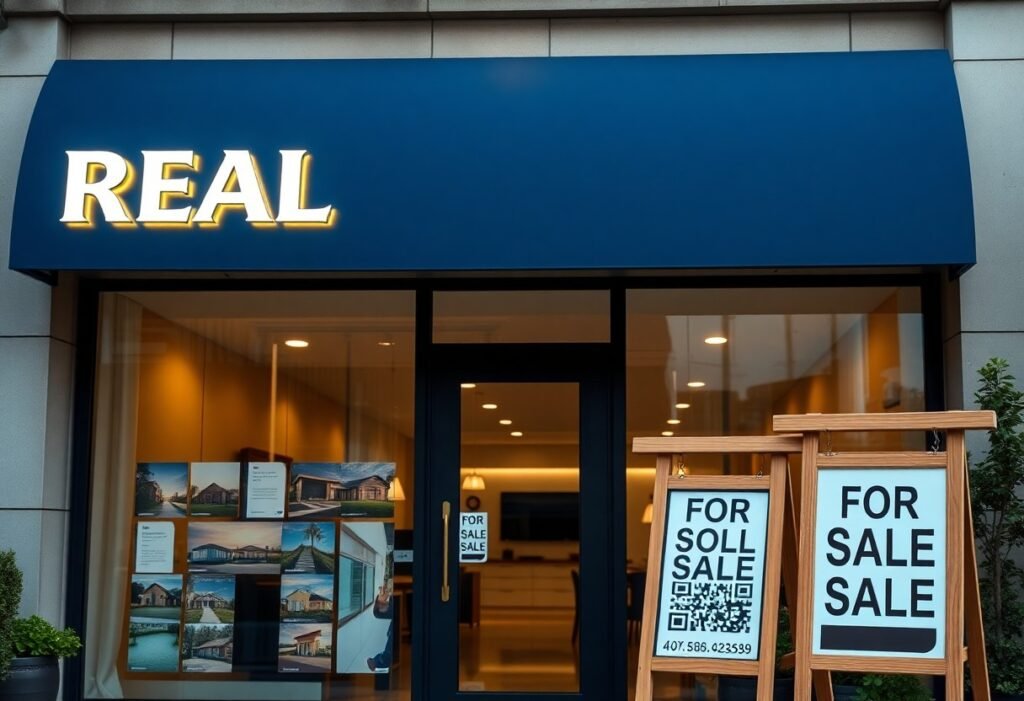
Most effective storefront signs for your real estate office prioritize visibility, clear branding, and trust-building details: bold, legible channel letters or an illuminated cabinet sign for night visibility, cohesive window graphics showcasing your logo and specialty, and tasteful directional or open-house placards. Choose durable materials, high-contrast colors, simple messaging, and strategic lighting so your signage communicates professionalism, attracts foot and street traffic, and helps clients find and remember your agency.
Key Takeaways:
- High-contrast, large, legible typography and simple fonts so signage reads easily from street level.
- Consistent branding-logo, color palette, and a short tagline-creates recognition and trust.
- Illuminated or backlit signs and well-lit window displays maintain visibility after dark; use energy-efficient LEDs.
- Prominent contact information and a clear call-to-action (phone, website, QR code, hours) placed at eye level.
- Durable, weather-resistant materials and permit-compliant installation; use modular displays for quick listing updates.
Importance of Storefront Signage for Real Estate
You’ve already seen listings online, but your storefront sign often determines whether a passerby stops to inquire; a FedEx Office study found 76% of consumers entered a business because of its signage. Proper signage increases walk-ins, builds trust, and turns casual observers into leads. Use high-contrast colors, the 1-inch-per-10-feet readability rule, and durable materials so your office reads clearly from typical street distances of 50-200 feet.
First Impressions Matter
People form first impressions in about seven seconds; when your sign is faded or cluttered prospects assume listings are out of date. Crisp typography, clean lines, and consistent lighting signal professionalism. Choose finishes like brushed aluminum or acrylic and keep windows uncluttered-one local firm saw a 12% increase in walk-ins after replacing hand‑written flyers with a backlit channel sign.
Creating Brand Recognition
Consistency makes your firm instantly recognizable-use a 2-3 color palette, fixed logo proportions, and the same typeface and Pantone codes across storefront, A-frames, window graphics, and For Sale signs. Repeat placement within a neighborhood so your brand becomes familiar; one boutique agency standardized signage across 12 offices and reported an 18% rise in inbound walk-ins within six months.
To reinforce recognition, you should track effectiveness: add unique QR codes or short URLs on each sign and monitor scans, calls, and web visits to compare locations. Follow the 1-inch letter = 10-feet readability rule, mount primary signage at 48-60 inches eye level, and pick illumination (halo, channel letters, or LED backlit panels) based on 24/7 visibility needs. Schedule cleaning every 3-6 months and refresh materials every 3-5 years to keep your brand looking current.
Types of Storefront Signs
| Sign Type | Best use & specs |
| Channel letters | High-visibility building ID with acrylic/metal faces and LED backlighting; readable from 100+ ft; typical small-store cost $1,000-$5,000; lifespan 10-15 years. |
| Lightboxes | Backlit displays for 24/7 visibility; LED reduces energy ~50% vs fluorescent; ideal for street-facing offices and multi-tenant lobbies. |
| Window graphics | Perforated vinyl, frost, or full-wrap prints for promotions and privacy; perforated film keeps sightlines while showing a full image; installs often $200-$1,200. |
| A-frame / sidewalk signs | Portable, low-cost units ($100-$400) for open-house directions and daily specials; test messaging to lift foot-traffic conversions by double-digit percentages. |
You can compare specs, materials, permit steps and ROI models in The Complete Guide To Creating The Best Real Estate Signs, which lists templates and maintenance cycles for real estate offices.
- Match sign height to street elevation: letters 1″ per 10 ft of expected viewing distance.
- Factor in ambient light: LEDs at 1,500-5,000 nits work well for sunlit facades.
- Confirm local sign codes and permit timelines before production to avoid delays.
Traditional vs. Digital Signs
You’ll weigh upfront cost versus flexibility: static signs typically cost $300-$1,500 and last 10-20 years, while digital LED displays often start at $2,000 and run to $20,000 but let you change listings and messages instantly; digital screens average 7-10 years of full-brightness life and offer higher CPM efficiency when you update content daily.
Effective Use of Colors and Fonts
You should prioritize contrast and legibility: aim for high contrast (light on dark or vice versa), limit palettes to 2-3 brand colors, and use sans‑serif fonts; apply the 1″ per 10 ft rule for letter height and test at actual sight distances to ensure readable phone numbers and web addresses.
More details: avoid condensed or script fonts for primary copy, increase tracking for headline text, and keep stroke weights consistent-choose a bold weight for names and a medium for secondary info; test color under both daylight and LED illumination and mock up at full scale to verify legibility from 25, 50 and 100 feet.
Perceiving how drivers and pedestrians encounter your sign-angle, speed, and viewing time-lets you prioritize font size, contrast, and illumination to maximize contact and conversions.
Key Features of Successful Real Estate Signs
To maximize curb appeal and lead generation, you want signs that combine visibility, clarity, and brand consistency; 60-70% of prospective buyers say exterior signage influences first impressions. Use high-contrast pairs and fonts with at least 4-6 inch letter height for pedestrian sightlines and 8-12+ inch for drivers. The most effective signs focus on one clear action and a memorable visual.
- Visibility: use high-contrast colors, reflective or backlit options so your text reads at a glance.
- Size & Letter Height: follow the 1 inch per 10 feet rule-4-6 in for sidewalks, 8-12+ in for road-facing signs.
- Typeface & Legibility: pick clean sans-serif fonts, avoid condensed styles, and maintain 150-200 dpi for crisp prints.
- Message Hierarchy: craft a 3-6 word headline, one secondary line for property type or price, and a single contact line.
- Brand Consistency: apply your logo, color palette, and tone across signs to build recognition over multiple locations.
- Call to Action: feature one CTA like “Call,” “Tour Today,” or a single QR code to capture mobile leads.
- Contact Info: display one phone number and a short URL or vanity link to improve recall and conversion.
- Material & Durability: choose aluminum composite or PVC with UV laminate rated 3-7 years depending on climate.
- Lighting & Reflectivity: include LED backlighting or reflective vinyl for night visibility and fast-traffic readouts.
- Local Compliance: check setbacks, size caps, and permit rules-many municipalities limit temporary signs to ~6 sq ft.
- Testing & Tracking: run A/B tests with unique tracking numbers or QR codes to see which messages drive calls or visits.
Size and Visibility
You must size letters to viewing distance: use the 1 inch per 10 feet guideline-so a sign read from 80 feet needs roughly 8-inch letters. For storefronts facing foot traffic, 4-6 inch type works; for signs intended to catch passing cars, aim 10-12 inch letters and panels 3-6 feet wide. The mounting height and unobstructed sightlines can increase legibility and response rates significantly.
Clear and Concise Messaging
You should keep headlines tight-3-6 words-and use shorthand like “2BR/2BA” or “1,200 sq ft” to convey property basics instantly. Include one numeric hook (price, size, or availability) plus a single CTA; for example: “Move-In Ready – 2BR/2BA – Call 555-1234.” The limited copy helps passersby extract meaning in under two seconds.
Test message variants for 2-4 weeks-compare “Luxury Offices – Lease Now” vs. “Prime Downtown Space – 1,500 sq ft”-and track phone, web, and QR conversions to learn what resonates. Use icons (phone, map pin) to replace words and prioritize whitespace to boost perceived value and legibility. The iterative approach lets you refine messaging based on real response data.
Location and Placement Strategies
You should prioritize sightlines and dwell time: drivers get about 2-3 seconds to read storefront copy while pedestrians scan for 1-2 seconds, so place primary branding where it’s seen from 30-50 ft and free of obstructions. Mount signs at readable heights (one rule: 1 inch of letter height ≈ 10 ft of readable distance), orient to the busiest approach-corner-facing or angled signs often outperform flat facades-and keep secondary wayfinding near the entrance and parking exits.
Choosing the Right Spot
You want your sign where people naturally look: above or beside the main entrance at 7-10 ft for pedestrian clearance, angled 15-30° toward the street for driver sightlines, and within 30-50 ft of nearby intersections to capture turning traffic. Check window sightlines so logos aren’t blocked by awnings; if frontage is narrow, prioritize a projecting sign or illuminated blade to double visibility for both pedestrians and passing cars.
Understanding Local Regulations
You must verify municipal sign codes before design: many cities cap sign area (commonly around 32 sq ft) and height (often 8-12 ft), impose setbacks from property lines, and restrict illuminated or moving elements in certain zones. Historic districts and mixed-use corridors typically have tighter rules, permit lead times of 2-6 weeks, and separate electrical inspections for backlit signs-plan timelines and budgets accordingly.
You can speed approvals by pulling permit-ready drawings: measure building frontage since allowed area is frequently calculated as 1-2 sq ft per linear foot of frontage, supply scaled elevations and mounting details, and work with your sign vendor to submit structural or electrical plans. Also check zoning overlays for temporary signage caps, required maintenance standards, and any hours-of-illumination limits so your final placement and finish won’t trigger a compliance hold-up.
Seasonal and Promotional Signage
During peak seasons you can deploy short-run banners, window clings, and sidewalk A-frames to reflect current campaigns-holiday colors, spring selling season, or tax-season buyer messaging. Swap vinyl inserts every 2-3 weeks to keep content fresh; agencies that rotate seasonal signage report foot-traffic lifts of 10-25%. Use weatherproof materials and time-limited offers (e.g., “Open House This Weekend”) to drive urgency and measurable spikes in walk-ins.
Adapting to Market Trends
When interest rates or inventory shift, you should pivot storefront copy within 24-48 hours: promote fixed-rate financing when rates fall, or focus on investment/rental messaging when listings tighten. Digital displays and printed changeable panels let you A/B test headlines; one firm increased lead capture by 28% after testing “Buy Now” vs. “Lock Your Rate” messages for four weeks.
Showcasing Special Listings
For luxury or unique properties you want high-impact visuals: oversized window vinyl with a hero photo, 24″x36″ listing boards showing price, beds/baths, square footage and a QR code linking to a 3D tour. Drive-by audiences get 2-3 seconds, so prioritize a single standout image and one clear CTA; offices using this format saw on-site inquiries rise up to 40% for featured listings.
More detail: you can stagger promotion intensity-use LED backlit panels for weeklong highlights, sandwich-board flags on open-house days, and targeted door-hangers within a 0.5-mile radius. Include measurable elements: unique QR codes per campaign, UTM-tagged URLs, and a simple phone keyword (text “Tour123” to track response). Also align with compliance-display permit numbers where required-and coordinate with agents so signage matches online listings and scheduled showings for seamless lead conversion.
Case Studies: Successful Real Estate Signage Examples
Several real-world offices achieved measurable gains by pairing the right sign types with placement and messaging; you can replicate many of these tactics. The following examples show exact metrics, budgets, and timelines to help you choose the mix that fits your market, whether that’s high-traffic urban corners or suburban walkways.
- 1) Urban franchise (downtown corner): Installed 72″ illuminated channel letters plus a 5 ft perpendicular blade sign; results: 24% increase in foot traffic, 18% rise in monthly qualified leads, payback in ~7 months on a $14,500 install and permitting spend.
- 2) Suburban independent office: Rolled vinyl storefront graphics + two A-frame signs with QR codes; campaign produced 450 QR scans in 30 days, 15% uplift in listing inquiries, total production cost $1,200, and 48% of scans converted to contact requests.
- 3) Highway-facing branch: Replaced aging fascia with a backlit cabinet sign and 12′ pylon; traffic-count sampling showed a 35% jump in drive-by impressions and a 9% increase in inbound calls; capital outlay $12,000, measured over 90 days.
- 4) Multi-office rebrand: Standardized façade signage, window films, and vehicle wraps across 10 offices; average outcome: 22% increase in referral-driven leads and a 12% faster lead-to-listing cycle within six months post-rollout.
- 5) Seasonal promotions pilot: Deployed digital roster in storefront plus rotating A-frames advertising open houses; open-house attendance rose 40% and online signups grew by 320 leads over a 60-day window, cost per lead dropped by 28% versus previous season.
Innovative Designs
Experiment with AR-enabled QR codes, dynamic LED accents, and layered translucent window films to create standout displays; one pilot with AR tours lifted engagement by ~27% versus static signage. You should test a single variable at a time-color contrast, motion, or interactivity-to isolate what drives clicks and foot traffic in your neighborhood.
Consumer Response and Engagement
Shoppers respond fastest to clear offers and tactile cues: bold CTAs, readable phone numbers, and scannable codes raise immediate interaction. You’ll often see higher engagement when signs advertise time-limited incentives or direct digital actions like “Scan for virtual tour,” which converts walk-bys into measurable leads.
Digging deeper, analytics from QR scans, tracked phone numbers, and time-of-day foot-traffic counts let you tie specific sign elements to outcomes. You can compare weeks before and after installs, segment performance by sign type, and reallocate budget toward the formats that deliver the best cost-per-lead in your territories.
Summing up
Summing up, you should choose high-contrast, readable fonts and bold logos, use illuminated or backlit channel letters for night visibility, display clear contact details and current listings in window vinyl, maintain consistent branding and durable materials, and position your signage for sightlines and local code compliance to maximize curb appeal and lead generation.
FAQ
Q: Which types of storefront signs perform best for real estate offices?
A: High-impact combinations work best: illuminated channel letters or LED lightboxes for brand visibility at night; projecting/blade signs to catch pedestrian sightlines; large storefront window graphics and vinyl lettering for listings and contact info; durable awnings with logo for curb appeal; and portable A-frame signs for open houses. A permanent, well-lit primary sign plus flexible window or sidewalk signage gives both long-term recognition and day-to-day promotional ability.
Q: What materials and finishes should I choose for durability and appearance?
A: Use weather-resistant substrates: aluminum composite (Dibond), routed acrylic, polycarbonate, and powder-coated steel for metal elements. For face graphics, choose UV-stable vinyl or direct UV-printing on acrylic/metal. For illuminated signs pick LED modules and sealed housings to prevent moisture; for awnings use marine-grade fabric. Specify anti-graffiti coatings or laminate where vandalism is a risk and UV-protective laminates to prevent fading.
Q: How should a sign be designed for legibility and brand consistency?
A: Prioritize high contrast between text and background, simple sans-serif or humanist typefaces, and clear hierarchy (business name largest, phone/website secondary). Follow the 1 inch per 10 feet rule for letter height to ensure readability from typical viewing distances. Avoid dense copy-use a short tagline or necessary contact info. Maintain consistent colors, logo placement, and proportions so the storefront aligns with online and print branding.
Q: What permitting, landlord, or local-code issues affect storefront signage for real estate offices?
A: Always check municipal sign codes for size, height, illumination, and placement restrictions; historic districts and HOA areas often impose stricter limits. Illuminated signs typically require an electrical permit and inspection. Obtain building-owner or landlord approval for mounted signs and confirm lease clauses about external signage. For temporary or sidewalk signs verify local ordinances about placement and time limits to avoid fines.
Q: Should I use permanent signs, changeable signage, or digital displays for listings and promotions?
A: Combine approaches: invest in a high-quality permanent, illuminated storefront sign for brand visibility and trust; supplement with window graphics, vinyl clings, or magnetic panels for rotating listings; use A-frames and banner stands for open-house promotions. Digital displays (LED panels) offer the most flexibility for frequent updates and multimedia but cost more and may be subject to stricter local rules and higher maintenance. Choose based on budget, frequency of content changes, and local regulations.