
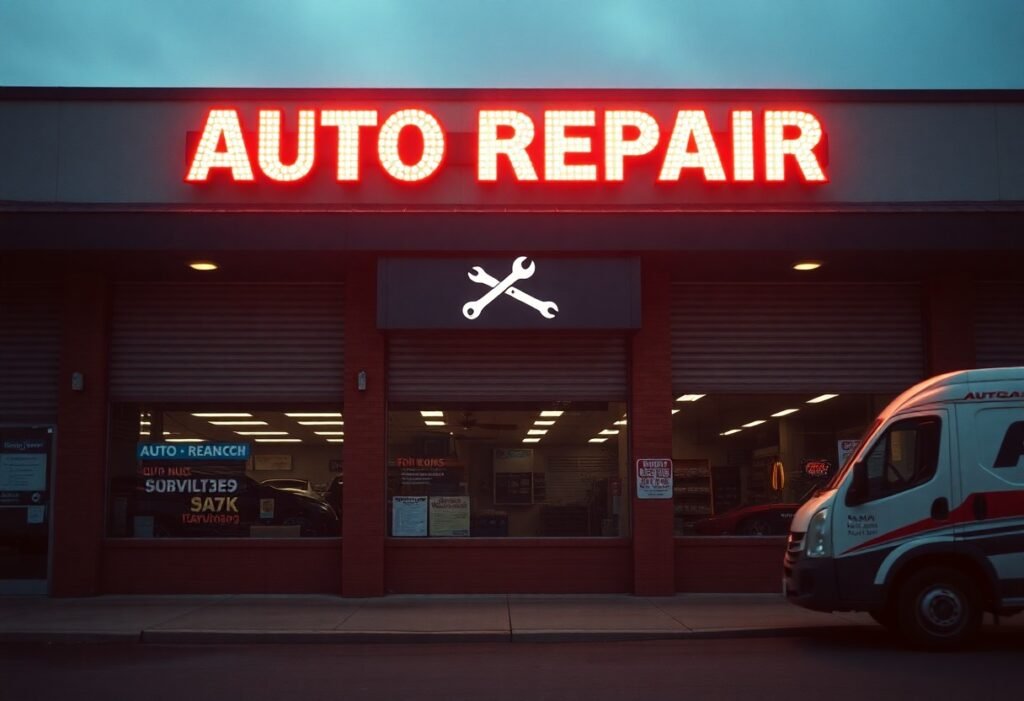
With high-visibility, durable signage you can make your auto shop stand out and drive walk-in traffic; illuminated channel letters or backlit cabinet signs offer night-time visibility, bold contrasting graphics and large, legible fonts communicate services, window and garage-door vinyls promote specials, while blade or projecting signs and clear wayfinding guide customers safely; choose weather-resistant materials, consistent branding, and professional installation to protect your investment and maximize impact.
Key Takeaways:
- High-contrast colors and large, simple fonts improve legibility from the road and at driving speeds.
- Backlit or LED-illuminated signs ensure 24/7 visibility and consistent brand presence after dark.
- Clear, concise messaging with a logo and top services (e.g., “Brakes • Oil Change”) and simple icons aids quick recognition.
- Durable, weather-resistant materials (aluminum, acrylic, powder-coated finishes) and secure mounting keep signs looking professional longer.
- Strategic placement and size-visible from approach angles, mounted at eye- and street level, and compliant with local codes-maximizes impact.
Importance of Eye-Catching Signage
Good signage drives immediate perception: legible copy at distance, clear lighting, and durable materials matter. Use the rule of thumb-1 inch of letter height per 10 feet of viewing distance-so a storefront visible from 100 feet needs ~10-inch letters. You should choose high-contrast colors, matte finishes to reduce glare, and aluminum or ACM panels with UV-resistant inks; combined, these choices keep your message readable in daylight, at night, and through seasonal weather over years.
Role in Attracting Customers
Visible, well-lit signs convert passersby into walk-ins: studies show 60-70% of consumers entered a store because of its signage, and you can tap that by placing bold headlines and a single clear CTA-“Tires • Brakes • Oil” or “Stop In – Same-Day Service.” Nighttime visibility is key, so LED-backlit channel letters or halo-lit signs increase after-hours inquiries; position signs to face main traffic flows and keep messages under six words for drivers at 25-45 mph.
Enhancing Brand Recognition
Consistent signage builds recall and trust; you should limit palettes to 2-3 brand colors and 1-2 typefaces across your exterior, fleet, and uniforms so customers instantly link the visual to your service. Use your logo prominently-aim for it to occupy roughly 20-30% of the sign face-paired with repeat elements like a signature color block or icon to reinforce memory on repeat drives past your shop.
To deepen recognition, standardize materials and placement across locations and touchpoints: matching channel letters, awning colors, and service stickers on loaner cars create repeated impressions. You can also integrate measurable elements-QR codes on window decals tied to promotions or consistent phone-number styling-to track which visuals drive calls. Over time, this repetition turns a single storefront into a recognizable local brand that drives referrals and repeat business.
Types of Storefront Signs for Auto Shops
Different sign types target specific needs: long-range identification, curbside promotions, directional guidance, or branding consistency; you should match sign style to location and customer speed. Common options include channel letters, LED lightboxes, blade/projecting signs, banners and A-frames, and vinyl window graphics-each has distinct visibility, cost, and permit considerations.
- Channel letters
- Illuminated lightboxes
- Blade/projecting signs
- Banners and A-frames
- Window graphics
| Channel letters | High-impact ID, visible 300+ ft, best for main façades |
| Illuminated lightboxes | Even illumination for logos, good for 24/7 visibility |
| Blade/projecting signs | Sidewalk visibility at pedestrian level, boosts walk-ins |
| Banners & A-frames | Low-cost promos, ideal for sales or events, easy to update |
| Window graphics | Promote services/brands, maximize unused glass real estate |
Illuminated Signs
You’ll get the best night and low-light presence with LED-illuminated signs: LEDs use roughly 60-80% less energy than fluorescent or neon and commonly last 40,000-50,000 hours, so a 10-year run is realistic with daily use; backlit cabinets and halo-lit channel letters both improve brand visibility for 24/7 operations and can be dimmed for local light ordinances.
Banners and A-Frames
You can deploy vinyl banners and A-frame sandwich boards for targeted, short-term messaging-banners cost around $20-$150 depending on size and finish, while A-frames typically run $80-$300; place them near curb cuts or sidewalks, keep copy to 3-7 words, and use 1″ of letter height per 10 feet of intended readability.
For deeper use, combine durable 18-22 oz PVC banners with grommets or pole pockets and choose wind slits for exposed locations; alternatively, water-fill A-frames resist tipping and allow changeable inserts, making them effective for weekend promotions, service specials, or directional signage during events. Assume that mixing permanent illuminated channel letters with temporary A-frames yields the best balance of steady brand presence and promotional flexibility.
Effective Design Elements
Strong composition balances hierarchy, contrast and simplicity so your sign reads instantly at driving speed. Prioritize one main message (brand or service) and a supporting line; industry practice is 1 inch of letter height per 10 feet of viewing distance. Use bold iconography, durable materials like aluminum or acrylic, and backlighting for night legibility to keep your message visible 24/7.
Color Psychology
Your color choices signal service and set expectations: blue conveys trust and is common for mechanics and dealerships, red drives urgency for quick lube or towing, and green suggests eco or EV services. High-luminance combos-yellow on black or white on navy-improve legibility; aim for at least a 70% luminance contrast between text and background for daytime readability.
Font and Clarity
Use clean sans-serif typefaces (Helvetica, DIN, Futura) with medium to heavy weight and simple letterforms so characters don’t blur at distance. Avoid scripts, condensed, or decorative fonts; keep line lengths short and use mixed case for faster recognition. Apply the 1-inch-per-10-feet rule when sizing letters for expected road speeds and sightlines.
For finer control, increase stroke width and spacing for letters under low light or when mounting above glare-prone glass. Use generous tracking and avoid tight kerning, especially on uppercase runs. If your curb is ~75 feet from the road, specify 8-inch letters; for drive-by visibility at 30-45 mph, keep the primary message to 2-4 words so drivers can parse it within the 2-4 seconds they have to read it.
Location and Visibility
Placement determines whether drivers see and have time to read your message. Use the rule of thumb of 1 inch of letter height per 10 feet of viewing distance-so 10‑inch letters for a shop 100 ft back. At 30 mph a driver covers roughly 44 ft/sec, meaning you should aim for legibility from 100-150 ft for recognition and safe action. Position signs for unobstructed sightlines and orient them to the primary flow of traffic.
Strategic Placement
Place your primary ID sign on the road-facing façade and supplement it with a 3-6 ft blade sign or a 10-15 ft pylon near the curb to catch low-angle approaches. Orient blade signs perpendicular to sidewalks for pedestrian and slow-traffic readability, and reserve larger illuminated faces for higher-speed corridors. Provide 50-100 ft of advance visibility before intersections so drivers have time to turn into your lot without abrupt maneuvers.
Complying with Local Regulations
Check zoning rules for sign area, height and lighting-many jurisdictions cap sign area between 32 and 150 sq ft and set maximum heights around 10-15 ft in commercial zones. Permit fees commonly run $50-$500 and administrative reviews often take 2-6 weeks; illuminated or freestanding signs usually trigger additional reviews. Confirm setback, sight‑triangle and historic‑district restrictions before fabrication to avoid costly revisions.
To secure approvals, submit a scaled site plan, elevation drawings and electrical wiring details; some localities also require a structural engineer’s stamp for larger fixtures. Noncompliance can lead to fines, removal orders or mandated retrofits. You’ll reduce delays by working with a sign contractor experienced in local codes-turnaround on permits and inspections often drops to 2-4 weeks when plans are correctly prepared.
Utilizing Digital Signage
When you add a digital display to your storefront you get flexibility that static boards can’t match: remote updates, scheduled dayparting and data-driven rotations. Outdoor LED modules typically run 5,000-10,000 nits and pixel pitches that dictate readable distance (smaller pitch for close-up viewing). Expect upfront costs from a few thousand to mid-five figures depending on size and weatherproofing, but you can push time-sensitive offers, live wait times, or service reminders instantly to capture drive-by attention.
Benefits of Digital Displays
Digital displays boost visibility and engagement by cycling targeted messages-promote oil changes in the morning, tires in the afternoon, or same-day inspections during slow hours. They let you show live info like wait times and estimated repair windows, and animations or high-contrast CTAs increase noticeability at 100-300 feet depending on pixel pitch and brightness. That adaptability helps you test offers and react to local traffic patterns without reprinting signs.
Content Management Strategies
Plan short, scannable slides and rotate them every 30-60 seconds for passing drivers; keep headlines under seven words and use large sans-serif fonts with 3-4 color contrasts. Schedule playlists by daypart (e.g., morning quick-service promos, afternoon alignment specials), use motion sparingly for emphasis, and automate updates via a cloud CMS so you can push promos or safety notices from your phone.
Use templates, brand kits and a simple taxonomy for assets so your CMS playlists stay consistent; pick a provider (ScreenCloud, NoviSign, BrightSign or your POS-integrated CMS) that reports play counts and uptime. Set KPIs-impressions, click-through via QR codes, or redemptions-and run A/B tests for headlines and pricing. For example, schedule an oil-change banner 8-11am and a tire discount 2-5pm for two weeks, then compare redemptions to optimize timing and creative.
Case Studies of Successful Auto Shop Signs
Several real-world examples show measurable gains from better signage; you can apply their tactics to your shop. See Showroom Signage Solutions to Elevate Your Brand for complementary design ideas and materials used in high-impact installs.
- 1) Riverside Auto Repair (CA) – 12’×4′ backlit channel letters + LED halo; installed in 6 weeks for $4,500; evening call volume rose 28% and monthly service orders grew 15% within 6 months; estimated payback: 9 months.
- 2) Midtown Tire & Service (NY) – 3.5’×8′ projecting blade sign + vinyl window graphics; $3,200 install; drive-in traffic increased 22% and peak-hour recognition jumped 40%; conversion rate up 8% over 4 months.
- 3) Highway Fleet Maintenance (TX) – 20′ pylon with digital message center; $45,000 including permits (9-11 months); exposure to 60,000 vehicles/day led to two fleet contracts adding ~$120,000/year.
- 4) Quick Lube Express (FL) – Illuminated cabinet sign (8’×3′) with wayfinding arrows; $2,800; reduced customer navigation time by 34% and average transaction value rose 12% within 3 months.
- 5) Urban Detail & Showroom (IL) – Facade overhaul: mural, backlit logo and interior showroom signage; $18,000; showroom foot traffic +47% and detailing package sales +30% in 4 months.
Analysis of Top Examples
Across cases you’ll notice LED illumination and simple, high-contrast typography delivered the fastest ROI; quantitative results ranged from 12% to 47% increases in traffic or sales. Larger, highway-facing signs correlated with securing commercial accounts, while smaller retail-facing signs improved immediate drive-ins; permit timelines and installation costs strongly affected net payback periods.
Lessons Learned from the Field
You should prioritize visibility at driving speeds, match sign scale to traffic volume, and budget for permitting and electrical work up front. Effective designs used letter heights and contrast that ensured a 1-2 second read time at typical approach speeds, while illuminated signs extended peak performance into evening hours.
For practical specs: use the 1 inch letter height = 10 feet viewing-distance rule (e.g., 20″ letters for 200 ft sightlines), plan 6-12 months for ROI on façade upgrades, and allow 4-12 weeks for local permits (pylon/digital signs can take 3-9 months). These metrics help you set realistic budgets and timelines.
To wrap up
Upon reflecting, the best storefront signs for auto shops are high-contrast, large-type designs that make your brand and services legible from the street; illuminated channel letters or backlit panels for night visibility; durable materials and protective coatings to withstand shop environments; and simple, focused messaging with your logo and service specialties. Prioritize placement and scale so you attract drive-by attention and build consistent, professional recognition for your business.
FAQ
Q: Which storefront signs are most effective for auto shops?
A: High-visibility channel letters and illuminated cabinet signs are top choices because they read well at distance and during evening hours. Complement these with a bold wall-mounted logo or blade sign at eye level to guide foot and drive-by traffic. Use consistent brand colors and a clear icon (wrench, tire, car silhouette) to communicate services instantly. For budget-conscious shops, high-quality vinyl window graphics plus a professionally designed painted sign can also deliver strong curb appeal.
Q: What materials and construction should I choose for durability?
A: Durable options include aluminum composite panels, powder-coated steel, and acrylic for face panels. Channel letters often use aluminum cans with acrylic faces and LED modules; route-cut HDU or PVC is good for dimensional signs. For storefront glass, cast vinyl with laminate protects against UV and cleaning. Choose tamper-resistant hardware, sealed electrical fittings for illuminated signs, and anti-graffiti coatings in high-vandal areas. Match material choice to local climate-corrosion-resistant metals and UV-stable plastics for coastal or sunny locations.
Q: How should lighting be handled for maximum impact and efficiency?
A: LED illumination offers the best balance of brightness, energy efficiency, and long life. Options include front-lit channel letters, halo-lit (reverse-lit) letters for a premium look, and full cabinet backlighting for bold surface coverage. Use diffusers to avoid hot spots and choose color temperature between 3000K-4000K for natural warmth that reads well against vehicle headlights. Include timers or photocells to control hours and reduce energy costs; ensure wiring and transformers are installed to code for safety and serviceability.
Q: What size, color, and font choices improve legibility for drivers and pedestrians?
A: Prioritize high contrast between text and background (light text on dark background or vice versa) and use simple, sans-serif fonts with generous letter spacing. Apply the legibility guideline of approximately 1 inch of letter height per 10 feet of viewing distance to determine minimum text size for curbside visibility. Keep messages short-business name and primary service (e.g., “Brake & Tire Service”)-and avoid decorative scripts that reduce readability from moving vehicles.
Q: What permitting, placement, and maintenance considerations should auto shop owners plan for?
A: Check local sign codes, setback rules, height limits, and historic district restrictions before ordering; many municipalities require permits and electrical inspections for illuminated signs. Place primary signage at the building façade facing the street and add secondary wayfinding or parking signs for customer flow. Establish a maintenance plan: inspect LEDs and power supplies annually, clean sign faces and remove debris, retouch faded paint, and service mounts and seals to prevent water ingress. Budget for periodic refreshes every 7-10 years depending on exposure and materials.