
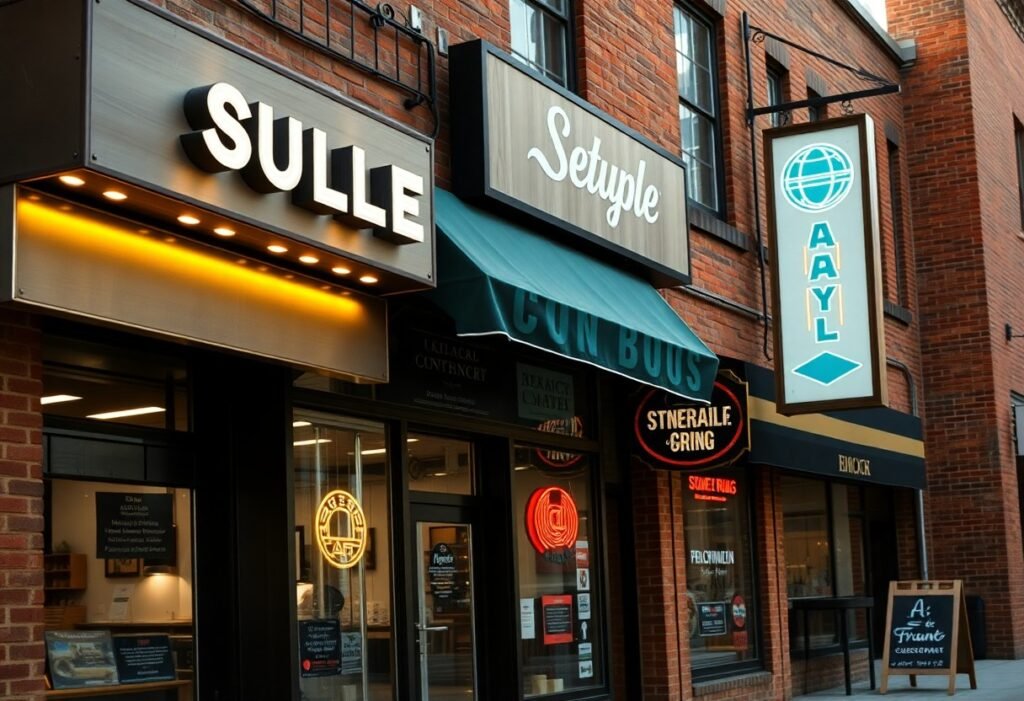
You should evaluate visibility, brand fit, durability and budget when selecting storefront signs; channel letters, lightboxes, awning signs, blade signs and window graphics each offer different benefits depending on your location and customer traffic. Assess materials, illumination, and installation requirements to match your message and long-term maintenance needs, and prioritize options that enhance legibility and curb appeal to drive foot traffic and brand recognition.
Key Takeaways:
- Channel letters – high-visibility, customizable, and illuminated options make them ideal for strong brand identity and night-time visibility.
- Blade/projecting signs – perpendicular signs that catch pedestrian and street-level sightlines, great for dense retail corridors.
- Digital/LED signs – dynamic, attention-grabbing for promotions and real-time messaging; check local sign regulations before installing.
- Awnings and canopies – combine shelter with large branding surfaces, improving curb appeal and storefront recognition.
- Window graphics and vinyl decals – cost-effective, flexible for seasonal promotions, and easy to update or remove.
Importance of Storefront Signs
Your storefront sign directly affects how quickly and accurately people find and judge your business; legibility, material, and lighting translate into measurable outcomes. Use the rule of thumb that each inch of letter height reads at about 10 feet to size signage for the street or sidewalk. LEDs typically last 50,000+ hours, lowering energy and maintenance costs, so your sign choices influence visibility, perception, and operating expense in concrete ways.
Enhancing Visibility
You improve sightlines by choosing the right format for the context: channel letters or illuminated cabinets for high-speed streets, blade signs perpendicular to sidewalks for pedestrian flow, and window graphics for close-range impulse buys. Size letters with the inch-to-feet rule, use strong contrast (dark on light or vice versa), and select LEDs in the 3000-5000K range to maintain clarity through dusk and night.
Reflecting Brand Identity
You express brand personality through material, finish, and type: brushed metal channel letters signal premium positioning, colorful acrylic lightboxes read friendly and affordable, while halo-lit minimal signs suggest modern luxury. Consistent color use, a single headline typeface, and appropriate illumination level make your storefront instantly recognizable and aligned with your brand promise.
When dialing in identity, pick durable substrates-powder-coated aluminum for trims, routed acrylic for illuminated faces, or stainless for upscale sheen-and factor in maintenance: LEDs’ 50,000+ hour life cuts service frequency. Choose color temperature to match mood (2700-3000K warm for hospitality, 4000K neutral, 5000K+ crisp for high-energy retail), ensure type is legible at typical viewing distances, and check local sign codes so style decisions remain practical and compliant.
Types of Storefront Signage
Options span channel letters, illuminated panels, blade signs, window graphics, A-frame boards and digital displays, each differing in visibility, durability and cost; you can plan budgets from roughly $50 for a basic A-frame to $8,000+ for custom channel letters and expect installation timelines from same-day vinyl to 2-6 weeks for fabricated signs. Perceiving how customers approach your frontage will guide placement, size and lighting choices.
- Channel letters
- Illuminated signs (LED, neon, lightboxes)
- Blade signs
- Window graphics
- A-frame & digital displays
| Channel letters | 3D custom letters for facade branding; high visibility, $500-$5,000 typical |
| Illuminated signs | LED/backlit or neon panels for night visibility; energy-efficient LEDs last 50,000+ hours |
| Blade signs | Perpendicular signs for pedestrian sightlines; effective within 25-60 ft |
| Window graphics | Vinyl/perforated films for branding and promos; $5-$25 per sq ft |
| A-frame & digital displays | Portable walk-up messaging and dynamic screens; A-frames $50-$400, digital $1,000-$20,000+ |
Illuminated Signs
Illuminated signs use LEDs or neon to extend effective visibility after dark, often boosting night-time recognition by up to 60%; choose backlit channel letters, lightboxes or LED modules based on façade depth and power access. LEDs reduce energy usage roughly 60-80% versus neon and handle outdoor conditions with IP-rated enclosures, so you can run 12-hour nightly displays with minimal maintenance.
A-Frame Signs
A-frames (sandwich boards) offer low-cost, portable messaging ideal for daily specials and walk-in conversion; expect $50-$400 depending on material and print. You can update messaging instantly with chalk, printed inserts or QR-code panels to capture mobile orders during peak hours.
Place your A-frame on the primary pedestrian path and use high-contrast typography-aim for 1.5-2 inches of letter height per 10 feet of viewing distance; check local sidewalk-siting rules to avoid citations. In one case, a café increased morning conversions 12% after adding a bold A-frame with a rotating QR-code offer.
Window Graphics
Window graphics let you convert glass into large-scale branding, promotions or privacy screens; vinyl wraps, perforated films and frost laminates install in hours and cost about $5-$25 per sq ft. You can refresh seasonal campaigns quickly and use perforated vinyl to maintain sightlines inside while showing full-color art outside.
For durable results choose 3-7 year UV laminates and plan artwork at 150-300 DPI for crisp printing; retailers who used full-window wraps to promote a 30% sale saw walk-ins rise 18% over two weeks. You should also test window glare at different times of day to keep messaging legible.
Blade Signs
Blade signs project perpendicular to the storefront to capture foot traffic and are most effective for viewers within 25-60 feet; options include flat painted panels, routed wood or illuminated box blades. Typical installed costs range $500-$2,500 including brackets and basic permit work.
Mount blades 7-10 feet above the sidewalk for clearance and use concise messaging-3-4 words plus a logo-for instant recognition. A downtown bookstore reported a 22% evening foot-traffic increase after installing a 30-inch illuminated blade with warm LED backlighting and bold typography.
Digital Displays
Digital displays span indoor tablets to outdoor LED screens and enable dynamic content, scheduled promos and analytics; pick pixel pitch by viewing distance (about 3-6 mm for close kiosks, 6-10+ mm for storefront LEDs). They let you A/B test offers and update messaging remotely, which can improve conversion by double-digit percentages when paired with clear CTAs.
Plan content rotation every 7-10 seconds to keep passerby attention and mitigate burn-in; expect initial costs from $1,000 for small indoor units to $20,000+ for weatherproof exterior LED walls. Retailers using dynamic screens with short video clips and QR codes reported 35% longer dwell times and measurable uplift in impulse purchases.
Choosing the Right Material
When choosing material you should balance longevity, appearance and cost: aluminum composite (Dibond) is lightweight, rust-resistant and often lasts 15+ years; acrylic/backlit panels produce vivid color and typically last 7-12 years with UV-stable inks; hardwood conveys warmth but needs sealant and annual upkeep; PVC or coroplast suits temporary promos (2-5 years). Match material to mounting type, local wind loads and your planned illumination to avoid premature replacement or code issues.
Durability Considerations
You need to account for climate, maintenance and protective finishes: powder-coating or anodizing extends aluminum life, 316 stainless steel survives 25+ years in coastal salt air, and UV-resistant vinyl or inks retain color about 7-10 years. Specify IP65 or higher for illuminated channel letters to prevent water ingress, plan annual inspections for fasteners and sealants, and budget for recoat or graffiti protection every 5-10 years depending on exposure.
Aesthetic Appeal
You can use material to reinforce brand tone: brushed metal (brass/bronze/steel) reads upscale, translucent acrylic works best for even backlighting, and painted wood suits artisanal brands. Combine finishes-matte powder-coat with polished metal accents-or use dimensional letters to create depth and legibility; ensure type size, contrast and viewing distance meet visibility guidelines (e.g., 1 inch letter height ≈ 10 feet legible).
For more detail, compare case examples and specs: a boutique achieved premium look with 3/8″ brushed brass letters lacquered to prevent patina, while a 24-hour café used 1/2″ acrylic push-through letters with LED modules rated IP67 for reliable night visibility. Request physical samples, full-scale mockups or 3D renders and confirm Pantone matches and expected fade life to avoid surprises after installation.
Placement and Positioning
Placement dictates how quickly your sign converts passersby into customers: mount it to avoid sightline obstructions from trees, awnings, or utility poles and align it with the primary flow-pedestrian sidewalk or curbside traffic. Use storefront band signs for head-on visibility, blade/projecting signs at corners for crosswalks, and channel letters above entrances for long-distance recognition; letter height at 1 inch per 10 feet of typical viewing distance ensures legibility from blocks away.
Height and Angle
Set the bottom of projecting signs at a minimum of 8 feet above sidewalks to meet most public-right-of-way rules while keeping awning or fascia signs 7-10 feet high for pedestrian eye-level. Scale letter height to viewing distance (1″ per 10′), and when mounting higher than 12 feet, tilt faces down 5-15° to reduce glare and improve readability for pedestrians and drivers approaching from below.
Compliance with Local Regulations
You must verify zoning codes and permit requirements before finalizing placement: many municipalities limit sign area by facade percentage (commonly 25-50%), restrict illumination hours, and require a structural or electrical permit for illuminated or projecting signs. Typical permit fees range $50-$500 and plan-review timelines often run 2-6 weeks, so factor approvals into your rollout schedule.
Work with your sign fabricator to prepare scaled elevations, material specs, and mounting details for submission; historic districts frequently demand sample materials or mockups and may ban direct-LED illumination. If a variance is needed, expect extra hearings-commercial applicants often shorten approval time by providing engineering calculations, photometric diagrams, and proof of insurance up front.
Maintenance and Care
To keep your signs functioning, you should schedule inspections and cleaning: dust and wipe aluminum, acrylic, and vinyl surfaces monthly, deep-clean LEDs and illuminated channel letters every 3-6 months, and perform an electrical safety check annually. Use industry guides like 10 Storefront Sign Ideas To Help Your Business Stand Out for material-specific tips and local regulator requirements.
Cleaning Procedures
You should wipe non-porous signs with a microfiber cloth and a 1:10 mild detergent-to-water solution; avoid ammonia on vinyl and acrylic. Rinse with clean water and dry to prevent streaks. For LED modules, dust with compressed air and clean lenses quarterly; logging cleanings and inspections every 6 months can reduce failures and extend service life.
Repair and Replacement
You must address minor damage within 48-72 hours: replace cracked acrylic panels, rebond loose vinyl, and tighten mounting hardware to prevent water ingress and structural stress. Keep spare letters, bulbs, and 12-24V LED strips on hand to minimize downtime-swapping a faulty LED strip typically takes 20-40 minutes for a trained technician.
If you see fading or electrical flicker, perform a root-cause check: test power supplies (quality LEDs commonly rate ~50,000 hours), inspect silicone seals and replace gaskets every 5-7 years. For heritage signs, document original colors and fonts, then work with a restoration shop that can match paint and hand-lettering; targeted repairs often cost 25-50% of a full replacement.
Case Studies of Successful Storefront Signs
Real-world Results
Several brands transformed foot traffic and sales with targeted signage-one local café saw a 28% walk-in increase after installing halo-lit channel letters; a boutique used backlit acrylic panels to boost evening sales by 42%; and a national chain reported a 15% uplift in drive-by recognition after switching to high-contrast vinyl. These examples show how sign type, placement, and lighting directly affect your measurable customer response.
Detailed Case Studies (numbers & outcomes)
- 1) Independent café – Halo-lit channel letters: daily customers +28% (85 → 109), monthly revenue +14% ($18,000 → $20,520), installation cost $3,800, energy ~12 kWh/month, payback ~3.5 months, install time 2 days.
- 2) Fashion boutique – Backlit acrylic panels: evening sales +42%, window conversion rate +9 points (12% → 21%), project cost $6,200, LED lifespan 50,000 hrs, sales lift sustained over 9 months after launch.
- 3) Quick‑service restaurant chain – High-contrast vinyl + digital menu board: drive-by brand recall +15%, order value +6% ($7.50 → $7.95), rollout cost per site $2,400, standardized install under 1 day, ROI within 6 months.
- 4) Pharmacy – Illuminated cabinet sign with push-through letters: evening foot traffic +20%, prescription pick-ups +8% monthly, upfront $4,500, maintenance visits twice yearly, lighting reduced nighttime missed customers by 35%.
- 5) Fitness studio – Blade sign with LED trim: curbside visibility score +32% (measured by passerby recognition survey), membership inquiries up 18% in 4 weeks, install $2,100, effective for narrow sidewalks and corner locations.
- 6) Regional retail chain – Window-perf vinyl campaign: walk-ins +11% during promo, conversion of promo visitors 3.6% higher, per-store material cost $750, campaign ran 8 weeks and produced a 2.8:1 incremental revenue-to-cost ratio.
Conclusion
Taking this into account, you should choose storefront signs that align with your brand, location, and budget-channel letters or illuminated cabinets for visibility, blade or projecting signs for pedestrian traffic, awnings and window graphics for identity, and digital displays for flexibility; combine types for maximum impact and prioritize legibility, materials, and local regulations.
FAQ
Q: What storefront sign types drive the most visibility?
A: High-visibility storefront signs include illuminated channel letters (front-lit or halo-lit) for strong curb appeal and nighttime readability; backlit lightbox signs for bold, uniform branding; projecting or blade signs for pedestrian traffic and line-of-sight visibility along sidewalks; large window graphics for promotional messaging and daytime impact; and programmable LED/digital displays for dynamic content and high-impact messaging. Each performs differently depending on sightlines (vehicular vs. pedestrian), ambient light, and placement-channel letters and lightboxes excel at distance and night, blade signs win on narrow streets, and window/digital signs catch immediate attention up close.
Q: Which sign types are best for tight budgets or small businesses?
A: Budget-friendly options include vinyl window graphics and decals (low cost, fast install), printed panel signs or simple routed PVC/foam board panels for a clean, inexpensive look, A-frame or sandwich boards for promotions and sidewalk presence, and non-illuminated hanging or blade signs for modest initial cost with good pedestrian visibility; consider a basic backlit cabinet with LED retrofit if you want illumination affordably. Factor in lifecycle costs-LED lighting and durable substrates reduce replacement frequency and can save money over time.
Q: Which materials and lighting options should I choose?
A: Common durable materials are aluminum composite panels for painted or printed faces, acrylic for translucent lighted faces, formed aluminum or stainless steel for channel letter faces, wood or high-density urethane for traditional carved looks, and coated fabrics for awnings. For lighting, modern LEDs are the best balance of brightness, energy efficiency, and lifespan; neon gives a vintage look but costs more to run and maintain; fluorescent is mostly legacy and less efficient. Choose corrosion-resistant finishes in coastal climates and UV-stable substrates for sunny exposures.
Q: How do local regulations and placement affect sign choice?
A: Local zoning, building codes, and historic-district rules dictate allowable sign size, height, projection, illumination, and mounting methods; some areas restrict digital animation or nighttime brightness. Placement affects legibility-optimize height, angle, and letter size for expected viewing distance (larger letters for cars, smaller for pedestrians) and avoid obstructions like awnings or trees. Always check permit requirements, setback rules, and electrical inspection needs before finalizing design to avoid costly redesigns or fines.
Q: How do I match a sign style to my brand and storefront architecture?
A: Align sign materials, typography, color, and scale with your brand personality and the building’s architectural language-sleek metal channel letters or minimal LED trays suit modern brands; carved wood, gold leaf, or painted signs complement heritage facades; fabric awnings add hospitality and shade for cafes and boutiques. Prioritize legibility with high contrast between text and background, simple typefaces for distance reading, and a clear visual hierarchy (logo, business name, secondary info). Test mockups at scale and under day/night conditions to ensure coherence and readability.