
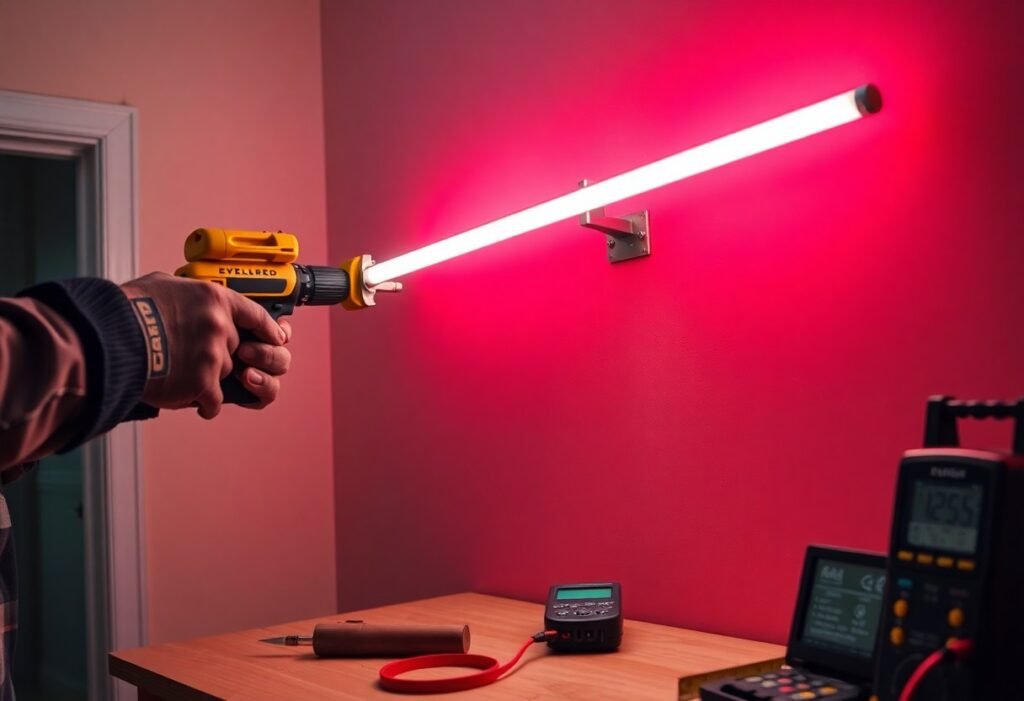
Led neon installation – what are best practices for led neon installation?
Just follow proven steps so you can ensure your LED neon installation is safe, durable, and visually striking: plan layout and power needs, use quality components and weatherproof connectors, mount with proper supports and spacing, protect wiring and power supplies, test circuits and secure regulatory permits, and perform routine inspections to maintain performance and safety.
Key Takeaways:
- Plan layout and mounting before ordering: measure precisely, choose the correct LED neon profile and colour, locate drivers close to runs to minimise voltage drop, and verify mounting surface and clearance.
- Use the correct LED driver and wiring: match voltage type (typically 12V/24V) and capacity with 20-30% headroom, size conductors for run length to avoid voltage drop, fuse circuits, and include surge protection and proper grounding per code.
- Follow manufacturer mounting methods and strain-relief practices: use recommended clips/channels or adhesives, respect minimum bend radius, secure cable entries, and avoid placing undue stress on connections.
- Weatherproof and manage heat: select IP-rated fixtures for outdoor use, seal end caps and connectors, provide ventilation or spacing to prevent heat buildup, and keep neon away from flammable materials.
- Test and document before finalising: bench-test segments for polarity, uniformity and flicker, verify dimmer/controller compatibility, label wiring, and have permanent connections inspected by a qualified electrician.
Understanding LED Neon Technology
What is LED Neon?
LED neon combines flexible silicone or PVC extrusions with densely packed SMD LEDs to reproduce the seamless glow of glass neon; you power it with low-voltage drivers (typically 12V or 24V) and can expect roughly 50,000-100,000 hours of service life. It comes in continuous profiles up to ~16 mm thick with bend radii around 30-40 mm, letting you form custom lettering, logos, cove lighting, and architectural outlines without fragile glass tubes.
Advantages of LED Neon Over Traditional Neon
You get substantially lower energy use-often up to 80% less than glass neon-plus safer low-voltage operation instead of kilovolt transformers, reduced heat output, and far greater durability for high-traffic installations. Color options span single-color, RGB, and addressable modules, while IP65+ ratings enable reliable outdoor signage; installers value lighter weight, instant-on performance, and reduced maintenance visits.
Typical light output ranges from about 200-1,200 lumens per meter depending on LED density and diffuser. You should plan power injection points – roughly every 5 m on 12V systems and every 10 m on 24V runs – and size constant-voltage drivers with ~20% headroom to avoid voltage drop. Dimming via PWM or DMX gives smooth fades, and in practice maintenance is usually driver replacement rather than tube replacement, lowering lifecycle costs for storefronts and long-run installations.
Planning Your LED Neon Installation
Map the run on-site and measure total lengths to within ±5 mm, noting bends, mounting points and nearby mains access; choose profile, IP rating and driver placement before ordering; size the PSU with 20-30% headroom (example: 5 m at 14 W/m = 70 W → specify a 90 W driver); factor in cable gauge for voltage drop (limit 12 V runs to ~5 m, 24 V to ~10 m without upsizing conductors) and confirm any local electrical permits or building restrictions.
Assessing the Installation Area
Survey surface material and structural support – timber studs, masonry or glass require different anchors (use 10 mm masonry anchors for brick, toggles or plywood backing behind drywall); measure available depth for the chosen profile and plan driver placement within 1-3 m; check for obstructions (sprinklers, ductwork, utilities), ambient temperature range (design for −20 °C to +40 °C for outdoor fixtures) and wind exposure for freestanding or rooftop signs when calculating fixings.
Designing Your Neon Display
Decide on viewing distance, letter height and LED density early: a common readability rule is 1 inch of letter height per 10 feet of viewing distance; select LED density (e.g., 60-120 LEDs/m) and expected power (typically 10-20 W/m depending on density) to compute driver size; choose 12 V for short decorative runs, 24 V for longer runs to reduce voltage drop, and specify minimum bend radius for the profile (often 20-30 mm) and mounting centers every 150-200 mm for even support.
Refine color and dimming strategy: use single‑color or RGB/RGBW with a controller rated for your total amperage, set PWM frequency >1 kHz to avoid camera flicker, and target brightness by application (indoor accent 200-500 lux, exterior logo 500-1500 lux at face). For example, a 3 m storefront logo at 24 V with 120 LEDs/m drawing 14 W/m needs ~42 W so choose a 60 W driver for 40-50% spare capacity on multi‑zone systems; pick diffused silicone tubing to eliminate LED hotspots and specify IP65+ for outdoor installations.
Essential Tools and Materials
Equip yourself with precision measuring tools, a 25-40 W soldering iron, low-voltage multimeter (0-30 V DC), insulated crimpers, and a heat gun for shrink tubing; include mounting channels, silicone-rated sealant and an appropriately rated driver. For wiring diagrams and safety steps consult the manufacturer’s LED neon installation instructions.
Tools Required for Installation
You should have a tape measure (mark every 500 mm for mounting clips), a drill with 3-5 mm masonry and wood bits, a 25-40 W soldering iron, wire strippers, crimp tool, insulated screwdrivers, and a low-voltage multimeter to verify voltage, polarity and continuity before powering the run.
Materials Needed for a Successful Setup
Gather silicone or PVC LED neon strips, an aluminum mounting channel for heat dissipation, mounting clips/screws, waterproof end caps, heat-shrink tubing (3:1 ratio), connectors rated for your system voltage, and a driver sized at least 20% above the total LED load.
In practice, calculate load: LED neon often draws 10-20 W per meter, so a 5 m run at 15 W/m needs a 75 W driver – choose a 90-100 W unit for headroom. Use 18-22 AWG for short runs under 5 m; switch to 16 AWG or parallel feeds to keep voltage drop under ~3% on 24 V systems.
Step-by-Step Installation Process
Follow a logical sequence: measure and mark a 1:1 layout, choose the right profile and driver close to the power source, prepare the surface, mount with clips or adhesive at 150-300 mm intervals, wire using 12-24 V DC with 1.5-2.5 mm² conductors, test for voltage drop (keep <3% over the run), seal endcaps with silicone, then check brightness and color consistency.
Quick Installation Steps
| Step | Action / Detail |
|---|---|
| Measure & Plan | 1:1 template, locate driver and service access, note bends and joins |
| Surface Prep | Clean with IPA, ensure flatness ≤2 mm/m, prime porous substrates |
| Mounting | Clips every 150-300 mm, closer at tight radii (75-100 mm), use M4/#6 screws |
| Wiring & Driver | Use 1.5-2.5 mm² conductors, keep driver within 1.5-3 m, fuse per run |
| Test & Seal | Check polarity, measure voltage drop, seal endcaps with silicone; final photometric test |
Preparing the Installation Surface
When preparing the surface you should clean with isopropyl alcohol, remove loose paint and dust, and allow about 30 minutes to dry; aim for flatness within 2 mm per meter to ensure consistent adhesion. On porous or freshly painted masonry apply a bonding primer, and keep ambient temperature between 5-35°C during installation to preserve adhesive performance.
Mounting and Securing LED Neon
For mounting, place retention clips every 150-300 mm and tighten screws gently-use stainless M4 or #6 fasteners-and reduce spacing to 75-100 mm on tight bends; keep the driver within 1.5-3 m to limit voltage drop and allow a 10 mm air gap behind profiles for heat dissipation to maintain LED life.
On drywall use 6 mm nylon anchors; for glass or polished acrylic prefer 3M VHB 4950 or UV-rated silicone adhesive; on metal use self-tapping screws with washers. Add strain relief at every cable exit, label polarity, and verify continuity with a multimeter before sealing endcaps. Torque fasteners to hold without deforming the silicone profile.
Best Practices for Safety
Assess the site for wet locations, combustible surfaces, and access constraints before installation. Use IP65/IP67-rated fixtures outdoors, GFCI protection where water is possible, and follow local code for permits and inspections. Employ fall protection and non-conductive ladders for elevated work, wear eye protection and gloves while soldering, and label circuits with an as-built wiring diagram so future service is safe and straightforward.
Electrical Safety Considerations
Match LED neon to a UL/CE-listed driver of the correct voltage (12V or 24V) and size the supply at no more than 80% of its rating for longevity. Protect runs with inline fusing (for example, a 5A fuse for a ~50W run at 12V), ground metal enclosures, and use GFCI for damp locations. For wiring, 18 AWG is acceptable for short runs under ~5 m carrying ≤6 A; step up to 16 or 14 AWG for longer runs or higher current to avoid overheating and voltage drop.
Avoiding Common Installation Mistakes
Avoid over-bending LED neon beyond the manufacturer’s minimum bend radius and space mounting clips every 10-15 cm (4-6 in) to prevent sagging. Seal end caps and transitions to stop water ingress, don’t exceed a single driver’s rated length to prevent dimming, and never rely on hot-glue as the primary exterior fastener-use mechanical clips or rated adhesives instead.
For example, a 12 m storefront run failed from voltage drop and poor solder joints; resolving it required power injection every 5 m, upgrading supply wiring to 14 AWG, and replacing hand-soldered joints with crimped, heat-shrinked connections. Check operating temperature with an IR gun-keep surface temps well below 60°C-and test each circuit under load before final sealing. Follow manufacturer specs (min bend radius, IP rating) and document the installation for easier troubleshooting later.
Maintenance and Care for LED Neon
Schedule routine maintenance to preserve brightness and extend life: dust monthly, deep-clean every 6-12 months, and inspect seals and drivers quarterly. Keep ambient temperature between 5-35°C and provide at least 50 mm clearance for driver ventilation. Replace degraded silicone or discolored diffusers-UV exposure can yellow extrusions within 2-4 years outdoors. Store spare connectors, fuses and a matching driver on site to reduce downtime.
Regular Cleaning and Inspection
Perform a visual and tactile check monthly: wipe dust with a microfiber cloth, clean silicone with mild soapy water or 70% isopropyl alcohol, and avoid acetone or abrasive pads. Verify mounting hardware is tight and printed IP seals intact; re-torque small screws to about 0.5-1.0 N·m if loose. For outdoor IP65/IP67 installations, flush with low-pressure water and inspect for ingress at cable glands every six months.
Troubleshooting Common Issues
Address flicker, dim segments, or color shifts by first powering down and checking the driver indicator LED and mains presence. Measure DC output-expect 12V or 24V ±5% depending on system-and inspect connectors and solder joints for corrosion or breaks. Swap in a known-good driver to isolate faults; loose crimps, reversed polarity, or exceeded run lengths are frequent causes of partial failure.
For deeper diagnostics, isolate the faulty run and measure current draw: for example, a 24V strip drawing 10 W/m draws ~0.42 A/m, whereas a 12V strip at 12 W/m draws ~1.0 A/m per meter. Watch for voltage sag under load-if output drops >10% compared with no-load, replace the driver. Always power down before probing, use a multimeter on DC range, and consult the manufacturer for LED module replacements or warranty-covered failures.
Summing up
With this in mind you should plan layout and power needs, prepare and clean mounting surfaces, use manufacturer-recommended fixtures and transformers, avoid sharp bends and over-tensioning, secure all wiring and connectors with strain relief and waterproofing for exterior installs, follow local electrical codes and test circuits before final fastening, and consider hiring a licensed electrician for mains connections or complex RGB/DMX setups to ensure safe, long-lasting performance.
FAQ
Q: How should I plan placement and design for an LED neon installation?
A: Plan the layout by measuring the space, marking mounting points, and sketching the routing for tubes and wiring. Consider viewing distance and sightlines to set height and brightness; choose color temperature and LED density to match the intended effect. Place the power supply (driver) where it is accessible for service but protected from moisture and extreme heat. Account for weight, cable runs, and the driver’s maximum load – group runs so each driver operates within its rated output. Verify local building and electrical codes if the installation is permanent or on a commercial facade, and obtain permits when required.
Q: What mounting methods and surface preparation work best for LED neon?
A: Match mounting hardware to the substrate: use wood screws into studs, toggle bolts for hollow walls, and masonry anchors for brick or concrete. Clean and degrease surfaces so adhesives or tapes bond correctly. For lightweight signage, industrial VHB tape can supplement mechanical fasteners but avoid relying on tape alone for heavier runs. Use mounting clips or standoffs designed for LED neon tubing to maintain proper spacing and allow thermal expansion. When using silicone or construction adhesive, choose a non-corrosive, UV-stable product and allow full cure time before powering the sign.
Q: What are the electrical and wiring best practices for LED neon installations?
A: Select the correct driver type (constant voltage vs constant current) and capacity with a safety margin above the total LED load. Use properly sized wire gauge for the length of run to prevent voltage drop; keep runs short or use thicker conductors for long distances. Install fuses or circuit breakers sized to protect the driver and cabling, and add surge protection if exposed to lightning-prone areas. Ensure secure connections with soldered joints or rated connectors and use strain relief at termination points. Match dimming method to the driver (PWM, 0-10V, TRIAC) to avoid flicker, and have mains connections completed by a licensed electrician to meet code and grounding requirements.
Q: How do I weatherproof LED neon for outdoor use?
A: Choose fixtures and drivers with appropriate IP ratings (IP65 or higher for wet locations) and use waterproof, UV-resistant connectors and silicone seals at all penetration points. Mount drivers in ventilated, weatherproof enclosures or indoors when possible. Run power through conduit or sealed cable glands and slope mounts to prevent water pooling. Use stainless steel or galvanized hardware to resist corrosion and allow for thermal expansion gaps so seals and adhesive do not fail. Install GFCI protection on outdoor circuits and position components above expected water levels and splash zones.
Q: What safety checks, testing, and maintenance should I perform after installation?
A: Before finalizing, power the system and test each segment for proper brightness, color consistency, and flicker-free operation. Check polarity, insulation, and for any overheating at connectors or drivers. Label circuits and document driver locations for future service. Schedule periodic inspections to verify fasteners are tight, seals remain intact, and lenses or tubing are clean; clean with a soft cloth and mild detergent, avoiding solvents and abrasive pads. If you encounter flicker, intermittent operation, or color shifts, isolate sections to determine whether the issue is a connection, power supply, or LED module and replace faulty drivers or connectors rather than modifying tubing. For work involving mains wiring or structural alterations, hire qualified professionals to ensure compliance with local regulations.